

Audio By Carbonatix
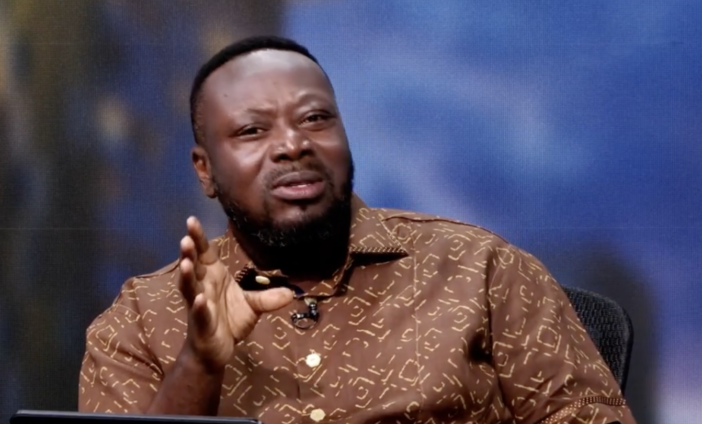
Youth Development and Empowerment Minister George Opare Addo says the government spent its first 18 months in office trying to fully understand the country’s youth unemployment crisis before rolling out targeted interventions.
Speaking on Wednesday, July 8, the minister admitted the period had been difficult but argued that tackling youth unemployment required careful planning rather than quick fixes.
“Within the last one year and six months, it’s been very tough. That I must admit, it’s been very difficult, and it’s been very challenging,” he said.
According to Mr Opare Addo, investments in young people take time to produce results, making it essential for the government to first understand the root causes of the problem.
“The problem with youth or youth unemployment is that youth issues - I call investment in young people is an investment, and you reap the dividends with time.”
He said the ministry commissioned a number of surveys and research projects during the period to gain a clearer picture of the challenges confronting young people.
“In the last one and a half years, we needed to understand what the real issues were, and so we commissioned a few surveys.”
The minister said the findings had given government a much stronger understanding of the problem and were now guiding policy decisions.
“And God has been so good. At least today, I’m able to tell you that I have a very good appreciation of what the issues are, and based on what the survey told us, what the research told us, we are using it to tackle our problems.”
Mr Opare Addo rejected suggestions that Ghana lacked programmes to address youth unemployment. Instead, he argued that the biggest challenge was poor implementation and weak coordination among state institutions.
“What I also saw at the ministry was that it was not that we lacked programs; there were more than enough programs to fix the problems.”
He said many government agencies were running similar initiatives without proper coordination, resulting in duplication and inefficient use of resources.
“The challenge was implementation and how we are able to coordinate these programs effectively.”
“There was a lot of fragmentation at the ministry, and because there was not a ministry responsible for coordinating all the activities of youth, you find one issue with one ministry. So one ministry says I’m doing A. We find another ministry says it’s doing B. It ends up being the same program, same beneficial result, but no resource.”
The minister said the government’s current approach is built on the evidence gathered over the past 18 months, with greater emphasis on coordination and effective implementation to improve outcomes for young people.
Latest Stories
-
The Pusiga connection behind Gertrude Atongi’s work in New York
23 minutes -
NPA launches 2026 staff welfare week with focus on teamwork and employee wellbeing
28 minutes -
Ghana, Saint Kitts and Nevis sign labour deal to strengthen protections for Ghanaian nurses
34 minutes -
Delayed promotions put teachers’ retirement benefits at risk – GNAT
37 minutes -
No ‘Bawumia candidates’ in NPP executive elections – Anthony Karbo
38 minutes -
Over 3,000 displaced as flooding overwhelms Hohoe communities
43 minutes -
Sunyani East NPP executives begin reconciliation drive ahead of 2028 polls
48 minutes -
Agric Minister engages Ga Mantse on agriculture transformation agenda
53 minutes -
Aayalolo expansion targets private car users, not trotro operators – Mahama Ayariga
58 minutes -
KNUST, GMTF explore AI partnership to transform healthcare delivery
1 hour -
MTTD records 9,000 preventable crashes, over 900 deaths in eight months
1 hour -
UN Secretary-General expresses optimism about future, pledges support for Mahama, AU
1 hour -
Ghana’s desalination lesson: A water project must work on paper and at the tap
1 hour -
Bawumia calls for paradigm shift in Ghana’s healthcare policies after GMA engagement
2 hours -
77 aspirants pick NDC nomination forms in Sunyani West
2 hours