

Audio By Carbonatix
Ghana's performance on budget transparency has suffered a significant setback, according to the latest Open Budget Survey (OBS), raising fresh concerns about citizens' access to information on the management of public finances.
The survey, released by SEND Ghana, assessed countries on three key pillars of the budget process — transparency, public participation and oversight. Ghana scored 22 out of 100 on the transparency index, placing it among the lowest-performing countries out of the 82 nations assessed globally.
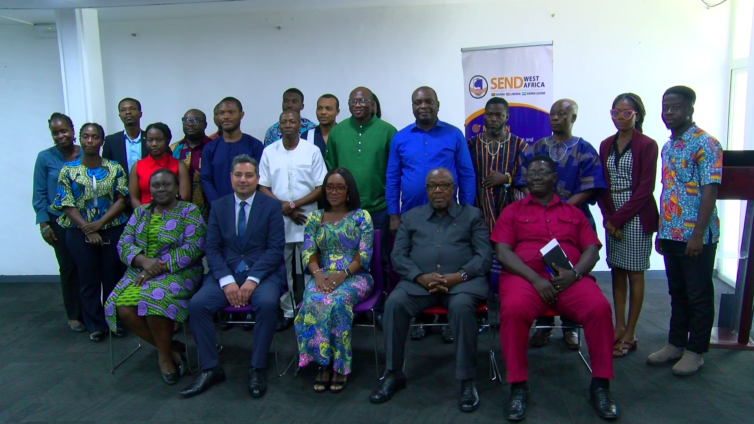
The findings were presented at a stakeholder engagement in Accra on Wednesday, June 24, 2026. The event brought together representatives from Parliament, government institutions and civil society organisations, including members of the Public Accounts Committee and the Finance and Economic Planning Committee.
Speaking at the forum, the Country Director of SEND Ghana, Harriet Nuamah Agyemang, attributed Ghana's poor performance largely to the limited and delayed publication of key budget documents.
She explained that timely access to budget information is essential for meaningful public participation and effective accountability in the management of state resources.
"What are some of these things that are dragging us back instead of moving us forward? One is transparency. Transparency, the whole idea is to publish your budget document in time and to have content that meets the standards agreed on in the survey, which we have signed on to," she said.
"And so if we are not publishing on time and the content is limited, it means that we are not providing adequate information to citizens to enable them to be equipped to engage with their authorities," she added.
Ms Agyemang stressed that transparency remains a cornerstone of good governance, noting that citizens cannot effectively participate in public decision-making or demand accountability if they lack access to relevant fiscal information.
The report has renewed concerns among governance and accountability advocates, who argue that inadequate access to budget information weakens citizens' ability to scrutinise government spending and hold public officials accountable.
They contend that greater openness in the budget process is necessary to strengthen public trust in state institutions and improve the efficient use of public resources.
The Open Budget Survey is regarded globally as one of the most comprehensive assessments of budget transparency and accountability, measuring the extent to which governments make key budget documents publicly available and provide opportunities for citizen engagement.
Reacting to the findings, the Deputy Ranking Member of Parliament's Finance Committee, Dr Stephen Amoah, described the report as a wake-up call for institutions responsible for managing the country's finances.
Although he expressed surprise at Ghana's low score, he stressed the need for a careful review of the assessment criteria and called for stronger efforts to improve transparency and public participation in fiscal governance.
"I'm even surprised. I have to find out the actual performance parameters or variables they used so that we can understand the work they are doing very well because, in my opinion, I have a few concerns about what they have done," he stated.
"Other than that, if we are to go by the law, the PFM Act, being the Public Financial Management Act, and the Constitution, which are the basic legal tools that we must use as reference points and standards as a country, then we need to examine the findings carefully," he added.
On the issue of public participation, Dr Amoah acknowledged that significant improvements were needed.
"Talking about participation, yes, I think a lot of work needs to be done there, and that does not really lie with Parliament per se. But of course, as Parliament, we need to take what they are saying seriously, review our work, upscale our performance and do better because it is very important," he said.
For advocates of fiscal transparency and accountability, the latest survey serves as more than just a performance ranking.
They believe it should prompt government, Parliament and other public institutions to strengthen disclosure practices, improve citizen engagement in the budget process and ensure that public resources are managed in a transparent, inclusive and accountable manner.
The stakeholders further emphasised that improving budget transparency is critical to enhancing public confidence in governance, promoting accountability and ensuring that citizens have a meaningful voice in decisions affecting national development.
Latest Stories
-
Absa Bank Ghana names Stephen Ato Frimpong as Board Chair
7 minutes -
Pickford ‘almost caused crash’ with careless driving
9 minutes -
Author and former politician Jeffrey Archer dies aged 86
20 minutes -
No education reform can succeed without teachers – Education Ministry
28 minutes -
Gauff condemns racist abuse after China Open win
45 minutes -
Medvedev disqualified for hitting spectator with ball
54 minutes -
Oliseh scores twice in late comeback win for France
1 hour -
Pentagon stops using Anthropic AI tools after blacklisting company, BBC told
1 hour -
From despair to dance: Family of nurse Salomey Baffoe rejoices after GH¢100k bail granted
2 hours -
Kejetia Phase III pricing talks loom as government moves to restart stalled works
2 hours -
Nchiraa Yam festival: Two killed, 14 injured as police restore calm
2 hours -
I draw inspiration for my songs from Reggae music – Lyrical Joe
2 hours -
AI must not replace human judgment in public spending – BoG Governor
3 hours -
Ghana should withdraw from 2027 AFCON – Kojo Addae Mensah
3 hours -
Team Ghana departs Accra for Angola ahead of Karting Africa Trophy
3 hours