


Audio By Carbonatix
The Ghana Shea Employers Association (GSEA) has issued a strong call to the government for urgent intervention to prevent the collapse of the country’s shea industry.
At a press conference held in Tamale, members of the Association raised alarm over growing threats to the sector, which employs thousands of women and plays a vital role in rural economies.
A private member of the Association, Faizatu Abdul Majeed, highlighted the critical role of women in the shea value chain, noting that they make up about 90% of the workforce.
“For generations, shea trees have supported families, especially in rural areas. There is a need for the shea trees to be protected because they are a national treasure.”
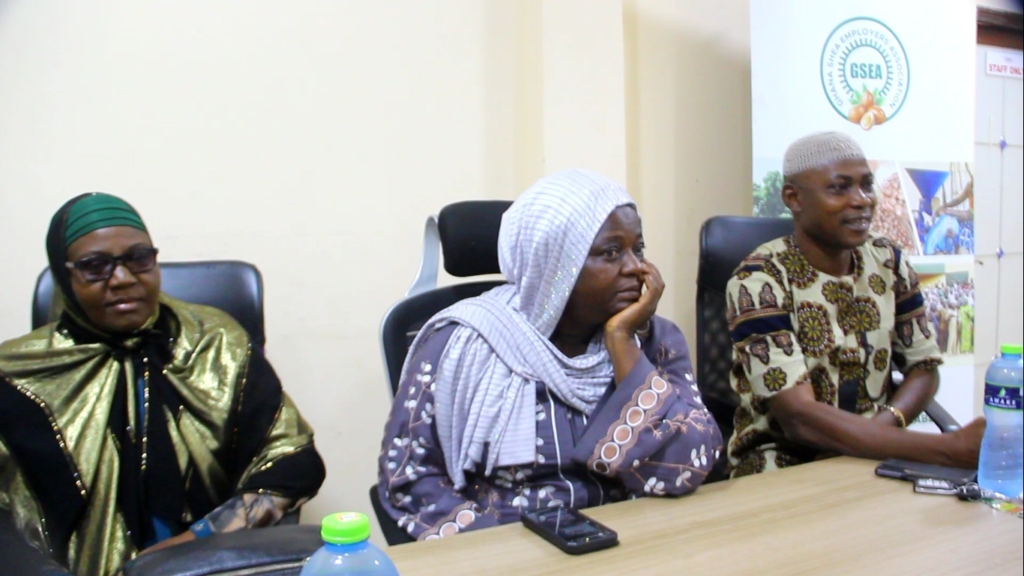
Ms. Abdul Majeed warned that the increasing export of raw shea nuts without proper regulation is not only leading to economic loss but also damaging the environment. She explained that Ghana loses up to 300% of its potential value by exporting raw shea instead of processing it locally into shea butter and other products.
“The way raw nuts are harvested without proper regulations is leading to deforestation, poor soil health, and loss of biodiversity. If we don't act now, the damage to our ecosystem could be irreversible,” she cautioned.
She urged the government to take decisive action, including banning the export of raw shea nuts, aligning Ghana’s policies with other countries in the subregion, such as Burkina Faso, Benin, and Nigeria, which have already imposed restrictions on raw shea exports to protect their local industries.
“We need to enforce stronger rules against illegal harvesting and encourage reforestation efforts. This is the only way we can ensure our shea trees are protected for generations to come,” she added.
President of the Ghana Shea Employers Association, Hajia Rabiatu Abukari, also expressed deep concern about the growing scarcity of shea nuts in the local market, noting that high prices in 2024 had made the nuts unaffordable for many women processors, compounding their economic challenges.
“In 2024, there were virtually no shea nuts due to price hikes. We are not asking aggregators to stop buying shea nuts, but they should sell them to us to process into shea butter for the local and export market,” she said.
Latest Stories
-
Kwaku Azar writes: A-G vs OSP
8 minutes -
Mfantsipim–Adisadel rivalry built excellence, not division – Sam Jonah
33 minutes -
Vice President launches Mfantsipim’s 150 years of shaping Ghana’s greatest mind
50 minutes -
I assure Otumfuo, Mahama will join him to commission KNUST Teaching Hospital by end of this year – Haruna Iddrisu
2 hours -
Gov’t to roll out free special education for persons with disabilities from July 1 – Education Minister
2 hours -
“We used it to test our officiating officials’ readiness” – Bawah Fuseini after CAA Athletics event
2 hours -
Volleyball emerges as Ghana’s fastest rising sport
2 hours -
National Sports Fund needs strong leadership from the top – Administrator David Wuaku
3 hours -
JoySports Exclusive: Steve McLaren in talks with GFA after expressing interest in Black Stars job
3 hours -
Fire guts auto parts warehouse at Bubuashie, one fire officer injured
3 hours -
I owe my victory to coach Ofori Asare – Allotey after winning WBA Africa Gold Super Flyweight belt
3 hours -
Church of Pentecost supports over 2,000 BECE candidates in Obuasi with career guidance seminar
5 hours -
Brandon Asante and Coventry all but promoted to Premier League despite Sheffield Wednesday draw
5 hours -
GPL 2025/26: Late Kwartemaa strike downs Hearts in Tema
5 hours -
Ghana Faces Sierra Leone Moment as Prosecutorial Powers come under strain
5 hours