


Audio By Carbonatix
The Chief Executive Officer (CEO) of Ghana Infrastructure Investment Fund (GIIF), Nana Dwemoh Benneh, says the authorities are working with some development partners to set up an infrastructure credit guarantee scheme.
"If we are able to do it, that enables us now to speak more to the pension fund managers and encourage them to invest part of that pension money in project financing," he noted.
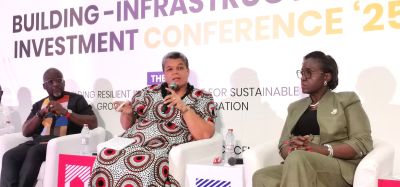
Speaking at the International Building-Infrastructure & Investment Expo (IBIXPO 2025) in Accra, he noted that with that in place, the country could be assured of having local currency financing and being able to raise local currency to fund infrastructural projects in the long term.
The concept of establishing an infrastructure credit guarantee scheme was borne out of the success stories chalked up in some African countries, including Nigeria and Kenya, he explained.
That path, he said, had seen those countries build the local capacity to accrue more funds for development projects.
The Nigerian Infrastructure Credit Enhancement Facility (InfraCredit), for instance, is a specialised institution that provides NGN-denominated guarantees to enhance the credit quality of local currency debt instruments issued to finance infrastructure projects in the West African country
InfraCredit, established in 2017, with an initial contingent capital of USD 25 million via its guarantee solution, GuarantCo, has worked assiduously to attract additional forms of capital and build a more robust balance sheet to underwrite long-term local currency guarantees.
Since its establishment, InfraCredit has (as of 31 Dec 2024) successfully guaranteed 24 transactions, mobilising over NGN 200 billion in private investment with tenors of up to 20 years and crowding in over 21 domestic institutional investors—around 60 percent of total pension fund assets in the country.
Of this total, InfraCredit has supported nearly NGN 150 billion worth of bond issuances, with an average tenor of 11 years, compared to the market average tenor of 3.2 years achieved in the Nigerian Market without InfraCredit support.
Institutional investors made up the majority of participants in these issuances, with Pension Funds accounting for more than half (56.16%) of the total, and, significantly, most of these projects had first-time access to local currency finance of up to 20-year tenor from the domestic bond market.
Nana Benneh indicated that with global regulations reducing the amount of bank capital available for Africa's infrastructural development, institutional investors, including pension funds, sovereign wealth funds, and insurance companies, had emerged as a potentially mainstream financing source.
That course was needed to close the estimated US$108 billion infrastructure finance gap in Africa, he stated.
The GIIF CEO said it was imperative to mobilise institutional investment for infrastructure assets while providing the backbone for Africa’s regional integration, trade, investment, and competitiveness.
Deputy Minister for Works, Housing, and Water Resources Gizella Tetteh-Agbotui, in a briefing, called for a strong public-private partnership in funding infrastructural projects.
Those projects, she said, were capital-intensive, thereby calling for joint efforts and collaboration in ensuring their effective execution.
The Deputy Minister praised the objectives underlying the 'IBIXPO 2025' and expressed the hope that it would bridge knowledge gaps, foster partnerships, and unlock investment opportunities in infrastructure.
Madam Eugenia France, an Official of the Image Consortium Limited, in her welcome speech, explained that the programme sought to bring together key stakeholders to explore and unlock the potential of infrastructure development in West Africa.
These include investors, policymakers, industry leaders, and construction professionals.
The Expo also highlighted innovative technologies and solutions that could revolutionise construction and infrastructure development.
The Chief Executive Officer of Global Afrisino, Albert Mensah, said the event inspired actionable strategies for building resilient and future-ready infrastructure systems by showcasing successful case studies and facilitating knowledge exchange.
The IBIXPO 2025 was organised by Image Consortium in Partnership with Global Afrisino under the auspices of the Ministry of Works, Housing, and Water Resources and the Ghana Infrastructure and Investment Fund (GIIF).
It was on the theme "Building Resilient Infrastructure For Sustainable Growth & Regional Integration."
With a focus on sustainable growth, innovation, and regional integration, the expo facilitated exhibitions and learning experiences to catalyse transformative infrastructure projects that will drive economic prosperity, enhance connectivity, and improve the quality of life across the region
Latest Stories
-
King Mohammed VI reaffirms Morocco’s full support for Gulf States following attacks on their security
1 hour -
Esther Cobbah urges women founders to make trust and excellence their competitive edge
1 hour -
Adonis Adamado
2 hours -
‘Control lies with private capital’ – COPEC warns NPA’s fuel stock assurance not enough amid Iran attack
2 hours -
10 illegal miners feared dead, 30 critical after mine cave-in at Manso Tontokrom
2 hours -
GPL 2025/2026: All Blacks hold leaders Medeama at home
2 hours -
Ghana has over 5 weeks of fuel stock despite Middle East tensions – NPA
2 hours -
Middle East tensions may hit Ghana’s pumps soon – Duncan Amoah
3 hours -
WPL 2025/26: Hasaacas beat Army Ladies as Ampem Darkoa Ladies draw
3 hours -
Five facts about Baba Sadiq, Ghana’s High Commissioner Designate to Nigeria
3 hours -
Baba Sadiq Abdulai appointed as High Commissioner to Nigeria
4 hours -
Playback: The Probe examined Israel-Iran-US tensions and Ghana’s energy security
4 hours -
T-bills auction: Investor appetite remains at all-time high; interest rates tumble to 5.3%
4 hours -
Yes, we “eat Macroeconomics” because it is the foundation of every meal
4 hours -
Annoh-Dompreh launches Nsawam-Adoagyiri Eye Care Project 2026, screens 3,000 residents
4 hours