

Audio By Carbonatix
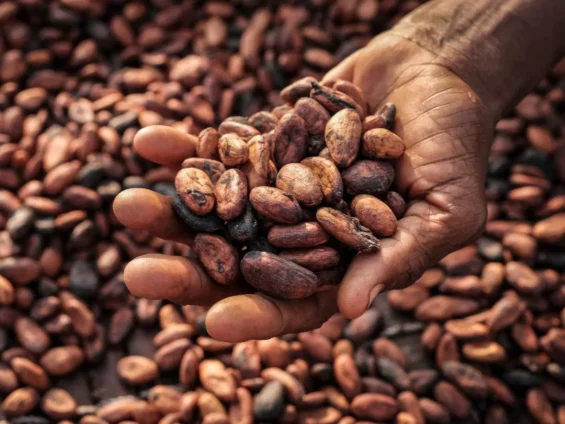
Ghana’s Cocobod will use part of a $200 million World Bank loan to rehabilitate plantations destroyed by the cocoa swollen shoot virus, which causes drops in yields and kills trees, the regulator’s deputy Chief Executive in charge of operations said on Thursday.
The disease has wiped off about 500,000 hectares of farmlands and reduced cocoa output from the West African nation, the world’s second biggest cocoa producer after neighbour Ivory Coast.
Ghana’s output declined to 600,000 metric tons last year after peaking at 1.048 million tons in the 2020/21 season, as the cocoa swollen shoot virus, aging plantations, illegal mining and smuggling took a toll on the sector.
A total of $132.8 million of the loan secured by the government last year and the counterpart funding will finance Cocobod’s rehabilitation of farms and help to enhance knowledge on the virus strains, a project information document showed.
“The rehabilitation will take a minimum of five years to start getting economic production,” Cocobod’s Emmanuel Opoku told Reuters, adding that efforts had been hampered by the country’s economic crisis and the board’s limited funds.
The board will take over disease-infested farms, cut and replace sick cocoa trees, aiding growth to a fruiting stage before handing them back to farmers.
In 2018, Cocobod used part of a $600 million Africa Development Bank (AfDB) loan to rehabilitate aging plantations and those affected by the disease.
But the programme, originally meant to cover 156,000 hectares of plantations, was caught up in Ghana’s worst economic crisis in a generation during which inflation spiralled and the cedi currency depreciated sharply, Opoku said.
He said the AfDB facility benefited more than 88,000 hectares of farmlands, of which 40,000 hectares were ready to be given back to farmers in “the coming days”.
Alhassan Bukari, president of the country’s Cocoa, Coffee and Sheanut Farmers’ Association, told Reuters that rehabilitation efforts needed to be aggressive as many farmers were affected.
Ghana’s graded and sealed cocoa arrivals fell by 35% between the start of this season on Sept. 1 and Jan. 31 this year due to the intensity of the seasonal dry Harmattan wind and what Cocobod described as production challenges.
Latest Stories
-
I assure Otumfuo, Mahama will join him to commission KNUST Teaching Hospital by end of this year – Haruna Iddrisu
18 minutes -
Gov’t to roll out free special education for persons with disabilities from July 1 – Education Minister
40 minutes -
“We used it to test our officiating officials’ readiness” – Bawah Fuseini after CAA Athletics event
1 hour -
Volleyball emerges as Ghana’s fastest rising sport
1 hour -
National Sports Fund needs strong leadership from the top – Administrator David Wuaku
2 hours -
JoySports Exclusive: Steve McLaren in talks with GFA after expressing interest in Black Stars job
2 hours -
Fire guts auto parts warehouse at Bubuashie, one fire officer injured
2 hours -
I owe my victory to coach Ofori Asare – Allotey after winning WBA Africa Gold Super Flyweight belt
2 hours -
Church of Pentecost supports over 2,000 BECE candidates in Obuasi with career guidance seminar
3 hours -
Brandon Asante and Coventry all but promoted to Premier League despite Sheffield Wednesday draw
4 hours -
GPL 2025/26: Late Kwartemaa strike downs Hearts in Tema
4 hours -
Ghana Faces Sierra Leone Moment as Prosecutorial Powers come under strain
4 hours -
Don’t consume fish or seafood from Tema Shipyard until further notice – FDA warns
4 hours -
Why volunteering might be Africa’s most underrated career accelerator
4 hours -
ActionAid Ghana raises concern over gender gaps in Feed Ghana Programme
4 hours