

Audio By Carbonatix
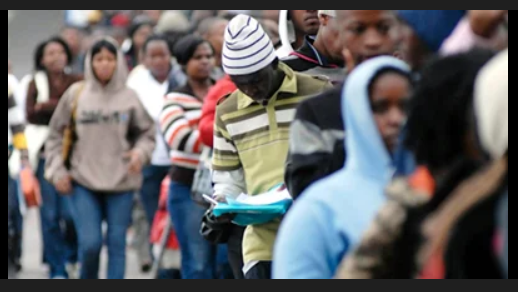
A survey conducted by the Institute of Economic Affairs (IEA) has identified unemployment as the most important issue that must be addressed by the John Mahama administration.
According to the survey, respondents overwhelmingly pointed to economic and governance-related problems, with unemployment and Illegal mining (galamsey) at the forefront.
“Nearly half of respondents (46%) identify unemployment as the most pressing national issue, making joblessness the most frequently mentioned concern. This highlights the central role of employment in public perceptions of national well-being”.
“The second most cited issue, mentioned by 30% of respondents, is illegal mining, commonly known as galamsey. The prominence of galamsey highlights widespread concern over environmental damage, water pollution and related health issues, and the long-term sustainability of natural resources,” the survey said.
In addition, the survey captured concerns over the cost of living as widespread and intense, despite the high job approval for President Mahama (68%).
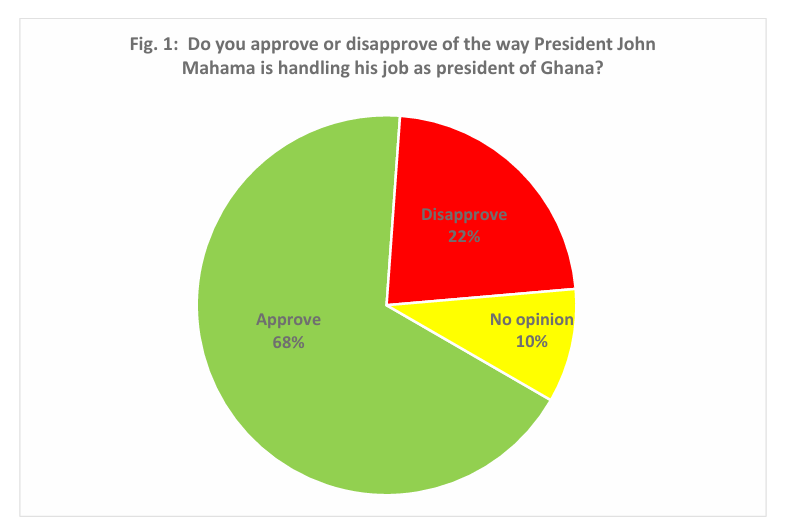
“Seven in ten respondents (71%) report being very concerned about the price of food and consumer items, while two in ten respondents (20%) say they are 2 somewhat concerned.
Overall, more than nine in ten Ghanaians (91%) expressed at least some level of concern about rising prices. The results showed that, although most people believe the president is leading the country in the right direction, challenges related to basic necessities remain unresolved and require his urgent attention.
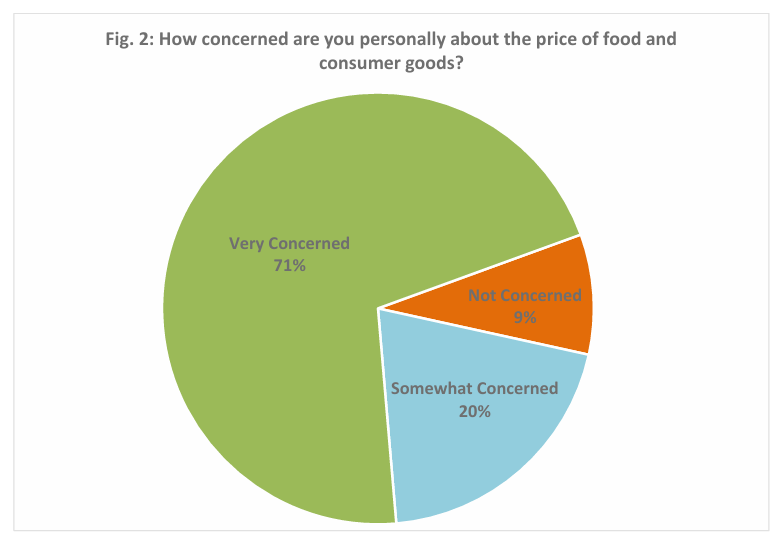
Meanwhile, the survey said public perception of President John Mahama’s job performance is broadly positive, with a greater percentage of the population approving of his job performance.
“When asked whether they approve or disapprove of the way President Mahama is handling his job, 68% of respondents say they approve. About 22% say they disapprove, while 10% report having no opinion”.
The survey said the approval rating suggests a solid base of public support for the president, even amid widespread concern about some socioeconomic and governance issues.
“The gap between approval and disapproval— over forty percentage points— indicates that positive assessments of the president’s performance extend well beyond his critics. However, the presence of a notable minority (22%) who disapprove, along with those who hold no opinion, suggests that support is not universal and that further efforts are needed to engage and win over more Ghanaians”.
Latest Stories
-
The Ghanaian prophet and the mysterious death of his scottish wife Charmain Speirs
43 minutes -
Nearly 400 sentenced in Nigeria for links to militant Islamists
1 hour -
Ghana’s recovery supported by gold strength despite global oil price pressures – Standard Bank Research
1 hour -
‘Excellence is our inheritance’ – Nana Sam Brew-Butler hails Mfantsipim’s 150-year reign in leadership
2 hours -
Kwaku Azar writes: A-G vs OSP
2 hours -
Mfantsipim–Adisadel rivalry built excellence, not division – Sam Jonah
2 hours -
Vice President launches Mfantsipim’s 150 years of shaping Ghana’s greatest mind
2 hours -
I assure Otumfuo, Mahama will join him to commission KNUST Teaching Hospital by end of this year – Haruna Iddrisu
3 hours -
Barcelona dominate derby to extend La Liga lead
3 hours -
Gov’t to roll out free special education for persons with disabilities from July 1 – Education Minister
3 hours -
Importers and Exporters Association declares full support for Publican AI port system
4 hours -
“We used it to test our officiating officials’ readiness” – Bawah Fuseini after CAA Athletics event
4 hours -
Volleyball emerges as Ghana’s fastest rising sport
4 hours -
National Sports Fund needs strong leadership from the top – Administrator David Wuaku
4 hours -
JoySports Exclusive: Steve McLaren in talks with GFA after expressing interest in Black Stars job
4 hours