

Audio By Carbonatix
Director of the Ghanaian Genome Project, Professor Fiifi Ofori-Acquah, has stressed the need for Ghanaians to deepen their knowledge of the sickle cell disease.
He said this will help stop families from breaking apart and the needless accusation of relatives of being responsible for the disease.
Prof. Ofori-Acquah explained that the burden of undiagnosed genetic diseases, low information, and family discourse has triggered unhappiness among some Ghanaian families with the disease.
To understand the disease, therefore, one must be able to appreciate the interaction between genes, lifestyle, and the environment, to offer help to people, especially kids, who are helpless in this country.
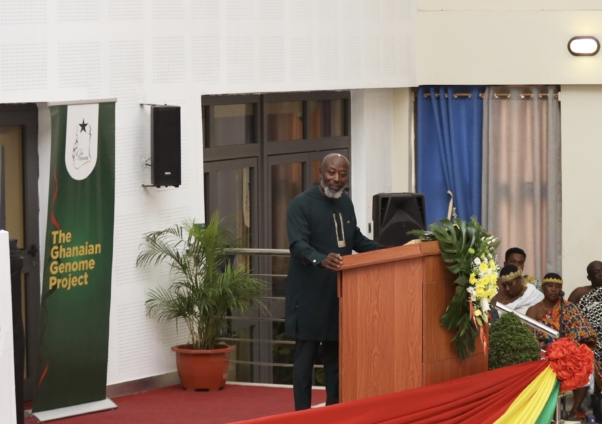
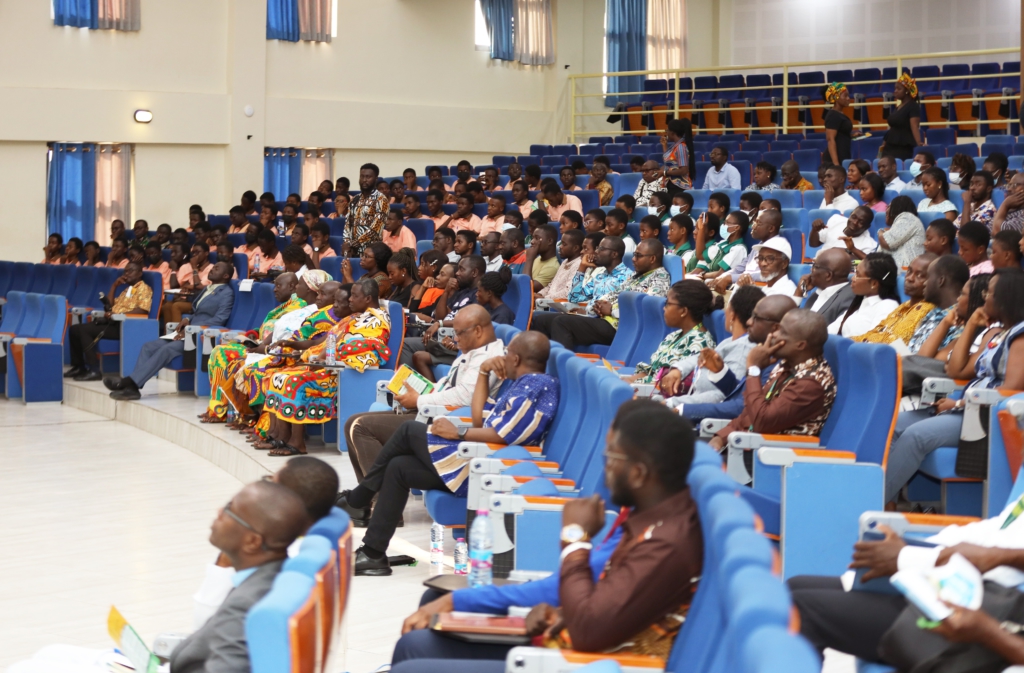
Prof Ofori-Acquah was speaking at a public lecture on the Ghanaian Genome (GhGenome) Project at the Kwame Nkrumah University of Science and Technology (KNUST), Kumasi.
Sickle Cell Disease (SCD) caused by inheritance of one sickle cell mutation, according to him, is the most common genetic disease and most of the cases are in Africa.
Over one percent of all babies with SCD have one parent who is negative for the sickle cell mutation; non-paternity may be assumed wrongly to be the reason for this phenomenon in most cases.
In Ghana, one out of every 50 babies born has sickle cell disease.
He said it is, therefore, the duty of experts to decode the Ghanaian genome to help people embrace sick conditions.
Prof Ofori-Acquah said Ghana ought to develop genetic programmes to diagnose rare diseases and to identify mutations that drive childhood cancers, adding that, it is a major developmental health challenge.
He mentioned that the West African Genetic Medicine Center and the African Center of Excellence have put up proposals to address developmental health challenges.
“A developmental challenge is a genetic disorder, and this can be done, but cannot be done alone in the universities or laboratory, this requires a national conversation,” he observed.
Over 400 children in Ghana are diagnosed with cancer every year - lymphomas and leukaemia (40 percent), RB1 gene mutations (15 percent), Wilms tumour (15 percent) and others constitute 30 percent.
He pointed out that the lack of genetic testing in Ghana means a death sentence for many children diagnosed with childhood cancers, saying “it is our duty to decode the mutations that cause childhood cancers in Ghana.”
The GhGenome Project is focused on training, research, as well as public and community engagement in all aspects of the human genome in Ghana.
Latest Stories
-
GPL 2025/26: Dreams FC stage stunning comeback to hammer Eleven Wonders
1 hour -
Livestream: The Probe examines Kumasi’s looming water crisis
1 hour -
MTN Ghana gears up to lead Africa’s AI revolution
1 hour -
Philanthropist Alhaji FuZak donates Da’wah bus to Ambariya Sunni community
1 hour -
GUTA calls for suspension of Publican AI system over trade disruptions
2 hours -
TTAG raises alarm over proposed recruitment of 7,000 teachers, demands national posting roadmap
2 hours -
Civilians feared killed after reports of air strike on Nigerian market
2 hours -
Bishop Simon Kofi Appiah installed as new Jasikan Diocese Bishop
2 hours -
Trump’s Strait of Hormuz blockade threat raises risks and leaves predicaments unchanged
2 hours -
US Court backs extradition of former MASLOC CEO Sedina Tamakloe-Attionu to Ghana
3 hours -
Seven arrested as NAIMOS dismantles illegal mining camp, seizes firearms at Boin River
3 hours -
Fire erupts at Madina Ritz Junction, destroys multiple wooden structures and containers
3 hours -
Daniel-Kofi Kyereh returns from long-term injury, registers assist for Freiburg U23
3 hours -
Knifeman calling himself ‘Lucifer’ slashes three at NYC’s Grand Central
3 hours -
Brands are built from within to without
3 hours