

Audio By Carbonatix
As Ghana strides boldly toward a digital future, it is important to recognise that the foundation of our nation's digital transformation lies in the quality of education we offer at the basic level.
Addressing a critical gap that threatens the very Success of our digitalisation policy: the lack of computers in our basic schools, particularly those in rural and poor communities is very crucial.
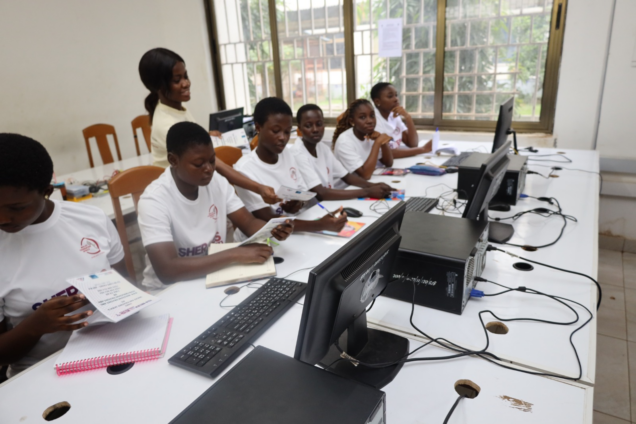
Today, ICT (Information and Communication Technology) is a compulsory subject across all basic schools in Ghana. However, the painful reality is that most pupils are being taught ICT concepts without ever seeing, let alone using, a real computer.
In many rural and underserved communities, ICT education is reduced to theoretical teaching students memorise the parts of a computer without experiencing its operations firsthand.
This situation is alarming and must be addressed with urgency and intentionality.
How can we genuinely prepare our children for the 21st-century global economy if we continue to deprive them of basic digital tools and experiences?
Teaching ICT without computers is like teaching swimming without water; it simply defeats the purpose.
The digital divide between urban and rural schools is widening, and unless we act decisively, we risk leaving an entire generation behind.
I am therefore proposing, and strongly appealing to the Minister of Education, Haruna Iddrisu and the entire government, to prioritise the provision of computers and laptops for basic schools across the country.

Special attention must be given to rural and economically disadvantaged communities, ensuring that no child is left behind because of their location or economic status.
We need a national intervention program to equip every circuit, district, and community with fully functioning computer laboratories.
This initiative must not be selective; it must cover everyone in the country to fulfill the objectives of our national digitalisation policy.
Equally important is the need for specialised and qualified ICT teachers at the basic school level. Training teachers to be confident, skilled, and innovative in delivering ICT lessons is fundamental.
Without well-prepared educators, even the best facilities will fall short of their intended impact.
Government, in partnership with teacher training colleges and universities, should design specialised ICT education programs to ensure that every basic school has at least one trained ICT teacher.
Capacity-building programs, continuous professional development workshops, and incentive packages must also be incorporated to attract and retain talent in this critical field.
If we commit ourselves to this vision, the results will be transformative. Our high school graduates will no longer be basic computer illiterates but young people equipped with essential digital skills aligned with 21st-century competencies.
They will be ready to innovate, create, and compete in a world increasingly driven by technology.
The benefits extend beyond individual success; they will accelerate Ghana's socio-economic development, strengthen our global competitiveness, and foster a new era of innovation and entrepreneurship.
It is time for decisive action. Ghana's digitalisation journey must start from the roots with our children. Let us ensure that every basic schoolchild, irrespective of their background, has access to the tools and training necessary to thrive in a digital world.
The Writer, Dr Patrick Essien, is a Lecturer at the University of Cape Coast, Founder of Molex Foundation Africa and an expert in Technical and Vocational Education and Training (TVET), and STEM Education.
Latest Stories
-
Catholic Bishops say moral values must match economic priorities in Anti-LGBTQ+ debate
15 minutes -
IGP Yohuno urges merit and hard work ahead of Police Academy exams
28 minutes -
Queendalyn Yurglee releases debut album ‘Clouds of Glory’
1 hour -
UDS moves to clear MPhil student wrongly linked to robbery case
1 hour -
Vodza Regatta 2026: Prof Audrey Gadzekpo rallies investors for coastal tourism growth
1 hour -
Introduction of 100 new Metro Mass buses won’t affect transport unions – GPRTU
1 hour -
Deputy Transport Minister backs Yellow Line traffic initiative
2 hours -
MTN Ashanti-Fest music concert set to hit Kumasi on Saturday
2 hours -
Authorities probe discovery of dead fish at Tema shipyard
2 hours -
Minority welcomes fuel tax cuts, demands accountability for GH¢1 levy
2 hours -
It remains a priority — Sam George on Anti-LGBTQ bill
2 hours -
Police arrest Nigerian national seen in viral videos wearing police uniforms
2 hours -
Free golf training empowers underprivileged girls in Accra
2 hours -
Why SIGA’s reset is not a market sin, but a national necessity
2 hours -
SIGA Directive: Beyond the theatre of institutional displacement
2 hours