

Audio By Carbonatix
The oil and gas industry in Ghana may, in the coming years, record a higher number of local participation.
More Ghanaian students and researchers pursuing Geophysical Sciences and Engineering are set to receive an in-depth technical know-how in oil and gas exploration.
Two geophysical software companies, GeoSoftware and dGB Earth Science, are assisting the Department of Physics, KNUST, to train students and researchers.
Local participation in the oil industry still remains an elusive subject in the government’s spectacle.
Despite the legislative instrument governing the subject, providing locals with the expertise for the industry is a daunting challenge.
Professor Akwesi Acheampong, an Associate Professor of Geophysics at the KNUST, says “considering Ghana’s oil and gas programme, there is a local content where those industries are supposed to employ Ghanaians.
“But these people have to be well trained in order to be able to fit in the industry. The fact that there is local content doesn’t mean anyone can be employed. Employees must be trained”.
Over the past decade, students resort to industrial training prior to their recruitment, a plight the management describes as worrying.
Due to the lack of teaching software, graduates are only equipped with the needed skills by the oil and gas companies.
“If you are to send students somewhere, you are limited. But if we have the software here and trained them here, there will be no limit,” Prof. Acheampong added.
With the three software donated by the dGB Earth Science and GeoSoftware companies, students will be trained comprehensively for the oil and gas industry.
The software would also aid researchers to expand the knowledge base in petroleum exploration in Ghana.
Dr. Cyril Boateng is a lecturer at the department of Physics. He explained the rationale for the gesture.
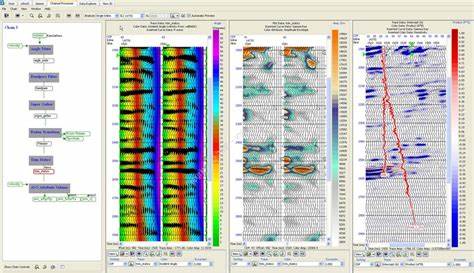
“The dGB Earth Science donated OpendTect seismic interpretation software for data interpretation. GeoSoftware is donating, HampsonRussell and PowerLog for seismic interpretation and reservoir characterization.
“Usually when a student graduates as a geophysicist, it takes them a year or two to be trained in the industry. But with this software available at the school, it will cut that experience,” he said.
The softwares are collectively worth $200,000.
Latest Stories
-
President Mahama is not sincere with Ghanaians on LGBTQ bill matter – Hassan Tampuli
14 minutes -
Gov’t to establish Prison Industrial Hub to equip inmates with income-generating skills – Prison Service boss
33 minutes -
Alhassan Tampuli donates cement, roofing sheets to support storm victims in Gushegu
33 minutes -
Alhassan Tampuli appeals for urgent support for storm victims in Gushegu
36 minutes -
The hypocrisy must stop; pass Anti-LGBTQ+ Bill now – Alhassan Tampuli to Mahama
40 minutes -
Imprisonment should be rehabilitative, not punitive – Ghana Prisons boss at UNGA
1 hour -
Ga Adangbe traditional priests petition Mahama over McDan aviation licence revocation
1 hour -
Anti-LGBTQ Bill: NDC’s arrogance is worrying – Hassan Tampuli
1 hour -
Let’s give OSP time to mature, not to scrap it – Hassan Tampuli
1 hour -
Nigeria convicts 386 Islamist militants in mass trials
2 hours -
Djibouti president wins election with 97.8% of vote, state media says
2 hours -
We don’t have mandate to deduct tax from rent allowance of security services personnel – Interior Ministry clarifies
2 hours -
Ablakwa receives Presidential Special Envoy on Reparations to advance global agenda
2 hours -
Christina Koch becomes first woman to travel around the moon on Artemis II
2 hours -
Epstein survivors’ calls to meet King Charles and Queen harder to ignore as US visit approaches
2 hours