

Audio By Carbonatix
The Ghana Health Service (GHS) has dismissed claims circulating on social media that insecticide-treated nets being distributed to primary school children contain harmful chemicals that pose a danger to human health.
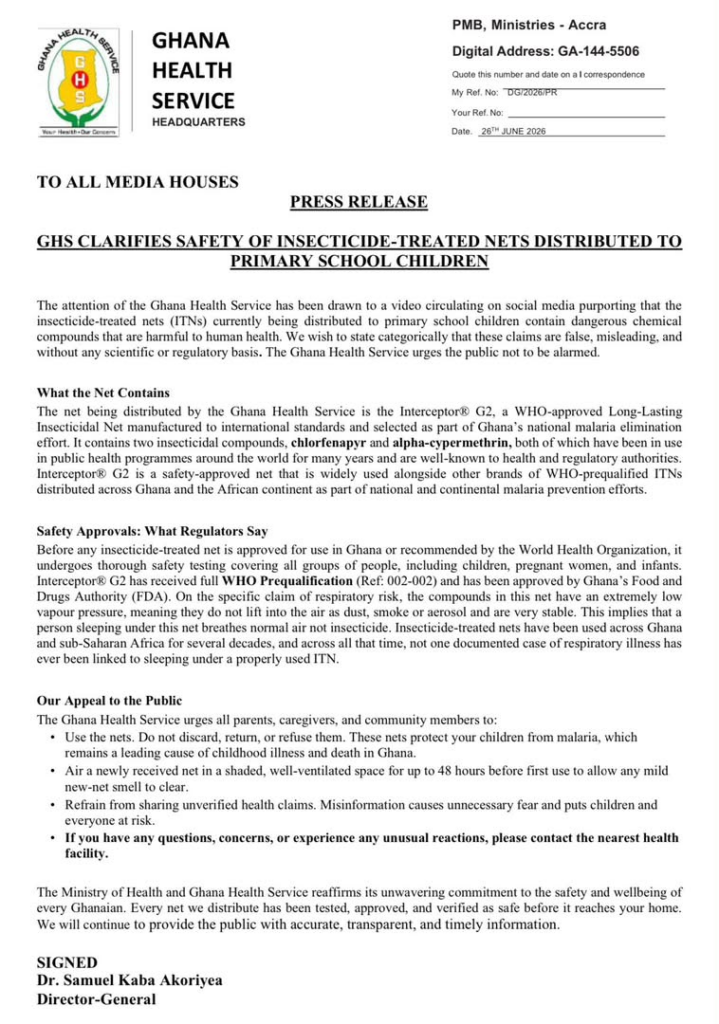
In a statement issued on Friday, June 26, the GHS described the allegations as false and urged parents and the public not to be alarmed, insisting that the nets have undergone rigorous safety testing and received approval from both national and international regulatory authorities.
"The attention of the Ghana Health Service has been drawn to a video circulating on social media purporting that the insecticide-treated nets currently being distributed to primary school children contain dangerous chemical compounds that are harmful to human health," the statement said.
The Service stressed that the claims were "false, misleading and without any scientific or regulatory basis".
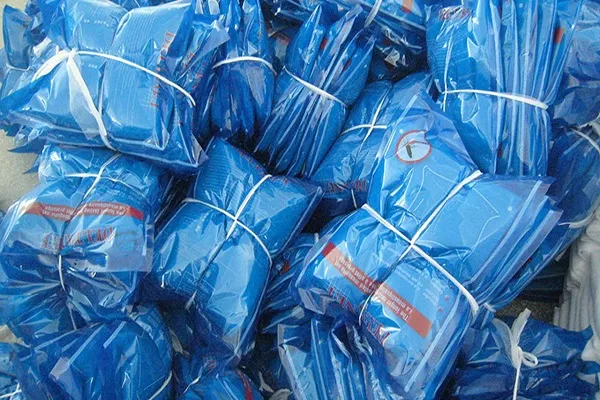
According to the GHS, the nets being distributed are the Interceptor® G2 Long-Lasting Insecticidal Nets (LLINs), which have been approved by the World Health Organisation (WHO) and selected as part of Ghana's national malaria elimination programme.
The Service explained that the nets contain two insecticidal compounds, chlorfenapyr and alpha-cypermethrin, both of which have been used in public health programmes around the world for many years.
"It contains two insecticidal compounds, chlorfenapyr and alpha-cypermethrin, both of which have been in use in public health programmes around the world for many years and are well known to health and regulatory authorities," the statement said.
The GHS further noted that the Interceptor® G2 net is one of several WHO-prequalified insecticide-treated nets being used across Ghana and other African countries to prevent malaria.
Addressing concerns about possible health effects, particularly respiratory risks, the Service explained that the insecticides used in the nets do not become airborne.
"On the specific claim of respiratory risk, the compounds in this net have an extremely low vapour pressure, meaning they do not lift into the air as dust, smoke or aerosol and are very stable," the statement said.
"This implies that a person sleeping under this net breathes normal air, not insecticide."
The GHS added that insecticide-treated nets have been used across Ghana and sub-Saharan Africa for decades without any documented cases linking their proper use to respiratory illness.
"Insecticide-treated nets have been used across Ghana and sub-Saharan Africa for several decades, and across all that time, not one documented case of respiratory illness has ever been linked to sleeping under a properly used insecticide-treated net," it stated.
The Service also assured the public that the Interceptor® G2 net had received full WHO prequalification and had been approved by Ghana's Food and Drugs Authority (FDA) before being distributed.
It noted that all insecticide-treated nets undergo extensive safety assessments covering all population groups, including children, pregnant women and infants, before they are approved for public use.
The Ghana Health Service appealed to parents, caregivers and communities to continue using the nets to protect children against malaria, which remains one of the leading causes of illness and death among children in Ghana.
It advised users to air newly received nets in a shaded, well-ventilated area for up to 48 hours before first use to allow any mild odour from the packaging to dissipate.
The Service also cautioned the public against spreading unverified health information online.
"Refrain from sharing unverified health claims. Misinformation causes unnecessary fear and puts children and everyone at risk," the statement said.
The GHS further encouraged members of the public who have concerns or experience unusual reactions after using the nets to report to the nearest health facility for medical advice.
Reaffirming its commitment to public safety, the Service said every insecticide-treated net distributed under the national malaria programme is thoroughly tested and verified before reaching households.
"The Ministry of Health and Ghana Health Service reaffirm their unwavering commitment to the safety and well-being of every Ghanaian. Every net we distribute has been tested, approved and verified as safe before it reaches your home," the statement said.
Latest Stories
-
Zenith Bank supports childhood cancer unit at Greater Accra Regional Hospital
4 seconds -
‘Who’s in charge doesn’t really matter; we’re all servants’ – John Boadu on leader of NPP
4 minutes -
Christa Pike’s prognosis still unclear after failed execution, lawyer says
19 minutes -
SLTF to advance fees for first-year students facing admission payment deadlines
22 minutes -
Ghana Institute of Architects calls for action to make adequate housing a human right
22 minutes -
BoG, Police arrest seven over cedi bouquets
23 minutes -
NCPTAs appeal to striking teachers to return to classroom
23 minutes -
Government plans engineered landfills and waste transfer stations nationwide – Ayariga
25 minutes -
Second edition of Prince Amoako Jr giveback project scheduled for December
27 minutes -
Muntaka commissions polyclinic at Ayigya Zongo to address healthcare challenges
35 minutes -
World Habitat Day: Adequate housing for all – a right we must build
36 minutes -
Ghana Institute of Architects urges government to adopt coordinated agenda for affordable housing
37 minutes -
Yutong bus extensively damaged by fire at Gbogdaa
37 minutes -
Spanish PM Sánchez calls early election after housing protests
43 minutes -
GH¢3,000 monthly allowances for Paramount Chiefs and Queen Mothers fully paid – Ayariga
43 minutes