

Audio By Carbonatix
The Ghana Incentive-Based Risk-Sharing System for Agricultural Lending (GIRSAL) through its Technical Assistance Facility (TAF) is partnering with the National Banking College (NBC) under its ‘Agriculture and Agribusiness Lending Course for Staff of Financial Institutions’ to train staff of financial institutions on agriculture financing.
The TAF is a key pillar of GIRSAL’s strategy and aims at strengthening the institutional capacity of staff of participating financial institutions in assessing loan applications from agribusinesses and hence help reduce the risk associated with lending to farmers and agriculture projects.
This initiative is supported by Alliance for a Green Revolution in Africa (AGRA).
Training Modules
Due to the COVID-19 pandemic, the first batch of the training program was conducted virtually between August 11 and September 18, 2020, and was attended by 33 participants from 12 financial institutions.
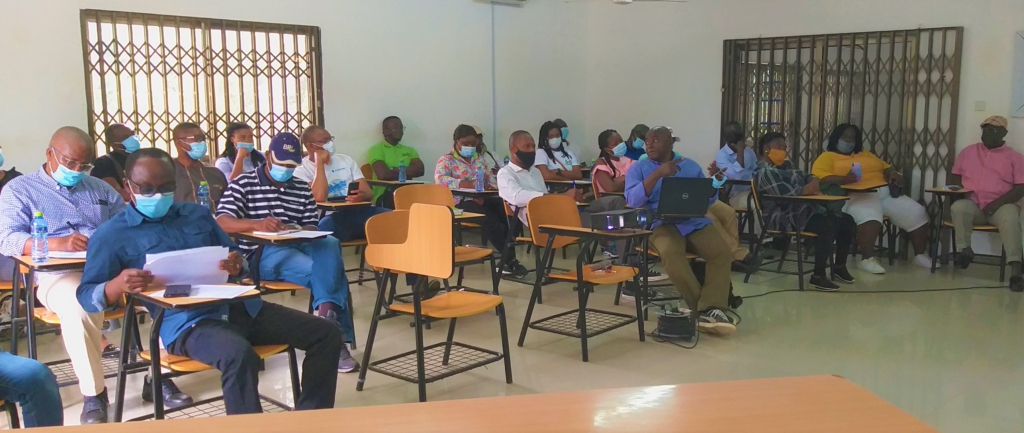
The training combined classroom training, case studies and a field trip to an agribusiness. The 3-module training program was facilitated by well-experienced industry resource persons.
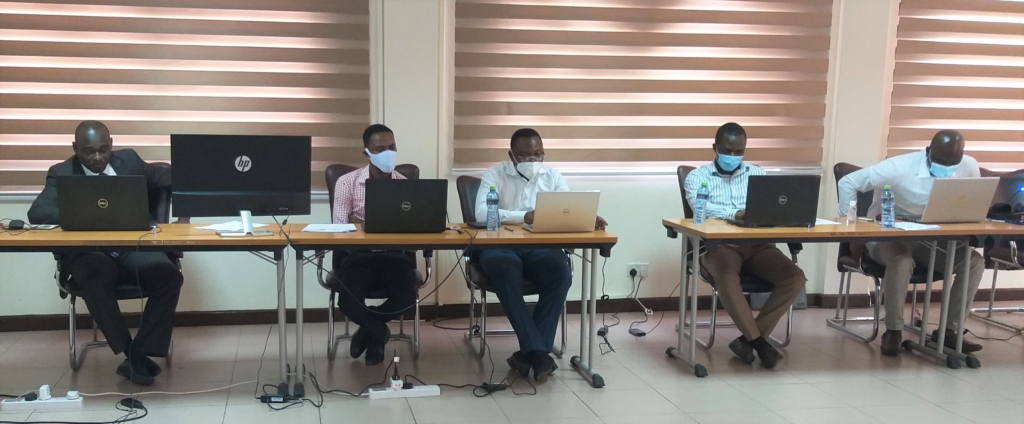
Modules 1 and 2 of the course covered the agribusiness environment, value chains in Ghana, and agricultural loan appraisal techniques, and targeted agriculture desk officers, relationship managers, credit risk officers and credit analysts.
Module 3 covered managing agriculture loan portfolios, with lessons ranging from agriculture insurance to commodity finance.
It targeted senior management and portfolio managers. The next round of the training is scheduled for the end of the year.
Field Trip to Golden Exotic Ltd
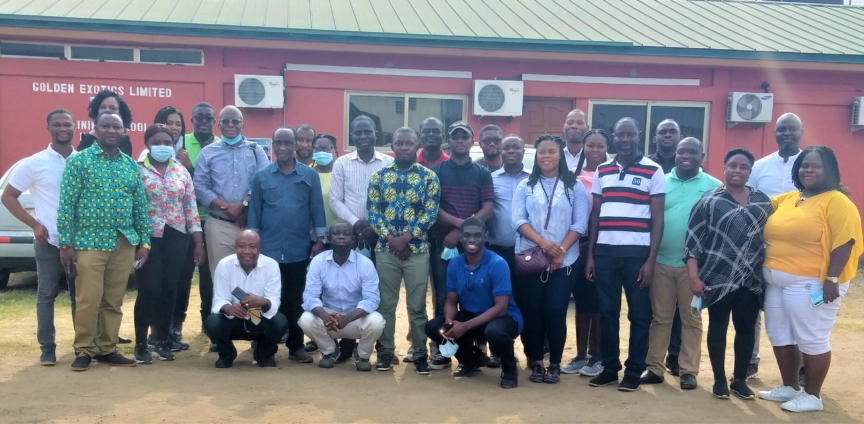
Participants visited Golden Exotics Ltd Banana plantation at Asutsuare (the largest banana plantation in Ghana) where they engaged the management on operational and financing challenges and opportunities.
There was also an interactive simulated credit application assessment session to identify, analyze, evaluate, and propose mitigation measures to value chain risks.
The field visit helped participants translate the classroom training to practical on-field operations of a typical agribusiness.
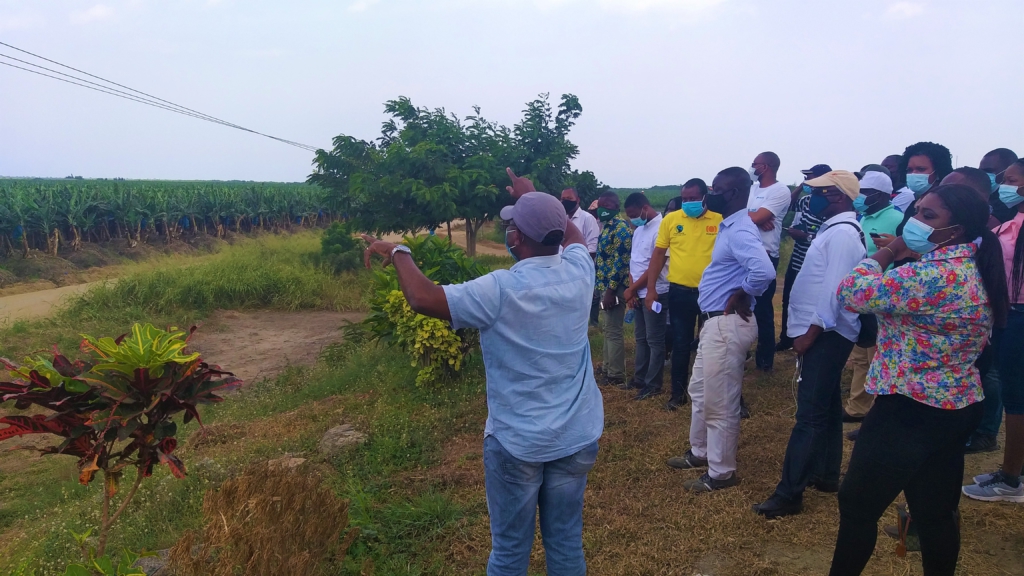
It also allowed participants to observe the good agronomic practices, post-harvest operations and learn the challenges and opportunities of large-scale farming operations as well as its financing and market environment.
The trip produced positive feedback from the participants who found it very educative and insightful and admitted the modules are very relevant to their work.
Latest Stories
-
Diaspora Nasara Caucus congratulates Mohammed Ali Suraj, new NPP executives
45 minutes -
Dr Antwi-Boasiako’s cybersecurity book showcased at UN crime prevention congress
47 minutes -
We will empower the grassroots and protect every vote – NPP’s 1st Vice Chair Kojo Bamba
57 minutes -
I do not see myself as better than anyone – NPP’s 1st Vice Chair Kojo Bamba
1 hour -
Police blur the line between invitations and arrests – Reindorf Twumasi Ankrah
2 hours -
Turning invitations into arrests is making citizens reluctant to assist police – Twumasi Ankrah
3 hours -
The Traffitech-GH SMS spot-fine system: The good, the sad, and the funny – Bright Simons writes
3 hours -
Hawa Koomson pledges experienced and mature leadership of NPP women’s wing
4 hours -
Young woman found dead at Kasoa Peace Town
4 hours -
Playback: The Law examined lawful arrest in Ghana
5 hours -
Mahama urges African governments to treat healthcare as an investment, not budget cost
5 hours -
Bawumia congratulates John Boadu and new NPP executives, pledges support ahead of 2028
5 hours -
Aksa Energy delegation pays courtesy call on GRA Commissioner-General
5 hours -
‘No talent should be left out’ – Bawumia pledges inclusive NPP campaign for 2028
6 hours -
Prof. Mike Oquaye recounts how he blocked the Special Prosecutor’s attempt to arrest Bawku Central MP
6 hours