


Audio By Carbonatix
AGRA President Dr Agnes Kalibata says action is needed from agricultural sector stakeholders to tackle post-harvest farm losses on the African continent.
Speaking at the second graduation of 78 Food Systems Leaders from AGRA’s Center for African Leaders in Agriculture (CALA) Programme in Addis Ababa, Ethiopia, she underscored the critical importance of addressing post-harvest losses in agriculture.
She emphasized the need for innovative solutions and strategic interventions to minimise post-harvest losses, a challenge that continues to impede the agricultural sector's growth and resilience across the African continent.
“Fifty per cent of CALA graduates are looking to solve post-harvest losses. Some of the food that we lose in the farms, if we save them, we won’t be saying that Africa has 300 million hungry people.
"If we work to solve post-harvest losses by 40%, we will be saving a lot on the production side and shift the narrative,” Dr. Kalibata, said.
CALA is an AGRA-led initiative and is delivered in collaboration with the African Management Institute (AMI) and USAID’s Policy LINK.
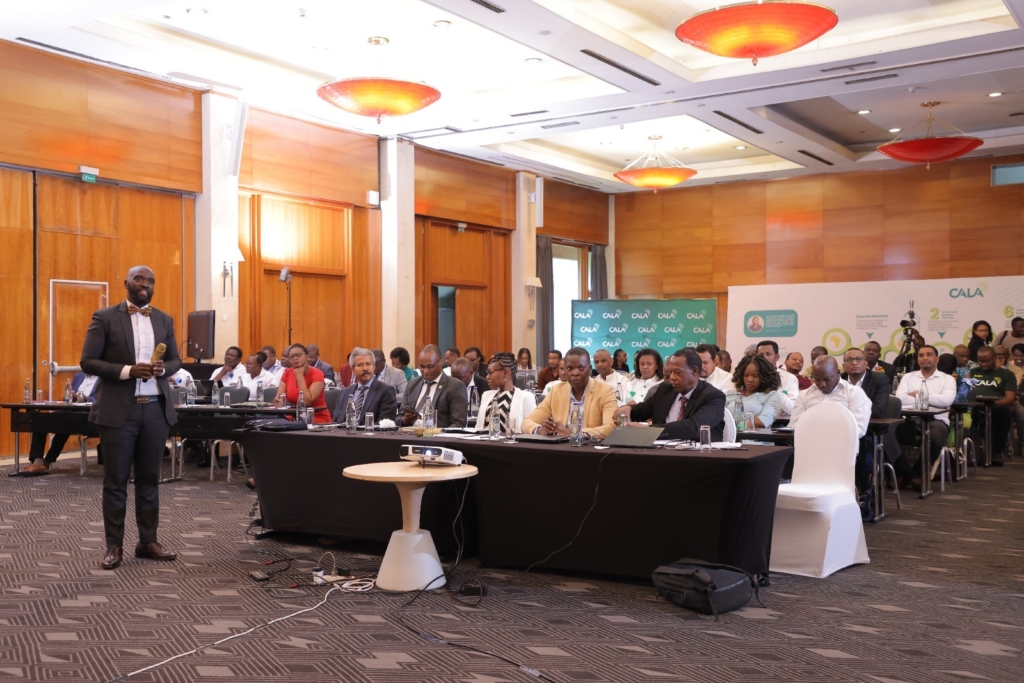
The 78 leaders drawn from the public, private sector, and civil society completed a 16-month collaborative, hands-on, and tailored experience for senior and rising leaders in Africa’s agriculture sector.
They spent the duration of the program honing their leadership skills and acquiring knowledge to tackle pressing issues facing the agricultural landscape.
The CALA program, designed to empower and nurture the next generation of agricultural leaders, focuses on equipping participants with the skills and insights needed to drive positive change in the sector.
It is designed for leaders spearheading and directly implementing country-level agriculture initiatives and equips participants with practical leadership skills for effective implementation of national flagship programs.
Berekum East Municipal Agriculture Director Salley Alhassan, who is also a member of Project Agriexcellence Ghana, was one of the graduates.
Selected from over 1,000 applicants, the graduates represent the continent’s most dynamic leaders in agriculture, with 45% of the leaders drawn from government agencies across the eight countries, 26% from the private sector, and 29% from civil society.
“As leaders in your respective organisations and fields, you have the opportunity to play a pivotal role in aligning your country’s national priorities to the regional priorities to ensure that the transformation of food systems is grounded in the realities of local communities,” said Prof. Jean Jacques Muhinda, Regional Head for East and Southern Africa, AGRA.
The graduating delegates now join the inaugural cohort of 80 delegates in the prestigious CALA alumni community, continuing their learning and collaboration.
Latest Stories
-
Young Positivist Writes : My Experience with GCLP
1 hour -
Strong Day 1 turnout sets tone for Day 2 of Republic Bank-JoyNews Habitat Fair Clinic
2 hours -
Ghana Army warns new soldiers against social media misuse, uniform abuse
2 hours -
AMA calls for science-led action to tackle environmental health risks in Accra
2 hours -
NPP Canada Organizer BigMo urges Diaspora to support Kodua Frimpong
3 hours -
He entered at eight. He is now 16: Ghana’s children growing up in prayer camps
6 hours -
‘Development must not always begin from Accra’ — Anwelle Foundation launched in Jirapa
6 hours -
PKO trio eye victories at Odwira Festival
8 hours -
346 Ghana Navy recruits pass out after 26 weeks of intensive training
9 hours -
Newsfile to discuss EOCO-MP arrest, drug trafficking, speech arrests and $235m water debt
9 hours -
JoyNews gets results as listeners raise GH¢40,000 to help 17-year-old student with cerebral palsy attend SHS
10 hours -
Vice President calls for stronger local pharmaceutical production to reduce medicine imports
10 hours -
The brewing tension at KNUST; Beware the Ides of October….
10 hours -
Health Ministry moves to integrate traditional medicine into mainstream healthcare
11 hours -
550 pupils in Kintampo South get educational lifeline as ‘Seeds of Hope’ reaches farming communities
11 hours