

Audio By Carbonatix
Ghana’s food security will receive a good boost if the country’s first genetically modified crop gets environmental release approval from government, the scientist leading the project has said.
The National Biosafety Authority of the Environment, Science, Technology, and Innovation Ministry announced in February that it has received a request from the Savannah Agricultural Research Institute (SARI) of the Council for Scientific and Industrial Research (CSIR) for environmental release approval of a GM cowpea or beans variety.
The gazette notification announcing the process said if approved, the request will allow for the “placing on the market of genetically modified Pod Borer Resistant (PBR) cowpea in Ghana.”
The gazette quotes the application to the Biosafety Authority as saying farmers and consumers will benefit from PBR cowpea as a result of higher yields, lower costs of inputs, and greater on-farm safety because of reduced pesticide usage, and decreased pesticide residue on the beans.
The authority says it is reviewing the application together with relevant regulatory agencies and independent experts. A decision is expected in or around August 2022.
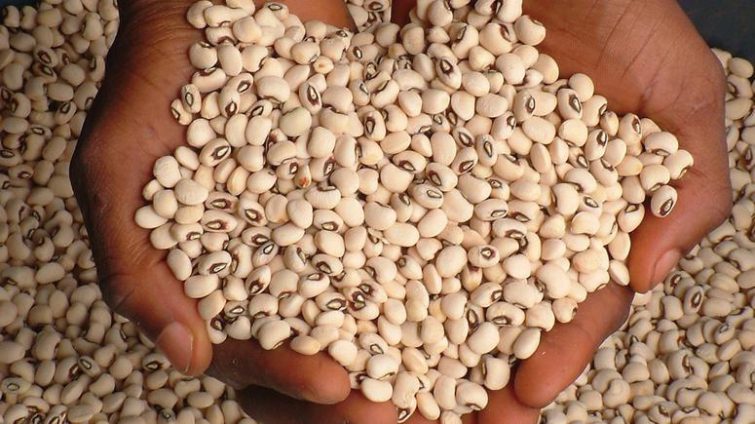
Dr Jerry Nboyine, who is the principal investigator in charge of the GM cowpea project, said the variety will help farmers cut down on the amount of spray they use on cowpea farms every season from more than eight times to about two times.
“Cowpea or beans. Your 'yo ke gari' popularly called red-red or gari and beans are made from it. Most of us are excited to see it in our dishes. But we don’t know farmers' hustle to produce it.
"From planting to harvest, even in storage, even in storage, this particular crop is loved by pests…,” he explained.
“What scientists were able to do with the help of biotechnology tools is to identify a particular gene responsible for resistance and it was introduced into crops.
"Cowpea is one of them… It has helped make the cowpea resistant to the maruca pests,” he added.
The application for environmental release follows almost 10 years of research.
Chief Executive Officer of the National Biosafety Authority Eric Okoree says the authority is well-positioned to be able to appropriately scrutinize the GM cowpea and ensure it benefits Ghanaians.
“The authority was established in 2011 and implemented in 2015. As soon as it was established, the then biosafety committee gave two approvals for GM cowpea and GM rice. And the permits were given to the CSIR. The research has been ongoing, and the authority is monitoring it,” he said.
“Now Ghana has a law in place to regulate GMOs. An authority has been established. And our aim is to ensure the safety of health and the environment. And when that is done, all the benefits of GMOs will be realised,” Mr Okoree added.
Latest Stories
-
After more than 14 years at Atletico Madrid, what next for Simeone?
2 hours -
Conquering the World – Building on the foundations laid by Otto Addo
2 hours -
[Watch Live] Kwaw Kese, Kwami Eugene, Tinny, Keche and others thrill fans at Gomoa Easter Carnival
2 hours -
Gomoa Easter Carnival: Experts charge indigenes to own festival to ensure sustainability
3 hours -
Gomoa Easter Carnival: Edem Agbana and Joy Prime fans shower festival with huge endorsements
5 hours -
Gov’t to overhaul free zones into manufacturing hubs for local production – Trade Minister
6 hours -
Ghana losing $2.5bn yearly from raw exports – Trade Minister reveals
6 hours -
Mahama unveils plans for Kwahu Airport, Convention Centre
6 hours -
World’s oldest leader, Paul Biya to get a deputy for first time in 43-year rule
6 hours -
Search for missing US airman continues as Trump threatens ‘hell’ if Iran does not reach deal
6 hours -
US says it has arrested relatives of late Iranian general Qasem Soleimani
6 hours -
La Liga: Real Madrid’s title hopes hang in the balance as Mallorca snatch stoppage-time winner
6 hours -
FA Cup: Haaland hat-trick powers Man City past Liverpool into semi-finals
6 hours -
FA Cup: Chelsea thrash Port Vale to reach Wembley semi-final
7 hours -
Gov’t to boost tourism in coastal communities through infrastructure, sanitation – Vice President
7 hours