

Audio By Carbonatix
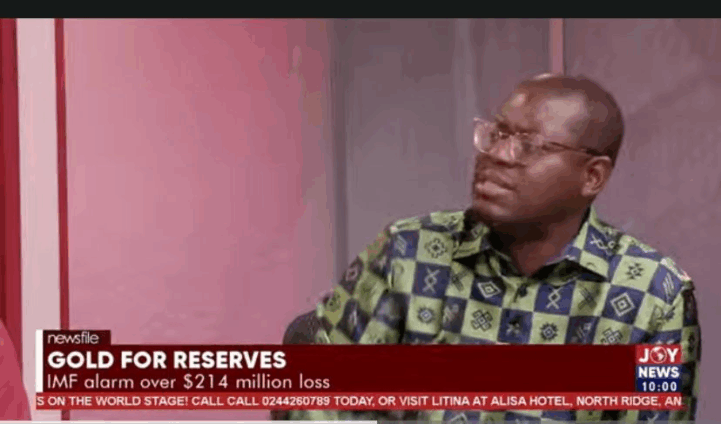
Honorary Vice President of IMANI-Africa, Bright Simons, has raised concerns over transparency, competition, and financing structures within Ghana’s gold trading and aggregation system, warning that the current setup may disadvantage private sector participants.
Speaking on JoyNews' Newsfile on Saturday, January 3, Mr. Simons said once the International Monetary Fund (IMF) identified losses in the Gold-for-Reserves programme as trading losses, responsibility could not be attributed to only one side of the transaction.
“If one institution is responsible for buying and another for selling, then responsibility is shared. At the very least, this is a joint effort,” he argued.
He questioned whether pricing mechanisms on both the buying and selling sides, particularly discounts and premiums offered by off-takers, were competitive and transparent.
“The only way to know whether off-taker pricing is competitive is through an open and transparent bidding platform,” he said.
According to him, feedback from self-financed gold aggregators suggests they are struggling to compete under the current system, especially against an aggregator that enjoys financing advantages.
“You have one aggregator receiving funding from the Bank of Ghana and another sourcing funds commercially from banks. One pays interest, the other does not. Who do you think will win?” he asked.
He dismissed claims that government funding is interest-free, insisting that such financing still carries economic cost, even if not explicitly priced.
Mr Simons also raised concerns about the aggregator licensing process, describing it as opaque and lacking transparency.
“Applicants are told that only one entity qualifies, but there is no publicly known evaluation mechanism,” he said.
He compared the situation to the telecoms sector, where the National Communications Authority (NCA) uses auctions to allocate scarce resources, allowing for greater transparency and public confidence.
“In this case, the public has no visibility. We are simply told who has been selected, without knowing the criteria or process,” he added.
He called for greater openness, competitive bidding, and clearer rules, warning that without reform, the system risks inefficiency and public mistrust.
Latest Stories
-
Nigeria’s Seplat Energy resumes operations as oil workers halt strike action
41 minutes -
Nigeria launches manhunt after abductions by bandits in northwest Zamfara
50 minutes -
Kenya fuel executives resign as state probes supply chain irregularities
1 hour -
Senegal bans ministers from foreign travel as oil price rise bites
1 hour -
Nigerian army rescues 31 hostages after church attack
1 hour -
Spain’s huge pork industry seeks salvation from swine fever threat
2 hours -
Trump declares victory after rescue but threats to US operation in Iran still loom
2 hours -
US Secret Service investigates reports of gunfire near White House
2 hours -
Current account stability to mitigate pressure on cedi; currency to end year at GH¢11.40 to a dollar
2 hours -
Oil back above $110 after expletive-laden Trump threat to Iran
2 hours -
T-bills auction: Government records 32% undersubscription; interest rates rise again
2 hours -
Economy to remain relatively insulated from fallout of US–Iran conflict – Fitch Solutions
2 hours -
Leeds draw Chelsea, Man City face Southampton in FA Cup semis
4 hours -
Messi and Suarez score as Inter Miami draw at new stadium
4 hours -
Liverpool ‘gave up’ in FA Cup exit – Van Dijk
4 hours