

Audio By Carbonatix
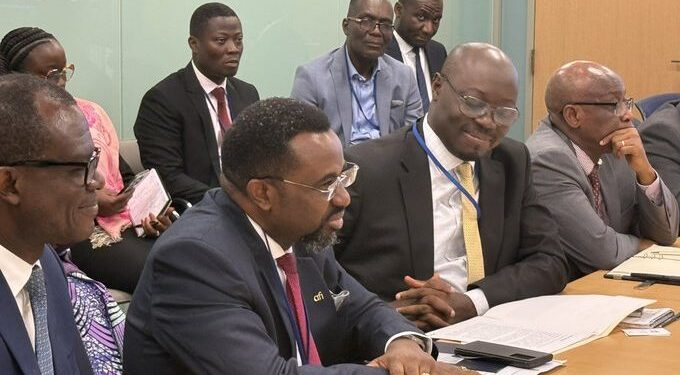
The Governor of the Bank of Ghana, Dr Johnson Pandit Asiama, has disclosed that government has begun steps to recapitalise the central bank, with a bond already issued to support the process.
According to him, the government remains the majority shareholder of the central bank and is legally mandated to restore its capital position.
“Government has given us a bond to kick-start the recapitalisation process. Government is the main shareholder, and the law mandates the government to recapitalise the Bank of Ghana, and there is an Memoranda of Understanding to that effect,” he stated.
The recapitalisation follows the significant impact of the Domestic Debt Exchange Programme, which led to losses on the central bank’s holdings of government securities and weakened its balance sheet. The programme formed part of broader fiscal and monetary reforms aimed at restoring macroeconomic stability.
Dr Asiama explained that the bond issuance is part of a structured plan agreed between the central bank and government to gradually rebuild capital buffers and ensure the Bank remains financially sound.
He further assured that despite these challenges, the central bank remains committed to its core mandate of maintaining macroeconomic stability.
“We will continue to meet our mandate of price and exchange rate stability,” he emphasised.
The Governor added that recent policy measures, including a 150 basis points cut in the policy rate to 14 percent, reflect growing confidence in the economy’s recovery path. He noted that easing inflationary pressures, relative exchange rate stability, and improved external sector conditions have created room for such policy adjustments.
In addition, the Bank reported improvements in the financial sector, with total assets of the banking industry increasing and non-performing loans declining due to a reduction in the stock of impaired loans. However, credit growth to the private sector remains subdued, highlighting the need for sustained policy support to stimulate lending.
The recapitalisation effort is therefore expected to reinforce the Bank of Ghana’s ability to sustain recent economic gains, support financial sector stability, and enhance the effectiveness of monetary policy in driving growth.
Latest Stories
-
Producer price inflation stood at 1.4% in February 2026
4 hours -
NPLs remain key risk to banking industry – BoG
4 hours -
Consumer confidence, business sentiments improve – BoG
4 hours -
BoG assures cedi stability despite Middle East crisis
4 hours -
Sony removes 135,000 ‘deepfakes’ of its artists’ music
5 hours -
Winston Yeboah Danso supports Fafali Girls with GH₵10,000 donation ahead of Street Child World Cup
5 hours -
Oil nears $110 a barrel after gas field strike
5 hours -
Ghana’s economy now resilient enough to withstand external shocks – Mahama
5 hours -
Cocoa price adjustment painful but necessary to sustain sector – COCOBOD CEO
5 hours -
No single African country will be treated in a manner that is preferential or advantageous – Patrice Motsepe
6 hours -
Removal of GH₵1 levy won’t automatically lower pump prices – Arko Nokoe
6 hours -
Decision to strip Senegal of AFCON title reflects independence of institutions – CAF President
6 hours -
Energy Committee Vice Chair assures Ghanaians on stability amid fuel prices
6 hours -
Mahama hails 48 Engineer Regiment after successful disaster recovery mission in Jamaica
6 hours -
Rising crude prices expose flaws in ‘One Ghana Cedi’ levy – NPP MP
7 hours