

Audio By Carbonatix
The Government of Ghana has announced an ambitious total revenue and grants target of GH¢268.1 billion for the 2026 fiscal year, representing a growth of over GH¢41 billion or an 18.3 percent increase over the 2025 outturn of GH¢226.5 billion.
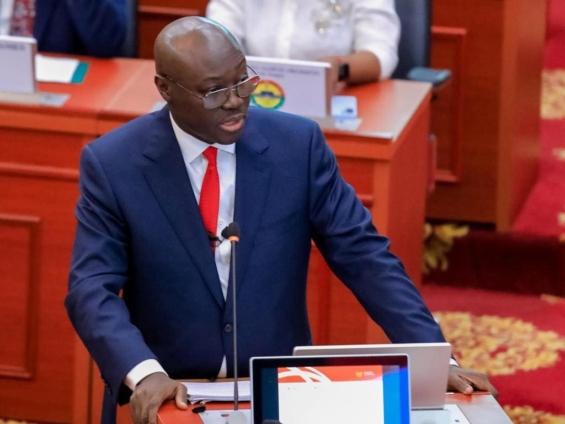
Presenting the 2026 Budget Statement and Economic Policy to Parliament, Finance Minister Dr Cassiel Ato Forson said the new target reflects the government’s commitment to consolidate macroeconomic stability and sustain the gains made under the “Reset Agenda”.
“Mr. Speaker, Total Revenue and Grants for 2026 is projected at GH¢268.1 billion, up from GH¢226.5 billion in 2025. This represents a strong revenue performance supported by new non-oil tax policy measures expected to yield at least 0.6 percent of GDP”, he said.
According to the 2026 budget statement, non-oil tax revenue will remain the largest source of government income, projected at GH¢216.1 billion, an increase of 18.8 percent over 2025 levels.
“Non-oil tax revenue, which accounts for about 80.6 percent of total revenue, is projected at GH¢216.1 billion, reflecting a robust 18.8 percent annual growth. 720. Mr Speaker, non-tax revenue (non-oil) is estimated at GH¢20.9 billion, representing about 7.8 percent of domestic revenue. Of this amount, GH¢18.2 billion will be retained by MDAs to support operations, while GH¢2.8 billion will be lodged into the Consolidated Fund. The IGF Capping Policy is expected to yield an additional GH¢329.6 million to the budget", he said.
This growth is expected to be driven by improvements in the Value Added Tax (VAT) regime, enhanced customs administration, and the rollout of a digital compliance monitoring system across major sectors.
Non-tax revenue, including fees, levies, and internally generated funds (IGFs), is projected at GH¢20.9 billion, while oil revenue is expected to contribute GH¢13.6 billion, supported by stable crude prices averaging around US$70 per barrel. Grants and other inflows from development partners are expected to supplement domestic resources.
Dr Forson emphasised that the government’s revenue strategy for 2026 will focus on equity and simplicity, ensuring that the tax system supports business growth while securing fiscal space for social and capital investments.
The finance minister also outlined several policy interventions to achieve the new revenue target, including VAT reforms, including the abolition of VAT on mineral exploration and the extension of zero-rated VAT on local textiles to 2028, to promote investment and protect jobs.
With revenue targets set high, the government faces the dual challenge of mobilising resources while ensuring that taxation does not stifle the private sector’s capacity to create jobs and growth.
Latest Stories
-
GPL 2025/26: Dreams FC stage stunning comeback to hammer Eleven Wonders
1 hour -
Livestream: The Probe examines Kumasi’s looming water crisis
2 hours -
MTN Ghana gears up to lead Africa’s AI revolution
2 hours -
Philanthropist Alhaji FuZak donates Da’wah bus to Ambariya Sunni community
2 hours -
GUTA calls for suspension of Publican AI system over trade disruptions
2 hours -
TTAG raises alarm over proposed recruitment of 7,000 teachers, demands national posting roadmap
2 hours -
Civilians feared killed after reports of air strike on Nigerian market
2 hours -
Bishop Simon Kofi Appiah installed as new Jasikan Diocese Bishop
2 hours -
Trump’s Strait of Hormuz blockade threat raises risks and leaves predicaments unchanged
3 hours -
US Court backs extradition of former MASLOC CEO Sedina Tamakloe-Attionu to Ghana
3 hours -
Seven arrested as NAIMOS dismantles illegal mining camp, seizes firearms at Boin River
3 hours -
Fire erupts at Madina Ritz Junction, destroys multiple wooden structures and containers
3 hours -
Daniel-Kofi Kyereh returns from long-term injury, registers assist for Freiburg U23
3 hours -
Knifeman calling himself ‘Lucifer’ slashes three at NYC’s Grand Central
4 hours -
Brands are built from within to without
4 hours