

Audio By Carbonatix
Government is considering the reintroduction of the Electronic Transaction Levy percentage charge from 1.75 % to 1.5%.
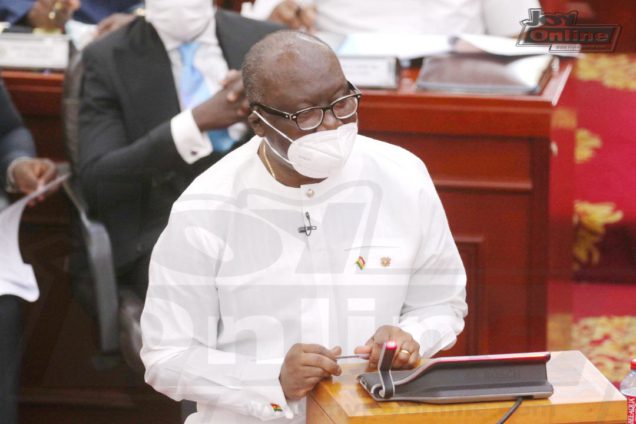
This comes after the Deputy Majority Leader, Alexander Afenyo-Markin revealed that the Finance Minister, Ken Ofori-Atta, will withdraw the controversial E-levy in Parliament and re-introduce same.
Mr Markin made this known whiles presenting the business statement for next week to the House.
He said the e-levy will be withdrawn by government on Tuesday February 15, 2022.
He also noted that it will further be reintroduced after it has been reviewed on Friday, February 18, 2022.
Members of Parliament were however encouraged to “participate fully in the consideration of the Bill for the passing of a good piece of legislation for the benefit of all.”
Earlier, government had hoped to get the buy-in of the NDC MPs for the Bill to be passed.
This was after telecommunication companies agreed to reduce their 1% charge on transactions by 0.25%.
If this was upheld, the rate would be reduced from 1.75% levy to 1.5%.
But it was rejected by the Minority.
About E-levy
Finance Minister Ken Ofori-Atta, presenting the 2022 budget on Wednesday, November 17, announced that the government intends to introduce an Electronic Transaction Levy (e-levy).
The levy, he revealed, is being introduced to “widen the tax net and rope in the informal sector”. This followed a previous announcement that the government intends to halt the collection of road tolls.
The proposed levy, which was expected to come into effect in January, 2022, is a charge of 1.75% on the value of electronic transactions. It covers mobile money payments, bank transfers, merchant payments, and inward remittances. There is an exemption for transactions up to GH¢100 per day.
Explaining the government’s decision, the Finance Minister revealed that the total digital transactions for 2020 were estimated to be over GH¢500 billion (about $81 billion) compared to GH¢78 billion ($12.5 billion) in 2016. Thus, the need to widen the tax net to include the informal sector.
Although the government has argued that it is an innovative way to generate revenue, scores of citizens and stakeholders expressed varied sentiments on its appropriateness with many standing firmly against it.
Even though others have argued in support of the levy, a section of the populace believe that the 1.75% e-levy is an insensitive tax policy that will deepen the already prevailing hardship in the country.
Latest Stories
-
Mahama endorses ADB at Kwahu Business Summit
1 hour -
Every gram will be tracked – Gold Board unveils traceability push to deal with illegally-mined gold
1 hour -
Analysis: Why the Bank of Ghana sold half its gold reserves
1 hour -
Buy wrong gold, face prosecution – Gold Board CEO cracks down on rogue dealers
1 hour -
Africa pushes integrated health agenda ahead of One Health Summit in Lyon
2 hours -
We own the strategy, its not head office decision – GCB MD positions bank as engine of Ghana’s economy
2 hours -
No more waiting for head office – GCB boss pushes Ghana-first banking
2 hours -
Mahama lauds Julius Debrah for shaping Kwahu Business Forum
3 hours -
Why actors beg in difficulty – Patience Ozokwor on Nollywood financial struggles
3 hours -
Any man who apologises to woman deserves to suffer – Brymo
3 hours -
Nigerian artistes no longer put effort into making music – Omah Lay claims
3 hours -
‘I’m now skeptical about going into politics’ – Davido
3 hours -
Nigeria’s Seplat Energy resumes operations as oil workers halt strike action
4 hours -
Nigeria launches manhunt after abductions by bandits in northwest Zamfara
4 hours -
Kenya fuel executives resign as state probes supply chain irregularities
4 hours