

Audio By Carbonatix
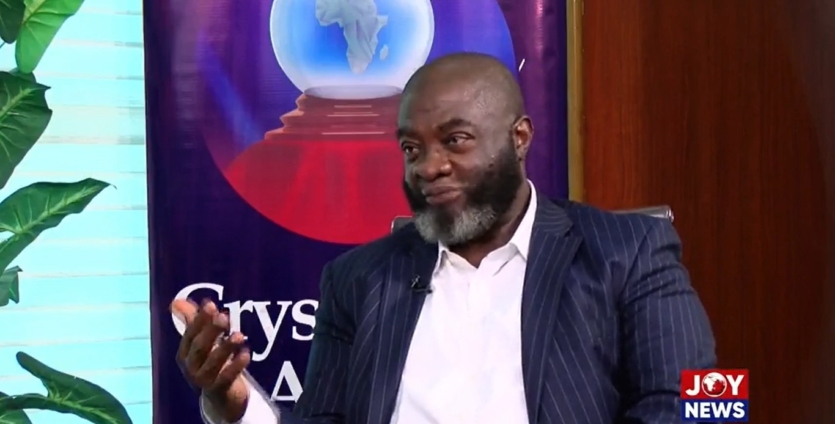
A Senior Partner at AB & David and Business Strategist, David Ofosu-Dorte, has expressed concerns about the conventional approach adopted by governments during challenging economic times.
Speaking on JoyNews' PM Express, he argued that the typical strategy involves restoring financial and macroeconomic stability, but this often comes at the expense of stifling local businesses.
"Anytime we've had challenges with our economy, the typical approach is to restore financial stability and macroeconomic stability. But this approach ends up destroying the micro ones.
"So, we often tend to create macroeconomic stability by overtaxing the micro-economy. That is a big challenge and it constantly prevents businesses from scaling up," he said on Thursday.
Mr Ofosu-Dorte's comments come amid the introduction of new tax policies set to role out this year because the government is currently under an IMF programme to resuscitate the economy.
He highlighted the dilemma faced by micro-enterprises, emphasising that macroeconomic stability is often influenced by external forces, especially when the government resorts to borrowing.
Mr Ofosu-Dorte then urged local businesses to develop strategies that minimise their dependence on government policies for growth.
"The extent that the macro is often dictated by external forces, especially when we go to borrow. So, micro-enterprises should be putting their strategies in a way that, as much as possible, causes them to depend less and less on the policies of the government. This is because the more you depend on the policies of the government, the more they affect you,"he explained.
The Business Strategist encouraged businesses to take a proactive approach and reduce reliance on government policies, suggesting that this would contribute to greater resilience and sustainability in the face of economic challenges.
"In any sector that you find yourself in, you can depend less on government policies or expect government policies to be the basis of your growth, as much as you can depend less on it, the better," he advised.
Latest Stories
-
Julius Debrah, ‘man to beat’ as NDC’s James Agbey dismisses Musah Dankwah’s polls
5 minutes -
GPRTU in Savannah Region to protest alleged eviction in Damongo
34 minutes -
Re: Reinsurance does not replace process — A response to the SIGA–SIC defence
49 minutes -
Gender Ministry supports Harriet Amuzu in ongoing abuse case
1 hour -
AG joins plaintiff to scrap OSP ?: We should be mindful of the mischief in this – Bobby Banson
1 hour -
Samson Lardy Anyenini questions willingness of Attorneys-General to prosecute political colleagues
1 hour -
It is only fair the OSP is heard in Supreme Court case – Bobby Banson
1 hour -
Asiedu Nketia resumes Ashanti tour, second leg kicks off on Sunday
1 hour -
NLA denies salary cut claims, threatens legal action over reports
1 hour -
BoG Governor honoured for stabilising cedi, improve inflation
2 hours -
Kyebi Easter Homecoming 2026: A resounding success!
2 hours -
RNAQ divorce ruling: What the noise is hiding
2 hours -
Trade Minister applauds GUTA as a pillar of economic growth; Prez Mahama honoured
3 hours -
President’s brother’s takeover of Damang Mines is ‘untidy’ – Alhassan Tampuli
3 hours -
It’s not true that gov’t decided not to renew the lease for Gold Fields – Bobby Banson
3 hours