

Audio By Carbonatix
The government is set to introduce a new policy that will require state institutions to purchase selected goods—including rice and sugar—exclusively from local producers, unless they obtain special approval from the Office of the President.
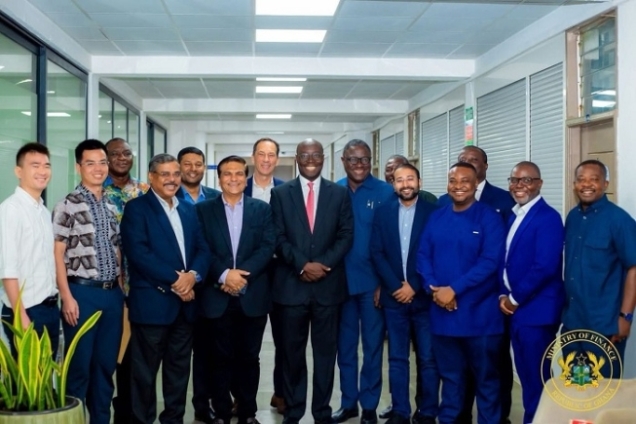
The Minister of Finance, Dr Cassiel Ato Forson, announced the measure during a meeting with the leadership of the Association of Ghana Industries (AGI), describing it as part of a broader effort to strengthen local industries, create jobs, and reduce Ghana’s reliance on imported goods.
“To support our local industries, the government will soon publish a list of items that all public sector agencies must procure locally,” Dr Forson said.
“Going forward, any government procurement from outside Ghana will require special approval from the Office of the President.”
Dr Forson questioned why Ghana continues to import basic commodities such as rice and sugar despite having the capacity to produce them locally.
According to him, no country can achieve meaningful development without a strong industrial foundation. He acknowledged the importance of trade but emphasised the need for deliberate policies to support domestic production.
He also raised concerns about the impact of smuggling on Ghanaian businesses, noting that illegal imports are undercutting local manufacturers.
“The government has identified smuggling routes,” he said, “and will soon introduce measures to prevent the influx of illegal goods that compete unfairly with locally manufactured products.”
As part of a wider industrialisation drive, Dr Forson proposed a working session with leaders in the private sector to discuss how local businesses can leverage the government’s 24-hour economy programme to increase production and stimulate economic growth.
President of the AGI, Dr Humphrey Ayim-Darke, welcomed the government’s move and described it as a positive step towards revitalising the country’s manufacturing sector.
He said ongoing dialogue between the state and industry stakeholders would help address the structural challenges facing local producers.
Latest Stories
-
Ghana explores centre of excellence for hearing, communication and cochlear implant care
10 minutes -
Schizophrenia-related disorders lead mental health cases recorded in Ghana
32 minutes -
Dutch authorities enlist Ghana in hunt for fugitive drug lord Bolle Jos
56 minutes -
Ghana housing finance conference adopts communiqué to improve affordable housing access
5 hours -
Special Initiatives Minister urges Wa Technical Institute to enrol more girls as EU-backed solar training lab opens
6 hours -
In the matter of my first year at the Bar
6 hours -
ActionAid Ghana calls for an end to child marriage, greater investment in girls’ rights
6 hours -
Newsfile to tackle World Cup visa scandal, beach demolitions, education strikes, BRICS bid
6 hours -
UK-Ghana Trade & Investment Summit: Trade Resource Centre to help businesses maximise UK-Ghana trade opportunities
7 hours -
Embassy of Denmark celebrates World Maritime Day
7 hours -
Linking LEAP to productive inclusion could cut extreme poverty by 2030 – UNICEF
8 hours -
Trade Ministry backs use of creative arts to rehabilitate prison inmates
8 hours -
Negotiations with government to continue despite strike suspension – GNAT
8 hours -
‘Ghana cannot afford to waste public resources; every cedi has a job’ – Ato Forson
8 hours -
Ghana expects economic boost as World Assemblies of God Congress brings 10,000 delegates to Accra
8 hours