

Audio By Carbonatix
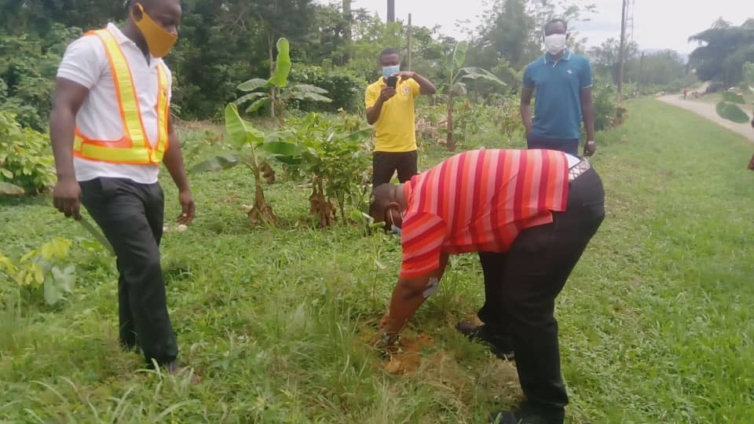
The Ghana Tourism Authority (GTA) has organized a tree planting exercise at Pikworo Slave Camp in Paga in the Upper East region as part of activities to mark this year's Emancipation Day.
This year's celebration themed; "Emancipation, our Heritage our Strength" and sub-themed; "Leveraging our Resilience: Black Lives Matter" is to memorialize the effect of slave trade on the nation's development.
The Regional Director of Ghana Tourism Authority, Mr Henry Yeleduor, said the exercise was being carried out across the country under the auspices of the Ministry of Tourism, Arts and Culture in collaboration with Metropolitan and District Assemblies and the Forestry Commission.
This tree planting exercise has replaced the usual practice of crossing River Pra, which hitherto had been the tradition yearly at Assin Praso in the Central Region.
He said his office chose Pikworo Slave Camp because of its historical relation to the slave trade. "We are told Paga was one of the main camps in the Upper East Region from where captives were being transferred to Salaga, a major slave trade market."
“Apart from beautifying the tourists’ site, the trees will also serve as a memorial for the times we could not go about with our normal activities due to the outbreak of the novel Coronavirus”, he added.
Mr Yeleduor said other activities to mark the day would include; reverential night at Cape Coast Castle and healing ceremony at Assin Manso.
The Forest Range Manager in charge of the Kassena Nankana West District, Mr Agyemang Dominic, commended GTA for incorporating the tree planting exercise as part of activities to celebrate Emancipation Day.
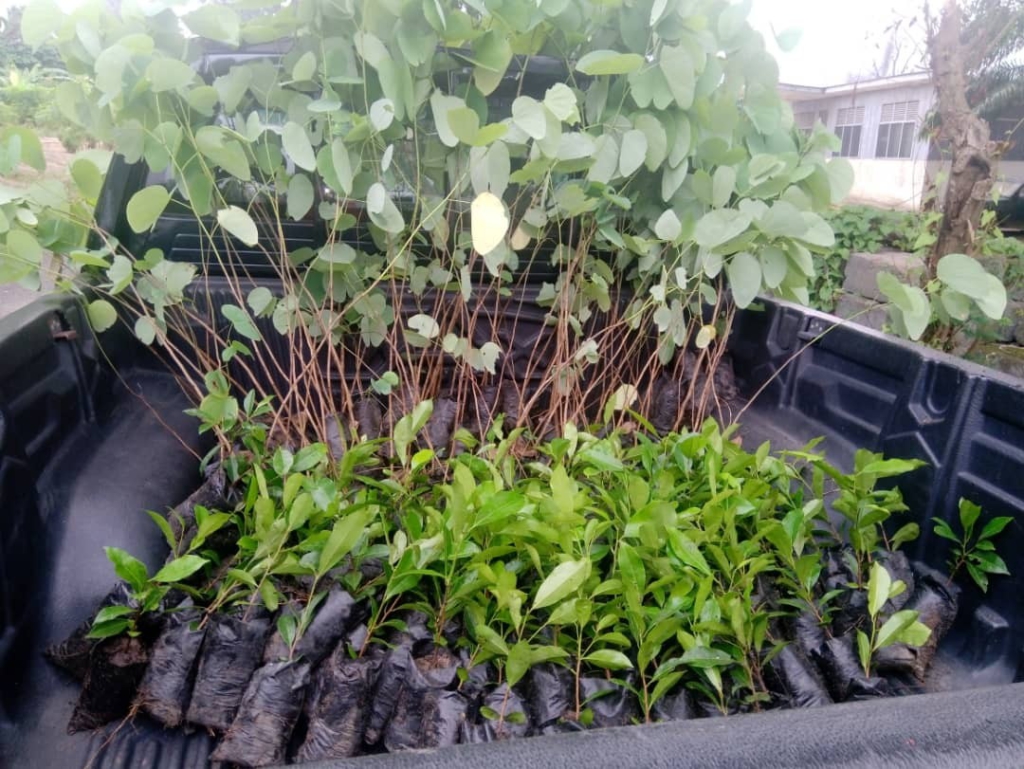
He said prior to the exercise, his outfit studied the terrain and recommended some tree spices such as; Mahogany, Teak, Cassia, Papoa, Terminilia and Cashew that would be suitable for the environment.
Interim Site manager for Pikworo Slave Camp, Mr Aaron Azumah, commended Ghana Tourism Authority for the project, describing it as being long overdue.
He said the Pikworo slave camp attracted close to 500 tourists in a month but had no infrastructure hence making the place unfriendly to people with disabilities.
Mr Azumah appealed to government for infrastructural development, such as a museum to help preserve the relics for historical purposes.
The Pikworo Slave Camp located three kilometers to the West of Paga Nania, was founded in the year 1704 and closed down in 1845 when slave trade was abolished.
It was originally established to serve as a slave transit, where slaves were auctioned and later resold in a major market in Salaga in the then Northern Region.
The facility, which serves as one of the major tourists’ attractions in the Upper East region, features trees, to which slaves were shackled, bowls carved on rocks for their feeding, with a nearby spring as their only source of water.
Other interesting features include; the slaves’ cemetery, the watchtower and the punishment rock on which recalcitrant slaves were punished.
Latest Stories
-
Vinicius scores twice as Real beat Atletico in thriller
1 hour -
Guardiola’s dance of joy as Man City pile pressure on desolate Arsenal
1 hour -
Kenyans fighting illegally for Russia in Ukraine to be granted amnesty
2 hours -
Hawaii storms have caused $1bn in damage, governor says
2 hours -
Mahama to lead Ghana’s delegation to UN special session on reparatory justice
2 hours -
National blackout hits Cuba for second time in a week
2 hours -
Trump at a crossroads as US weighs tough options in Iran
2 hours -
UDS and UG seeded ahead of 2026 Honda Football Championship raw
3 hours -
GPL 2025/26: Swedru All Blacks edge out Hohoe United in narrow 1–0 win
4 hours -
Carabao Cup: Semenyo wins first trophy with City
4 hours -
Carabao Cup: O’reilly double gives Man City Wembley win over Arsenal
5 hours -
Man City end Arsenal’s quadruple hopes as O’Reilly’s double clinches Carabao Cup triumph
5 hours -
Mahama to attend Africa Energy Technology Conference 2026 in Accra
5 hours -
From legacy to leadership: A new platform to shape Africa’s skills future
5 hours -
The tallest building in Ho: Kwame Nkrumah’s abandoned silo
6 hours