

Audio By Carbonatix
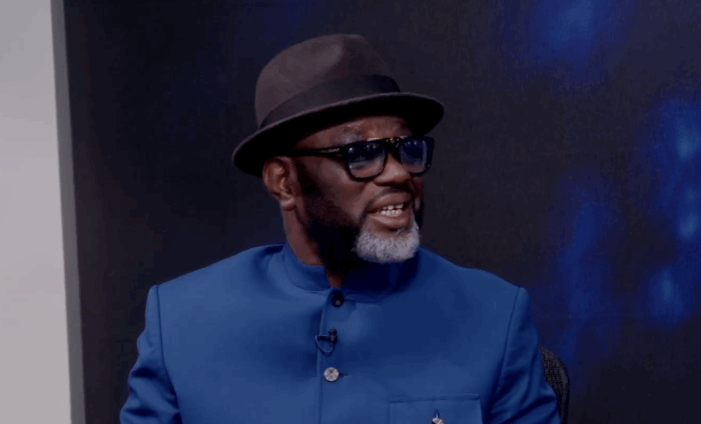
President of the Ghana Union of Traders’ Associations (GUTA), Dr Joseph Obeng, has taken on commercial banks over what he describes as hidden and inconsistent lending rates that continue to cripple businesses.
Speaking on JoyNews’ PM Express on Wednesday, November 12, he said the real cost of borrowing in Ghana remains far higher than the figures the banks and their regulators often publish.
“So what we have to do, and Mr John Awuah’s group have to do, is to publish some of these things,” he said.
“He’s saying that policy rate averages around 19 to 20%. I’m going to hold him on. I’m going to do this research from the traders, and then bring this report to you because most of them say it is around 25% even at this time.”
He argued that if the Ghana Association of Banks insists that lending rates average around 19%, it is only fair that these figures are made public and verifiable.
“If you say that it’s 19 and all that, then the person out there might think that their bank is maybe taking advantage of them,” he said.
“So let’s publish these things so that at least we can use them as a reference to bargain; otherwise, this thing is killing traders.”
Dr Obeng said the high cost of borrowing is destroying small businesses, especially those run by women. “Apart from the mainstream banks, the reason why most of our women businesses are collapsing, always saddled in debt, is because the rate of borrowing at the microfinance level is so excessively high,” he lamented.
“By the turn of the year, they haven’t even paid half of the principal, and then the debt is still accumulating.”
He, therefore, renewed calls for the government to establish the promised Women’s Bank to ease the credit burden on small female-owned enterprises.
“That’s why the women’s bank that the President has promised must be put in place,” he stressed. “Our women folks are very important for me… most of them deal with the susu people and the microfinance, and it’s very worrying.”
Dr. Obeng also accused some banks of poor risk management and internal corruption, saying they often push the cost of their inefficiencies onto responsible borrowers.
“When they talk about risk, you talk about the Ivory Coast having 7% whereas Ghana’s is 21%. It is because they do proper due diligence,” he argued.
“Sometimes the corruption in the banks itself, when they do not do the necessary due diligence and corrupt themselves by even going for some nonexisting collateral… they put all these things together and then spread it across the good and bad borrowers, which is very bad.”
He insisted the Bank of Ghana must step in to enforce stricter oversight on how banks determine lending spreads.
“At least, if you think that we can do good for us, then let’s publish and let’s know,” he said. “Because if I’m doing well, then you don’t spread your risk and then put it apart for all of us to pay. That’s what the banks do.
"And the Bank of Ghana have to do something seriously about this, because it shouldn’t be said that inflation has come this low, and so the interest rate is high.”
Responding to the concerns, the CEO of the Ghana Association of Banks, John Awuah, said lending differences between Ghana and the Ivory Coast cannot be blamed on the banks alone.
He explained that the problem lies in Ghana’s weak institutional structures and poor credit systems.
“Half of the banks operating in Ghana are also operating in Côte d’Ivoire — talk of Ecobank, Access Bank and the likes,” Mr Awuah noted. “So it is not the character of the banks but of the country and the structural deficiencies that we have.”
He argued that the bottlenecks stretch across the system. “We have a lot of structural bottlenecks — from the Lands Commission to the court system to credit culture,” he said.
“If Mr Obeng approaches a bank to borrow ¢100,000, all the bank could do is say, Oh, where else do you have exposure? It is word of mouth, as there is no mechanism for having a 360 view of the customer.”
Mr Awuah explained that many borrowers do not fully disclose their liabilities, leaving banks exposed. “So, whether he has a supplier’s credit, he won’t disclose to the bank… whether he has taken a loan from the landlord or is even in arrears, he won’t disclose.
"So the bank gives ¢100,000 thinking it’s going to bring goods from China to sell, make money and pay back the loan — half of it goes to pay the supplier, another half goes to pay rent and salary arrears.
"By the time you realise, what you funded is gone. Where is he going to get the money to pay you back?”
He concluded that until Ghana builds a system that gives banks a full picture of borrowers’ financial commitments, lending risks — and, therefore, rates — will remain high.
Latest Stories
-
Trump says he is considering firing US ambassador to Greece
24 minutes -
Man City bananas ‘brought fun back’, says Varadi
28 minutes -
Meta releases Muse Wonder AI models to challenge Anthropic and OpenAI
37 minutes -
Daily Insight for CEOs: The CEO as Chief Decision Maker
37 minutes -
Burnham had formal meeting with Man City chair while mayor
44 minutes -
Is Ghana producing too many lawyers? What is the best lawyer-to-citizen ratio?
46 minutes -
NDC sinking Ghana’s democracy with Emelia Agbenyo’s appointment – Miracles Aboagye
56 minutes -
Seedorf back in football as Corinthians head coach
1 hour -
Hincapié and Zubimendi injured in post-match training session
1 hour -
Fridges in French supermarkets hit by cyberattack
1 hour -
Qantas flight grounded after bedbug outbreak
2 hours -
Reality Zone with Vicky Wireko: International Day of the Girl, shaping today’s girl for tomorrow’s future – ZONTA Clubs lead the way
2 hours -
Global health must be led by countries, not designed for them – Mintah Akandoh
3 hours -
Mahama honoured at 2026 World Health Summit in Berlin for global health leadership
3 hours -
Breast cancer is not a death sentence – Besease Kontire Obaapanin, Magmina Foundation lead awareness campaign
3 hours