

Audio By Carbonatix
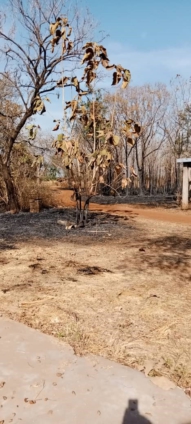
Wildfires have destroyed several hectares of food crops while houses and farmlands are under threat in many rural farming communities in the North-East Region.
Food crops like rice, beans, soya beans and maize have been burnt beyond salvage at a time farmers are harvesting and others threshing.
Some farmers at Gbilugu, a farming community near Walewale in the West Mamprusi Municipality, and the Gbiligu Ecological Farm, have lost almost all produce to this year’s fires.
Beehives and a teak plantation at the Ecological Farm have not been spared either.
Some of the affected farmers said the harmattan, which was one of the driving forces of the wildfires, had started early as compared to previous years, making the grass dry and easily ignitable, thus the fast spread of fire.
Although the cause of the fire was unknown, most of the bushfires recorded in the area over the years had been caused by herdsmen, weed smokers and uncontrolled fires by some farmers.
Mr Tahiru Tia Mohammed, a farmer at the Gbilugu Ecological Farms, told the Ghana News Agency that many farmers were devastated as they lost their farm produce to wildfires in mid-November.
He said he had lost about 2.9 hectares of rice, 0.6 hectares of soyabeans, 0.4 hectares of maize, and 0.2 hectares of beans while a friend of his lost about 2.5 hectares of rice.
Mr Mohammed said though they created fire belts around the farms, that did not help much due to the harmattan winds.
“It is going to be very challenging because we depend solely on the farm. It is only some of the maize that we have been able to harvest but we have not even started harvesting the rice and the fire has burnt everything....”
Alidu Adams, another farmer, said he had lost all his 3.3 hectares of rice to the wildfire and that the situation, coupled with the current economic crisis would be dire, while Ibrahim Torisariye, said he lost about 2.9 hectares of rice.
According to the farmers, previously, wildfires were recorded towards the end of December and January when farmers had harvested their crops, but due to climate change, which had affected the rainfall pattern, the rains stopped too early and the grass dried up, making the area easily susceptible to fire.
Subordinate Officer, Abdul-Mumin Azabu, the West Mamprusi Municipal Public Relations Officer of the GNFS, noted that wildfires had been one of the major challenges affecting farming communities in the area over the years, destroying food crops and houses.
He stated that three bushfires were recorded in November 2021 while two had been recorded so far in November, 2022.
He said due to financial and logistical constraints the Service had not been able to reach out to many communities to educate them on fire prevention and appealed for retooling of the Service to perform its functions well.
Latest Stories
-
Church of Pentecost supports over 2,000 BECE candidates in Obuasi with career guidance seminar
40 minutes -
Brandon Asante and Coventry all but promoted to Premier League despite Sheffield Wednesday draw
1 hour -
GPL 2025/26: Late Kwartemaa strike downs Hearts in Tema
1 hour -
Ghana Faces Sierra Leone Moment as Prosecutorial Powers come under strain
1 hour -
Don’t consume fish or seafood from Tema Shipyard until further notice – FDA warns
1 hour -
Why volunteering might be Africa’s most underrated career accelerator
1 hour -
ActionAid Ghana raises concern over gender gaps in Feed Ghana Programme
2 hours -
Windstorm wreaks havoc in Gushegu, displacing nearly 2,000 residents and damaging schools
2 hours -
Friends of Bridget Bonnie Marks her 35th birthday with donation to Kasseh Model Health Centre
2 hours -
From Ekumfi Kokodo to the Pulpit Stage: Essi Donkor’s gospel journey takes shape
3 hours -
Landfilling waste management creates no value, it’s an economic waste
3 hours -
Photos: Speaker Bagbin Commissions MPs constituency office under parliamentary decentralisation programme
3 hours -
Black Stars technical advisor Winfried Schäfer sacked as GFA shakes up backroom staff
3 hours -
Wenchi water project almost complete, critical to gov’t agenda – GWL MD
3 hours -
Anti-LGBTQ+ bill not part of government’s legislative agenda – Inusah Fuseini
3 hours