

Audio By Carbonatix
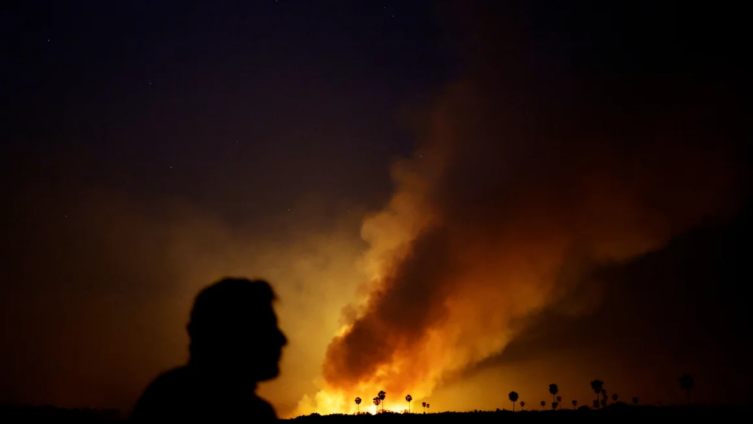
Brazil’s Pantanal, the largest tropical wetland on earth, is ablaze, with fires in June breaking historical records for that month.
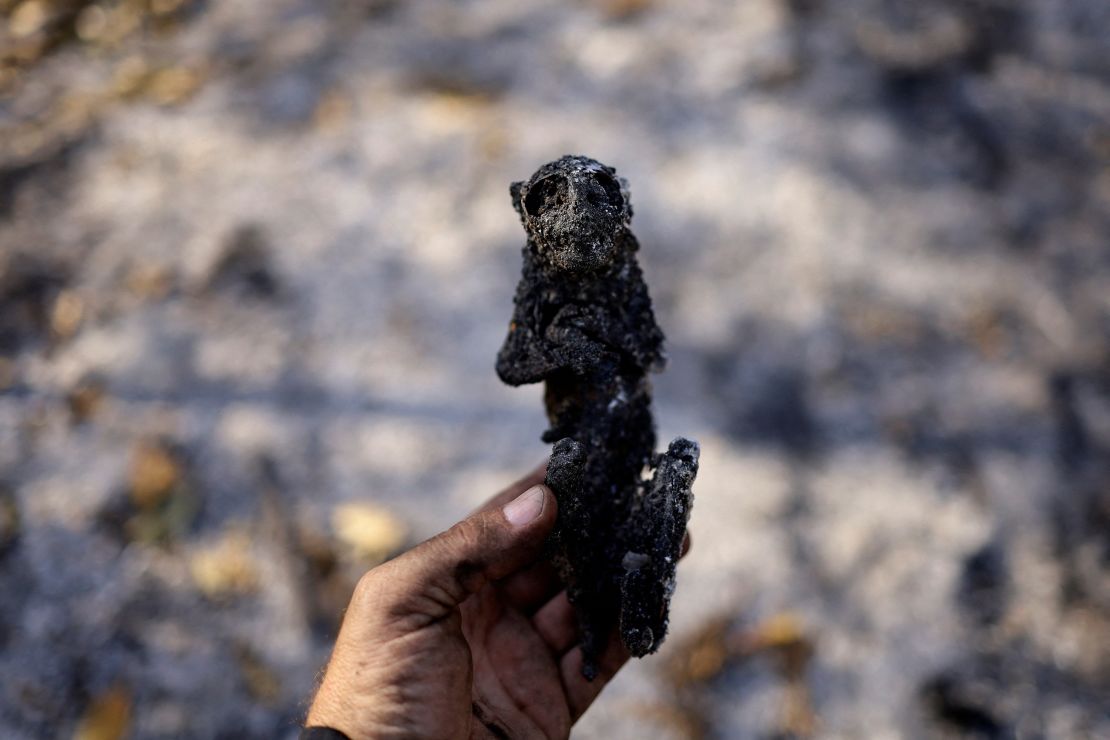
While aerial views of the wetland show smoke rising and the bright orange of burning fires, a closer look at burnt vegetation found charred skeletons of wildlife, including an alligator, monkey and snake, photos from Reuters showed earlier this week.
Brazil’s National Institute of Space Research (INPE) has detected 733 fires in the Pantanal biome so far this month, with the previous record for fires in Pantanal for June being 435 registered in 2005.
The state of Mato Grosso do Sul, which encompasses 60% of the Brazilian Pantanal, is under a “danger” warning for a heat wave expected to hit with temperatures 5ºC higher than average for the next three to five days, according to Brazil’s National Meteorological Institute (INMET).
The World Wildlife Foundation (WWF) Brazil has warned that the entire year of 2024 could become the worst year on record for the Pantanal as the dry season is just beginning, and the number of fires this year already represents an increase of 898% compared to the same period in 2023, according to INPE’s data.
“It is necessary to act quickly reinforcing [fire] brigades and counting with the support of the local communities to avoid a catastrophe”, said Cynthia Santos, conservation analyst for WWF Brazil, in a statement.
What to know about the wetlands
The Pantanal’s distinctive habitats rely on what scientists call the “flood pulse.” During the wet season between November and March, three quarters of the plain gets flooded, only for much of the water to drain away during the dry months, from April to September. This seasonal flooding makes the Pantanal a unique biome where large swaths of land regularly turn from terrestrial into aquatic habitats and back again.
Wetlands like the Pantanal are Earth’s most effective carbon sinks – ecosystems that absorb and store more carbon than they release, keeping it away from the atmosphere. At roughly 200,000 square kilometres, the Pantanal comprises about 3% of the globe’s wetlands and plays a key role in the carbon cycle.
When these carbon-rich ecosystems burn, vast amounts of heat-trapping gases are released back into the atmosphere, contributing to the greenhouse effect.
According to the World Wide Fund for Nature (known as the World Wildlife Fund in the US and Canada), the Pantanal boasts the greatest concentration of wildlife in South America – higher than that of its more famous northern neighbour, the Amazon.
“The Pantanal is very important for the planet, it has unique wild areas that are fundamental to life on Earth,” said Andre Luiz Siqueira, the CEO of ECOA, an environmental NGO based in the Brazilian state of Mato Grosso do Sul, speaking to CNN in 2020.
The area is home to thousands of endangered or unusual species, including jaguars, capybaras, black caimans, giant otters and hyacinth macaws. It’s also an important stop on the routes of around 180 species of migratory birds.
The wetland is facing a “hydrological crisis scenario” due to an intense drought. The lack of rain began in 2023 and has been aggravated by the ongoing El Niño phenomenon, according to ECOA.
Occasional wildfires are normal in the Pantanal, so much so that some plants in the region developed resistance to fires – for example by growing thick bark or covering their seeds with hard shells.
In 2020, the fires destroyed unique habitats and wrecked the livelihoods of many of the Pantanal’s diverse indigenous communities.
Latest Stories
-
6,079 promotion cases fully processed and paid – CAGD says amid nationwide teachers’ strike
3 minutes -
Teacher unions to meet government Monday over nationwide strike
18 minutes -
Photo story: Republic Bank-JoyNews Habitat Fair clinic wraps up after three days of housing solutions, expert engagement
21 minutes -
National Peace Council urges investment in youth to sustain Ghana’s peace
43 minutes -
Afenyo-Markin urges youth to speak up against injustice
54 minutes -
CAF annuls Edo Queens victory, orders WAFU B final to resume from extra time
1 hour -
Interior Minister urges traditional authorities to enforce anti-bushfire bye-laws
1 hour -
3rd Republic Bank-JoyNews Habitat Fair Clinic ends on a high note after three days of strong patronage
1 hour -
Ten climbers missing after avalanche hits Himalayan base camp
2 hours -
NPP had more permanent fuel relief measures than current GH¢2 diesel cut – Amin Adam
2 hours -
Photos from the 3rd Republic Bank-JoyNews Habitat Fair Clinic
2 hours -
Ethiopia’s army promises restraint amid fears of new civil war
3 hours -
Amin Adam calls for review of fuel taxes as diesel prices remain above GH¢18
3 hours -
World Vision Ghana, Ahafo districts sign MoU for universal WASH coverage
4 hours -
When the gold engine stutters: What Ghana’s Cedi and reserves are telling us about the new economic architecture
4 hours