

Audio By Carbonatix
Health advocates are calling for stronger financial support to sustain Ghana’s immunisation programmes and protect children from life-threatening diseases.
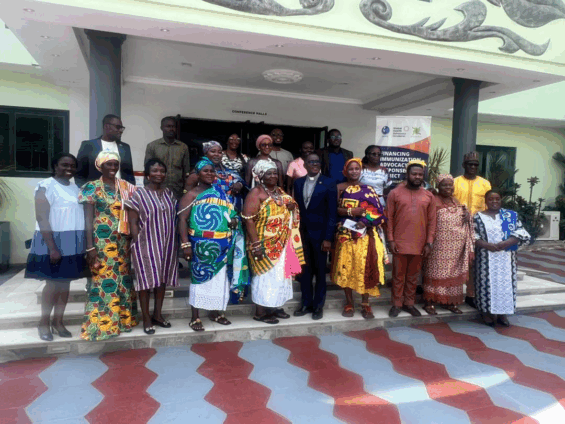
The call was made at a workshop organised by Hope for Future Generations (HFFG) in collaboration with the Global Health Advocacy Incubator (GHAI) and Gavi, the Vaccine Alliance.
Currently, Ghana’s immunisation drive is largely supported by donor funding, but this support is expected to cease by 2028.
HFFG Project Coordinator Sabina Morgan warned that the country risks setbacks in vaccine delivery if it fails to build local vaccine production capacity and strengthen its financing mechanisms.
She highlighted delays in the release of immunisation funds as a major threat, stressing the need for government to close gaps that undermine vaccine availability and the country’s ability to respond quickly during health emergencies.
“Timely and consistent financing for vaccines is not just a health imperative—it is a strategic investment that protects productivity and sustains economic growth,” she said.
GHAI Country Coordinator, Steven Atassige, also urged stronger citizen engagement and sustainable financing strategies in the 2026 national budget.
He commended government for improvements this year, noting that Ghana had already paid $24.6 million in co-financing for traditional vaccines before the end of the third quarter, a significant improvement from previous years.
“This is very encouraging. However, to sustain this progress, immunisation funding must be consistently prioritised in future budgets to prevent payment delays and avoid vaccine stockouts,” he added.
Representing the Ministry of Health, Principal Planner Kwaku Saffu-Mensah reaffirmed government’s commitment to sustaining immunisation programmes despite budgetary pressures and the recent withdrawal of support from the United States Agency for International Development (USAID).
He disclosed that the Ministry of Health, in collaboration with the Ministry of Finance, is exploring innovative financing measures, including public-private partnerships, to address the shortfall.
He further noted that the ministry has established a Resource Mobilisation Unit and an Intersectoral Collaboration Unit to improve efficiency and ensure resources are used for maximum impact.
Latest Stories
-
No public land to be allocated without minister’s prior approval – Armah-Buah announces sweeping reforms to protect state lands
10 minutes -
Ashanti Regional Minister inaugurates spatial planning committees, unveils plan to restore Kumasi’s Green Glory
21 minutes -
St Thomas Aquinas SHS hit by infrastructure deficit; appeals for key facilities
22 minutes -
Minority alleges gov’t plot to divert attention from cocoa price cut debate
34 minutes -
Democracy Hub files court injunction to stop Ayawaso East by-election over vote-buying in NDC primary
37 minutes -
Afrimaas urges media to defend industry at World Radio Day summit
44 minutes -
Bawumia condemns killing of Ghanaian traders in Burkina Faso terror attack
48 minutes -
South African trio charged with Bolt driver’s murder filmed on dashcam
55 minutes -
HeFRA launches investigation into alleged refusal of emergency care leading to death of road traffic accident victim
58 minutes -
Maison Yusif Fragrance showcases Africa’s organic fragrance power at BIOFACH Germany
1 hour -
GoldBod suspends gold buying licence applications amid regulatory reforms
1 hour -
GoldBod suspends selected gold buying licence applications ahead of regulatory reforms
1 hour -
Student death puts French far-left under pressure
1 hour -
One song, one voice: How ‘Aha Y3’ stole the night at Awake Experience 2026
1 hour -
SEC flags ‘Mekanism’ as illegal investment scam promising daily returns
1 hour