

Audio By Carbonatix
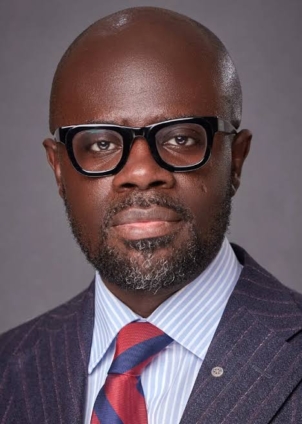
The Dean of UPSA Law School, Prof. Kofi Abotsi, has highlighted the challenges of holding political actors accountable for their promises to citizens.
According to the Dean, politicians often make grand promises to win votes but fail to honour them once in power because no one holds them accountable.
In an interview with Joy FM’s Super Morning Show on Tuesday, Prof. Abotsi explained that, “Today we govern through institutions, and the institutional interface is the only way to achieve success if we truly desire it.
"However, it is not easy to get political actors to make commitment by which they will stand that’s the total of the matter," he added.
Mr Abotsi noted that it is impractical for all Ghanaians to individually demand accountability from politicians. Instead, he emphasised the role of institutional frameworks.
He identified two types of institutions: the “hard” institutional surface, which includes Parliament, the Judiciary, the Auditor General, and other bodies established by the constitution to ensure accountability.
While Parliament can hold political actors accountable for official promises and actions, it struggles to enforce pre-election promises made on campaign platforms.
He asserted that the media plays a crucial role in holding politicians accountable before and after elections.
The media's power lies in its ability to remind politicians of their promises and check if they have fulfilled them using specific benchmarks. This role has seen successes and failures.
On the one hand, the media has helped focus public attention on key issues, encouraging politicians to be more careful with their promises.
On the other hand, the media is often fragmented and politically influenced, leading to a distorted public conversation.
Mr Abotsi stressed that while the media can guide Ghanaians on the path of accountability, its effectiveness is hampered by political infiltration, which dilutes and convolutes public discourse.
He pointed out that state institutions, particularly Parliament, have largely failed to hold the government accountable. The majority party in Parliament often views itself as an extension of the executive, weakening Parliament's role across successive regimes.
Read also : Kwame Sowu: The Challenge of Political Promises and the Complex Realities of Governance
Latest Stories
-
Mahama announces 60-Hectare irrigation project to boost tomato production
5 minutes -
WPL: Hasaacas Ladies win on last day to set up final with Ampem Darkoa
6 minutes -
Chisora beaten by Wilder in captivating bout
29 minutes -
One dead, six maimed as bloody land feud tears Krachi Nchumuru apart
53 minutes -
Missing service member rescued by US forces after jet downed in Iran, Trump announces
1 hour -
Gomoa Easter Carnival: Sarkodie, Kuami Eugene, Tinny, set festival ablaze as Day 3 ends on high note
2 hours -
“Feels amazing” – Antoine Semenyo reveals after Manchester City dismantle Liverpool
2 hours -
Mahama calls for emergency cabinet meeting over rising fuel prices
3 hours -
Asante Gold reports US$345million loss for 2025
4 hours -
Prof. Naana Jane Opoku-Agyemang provides update on Women’s Development Bank
4 hours -
‘It’s not easy’ – Mother of late Dr Omane Boamah breaks silence
5 hours -
Gov’t making progress in clearing $1.7bn power debt – Mahama
5 hours -
Justice is the engine of growth – Chief Justice
5 hours -
Meet us halfway – Trade Minister tasks private sector with AfCFTA success
6 hours -
After more than 14 years at Atletico Madrid, what next for Simeone?
6 hours