

Audio By Carbonatix
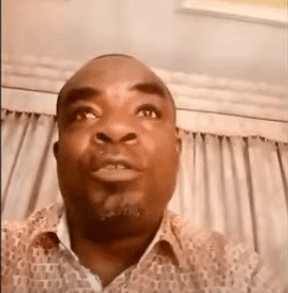
An Executive Council Member of the Ghana Real Estates Development Association (GREDA) is of the view that persons hit hardest by housing deficit are those residing in cities in the country.
Mr Eric Ebo Acquah, speaking on JoyNews' PM Express explained that due to rural-urban migration for greener pasture, they get overpopulated and individuals are left stranded and reside in kiosks due to lack of affordable housing.
'I believe that housing deficit is a primary problem for the city dwellers. When you go to the towns and villages, there are houses there that nobody stays in because everything is concentrated in the cities so everybody moves to the cities,' he said.
Discussing the way forward with host, Evans Mensah, Mr Eric Ebo Acquah noted that government should invest in the railway system.
Reason being, citizens who reside in the rural areas would have easier means to commute back to their homes without having to stay in the urban areas they visit.
This he said; "We must look at our transportation system. Because if you build 100,000 new units in Prampram and the people have to commute to Accra each day since there is no railway system that connects Prampram to Accra. We have to find ways to connect the towns and village with trains.
"Once you do that, people can live 50km and come to work without spending so many hours on the way."
To address the issue of housing deficit, many including Chairman of Comet Properties Limited, Nana Odeneho Kyeremateng, have urged government to take a look at the salary levels of workers.
According to Mr Odeneho Kyeremateng, wage level in the country are too low to enable many workers afford a decent accommodation.
Speaking to George Wiafe on PM Express Business Edition, Mr Kyeremateng indicated that an upward adjustment in salaries can be a catalyst to dealing with the housing challenges.
“…and then look at our salaries. I am not an economist in that sense or the Fair Wages and Salaries Commission, they [workers] must earn income according to whatever they’ve worked. Whatever they earn here, it is too low averagely. Not everybody can buy a house and not everybody can build a house,” he said.
He admonished government not to relegate a vital responsibility such as addressing housing deficit in the hands of the private sector.
For him, "Government should play a major role. Put funds into a wholesale holder, who will then give it out to the mortgagees so citizens can get access to the funds.”
Latest Stories
-
World Cup visa scandal: People have leveraged public office to facilitate fraud – Senyo Hosi
3 minutes -
Glut! Farmers count losses as prices crash, customers happy
38 minutes -
GSA postpones auction of unserviceable vehicles
41 minutes -
Man charged with attempted murder after stabbing
44 minutes -
World Cup visa scandal: Senyo Hosi says issue goes beyond calls for Sports Minister’s resignation
45 minutes -
Yaw Ampofo Ankrah hasn’t taken or received any money to facilitate visas – Lawyer insists
1 hour -
World Cup visa scandal: Senyo Hosi urges focus on constitutional accountability
1 hour -
La Beach demolition: Senyo Hosi condemns lack of consultation
1 hour -
Russian glide bomb attack on Zaporizhzhia kills at least 15 people
1 hour -
Jinapor warns underperforming energy sector CEOs of consequences, says no protection for failure
2 hours -
Fire destroys head of tipper truck on Lower Volta Bridge
2 hours -
Palmer signs new Chelsea contract until 2034
2 hours -
World Cup visa scandal: Mahama will act on corruption allegations – Abass Nurudeen
2 hours -
Abass Nurudeen accuses Minority of ‘scandal scavenging’ over World Cup visa controversy
2 hours -
US Embassy recognised NSA, GFA and GTA as separate entities for visa applications – Sports Minister’s aide
2 hours