

Audio By Carbonatix
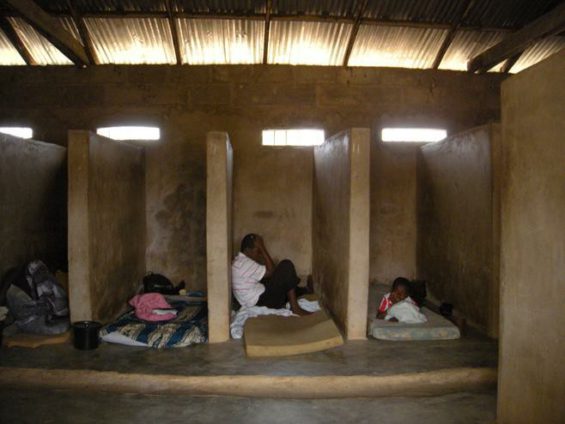
Challenges with shelter among the Ghanaian population is a factor when it comes to mental health issues confronting the country.
This is according to Professor Divine Ahadzie, Head of the Centre for Settlements Studies at the Kwame Nkrumah University of Science and Technology (KNUST).
He has proffered some solutions in providing affordable and decent housing in Ghana. Ghana has a social housing problem. The country has a housing deficit of 1.7million units.
To meet the shelter needs of the population, an estimated 170,000 housing units would have to be built annually. Prof. Divine Ahadzie observed that access to good descent houses promotes good health.
According to him, the housing problems such as high rent charges and frustrations dealing with homeowners, can worsen mental health problems.
"When you have the larger population having issues with housing, then there is a likelihood that the mental health of many people will be affected. It is linked to production at work, happiness and social life. Hence, once you take care of the home, mental health is also taken care of."

Prof. Ahadzie alluded to the compound housing concept as being helpful in meeting the accommodation needs of the populace.
He is prevailing on the government to upgrade the compound housing concept as an urban social housing strategy.
"Now compound houses are not economical in the cities, because if you put up a compound house you won’t get people to rent. Now compound houses are not built anymore. The existing ones are being upgraded so that sharing amenities are eliminated.
He continued that, "...this has raised the cost of rent pushing out the traditional compound house occupants, yet the government has not come in to fill the gap. Now the Minister is pushing for the National Housing Authority to be called to parliament and questioned on the policy for such people in addressing their housing needs."
Prof. Ahadzie also believes there are opportunities in reducing housing through the use of local materials.
"It has been established that over 70% of our soil composition is laterite. That is why we normally use it for construction of our roads and building of traditional houses.
However, through research and technology, he said that it has been upgraded to a new level of acceptable housing.
"Regardless of this, people still live with some regressive perception toward the laterite material. It is a matter of government policy and direction. People should also embrace it."
Latest Stories
-
Don’t let speed of information become your judgement – CJ tells new lawyers
34 minutes -
World Cup visa scandal: People have leveraged public office to facilitate fraud – Senyo Hosi
39 minutes -
Glut! Farmers count losses as prices crash, customers happy
1 hour -
GSA postpones auction of unserviceable vehicles
1 hour -
Man charged with attempted murder after stabbing
1 hour -
World Cup visa scandal: Senyo Hosi says issue goes beyond calls for Sports Minister’s resignation
1 hour -
Yaw Ampofo Ankrah hasn’t taken or received any money to facilitate visas – Lawyer insists
2 hours -
World Cup visa scandal: Senyo Hosi urges focus on constitutional accountability
2 hours -
La Beach demolition: Senyo Hosi condemns lack of consultation
2 hours -
Russian glide bomb attack on Zaporizhzhia kills at least 15 people
2 hours -
Jinapor warns underperforming energy sector CEOs of consequences, says no protection for failure
2 hours -
Fire destroys head of tipper truck on Lower Volta Bridge
2 hours -
Palmer signs new Chelsea contract until 2034
2 hours -
World Cup visa scandal: Mahama will act on corruption allegations – Abass Nurudeen
2 hours -
Abass Nurudeen accuses Minority of ‘scandal scavenging’ over World Cup visa controversy
2 hours