

Audio By Carbonatix
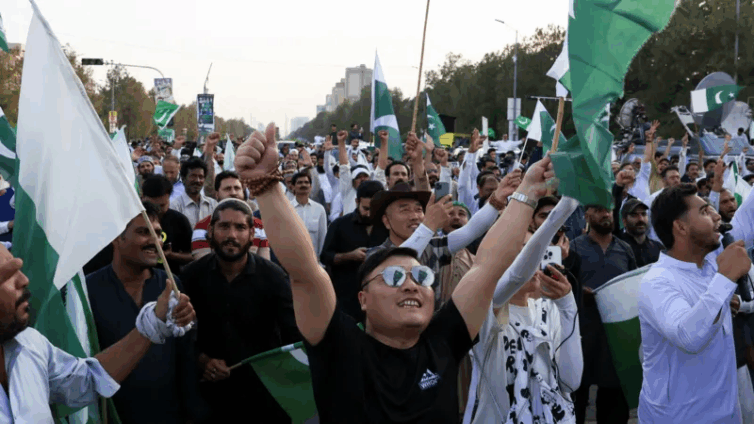
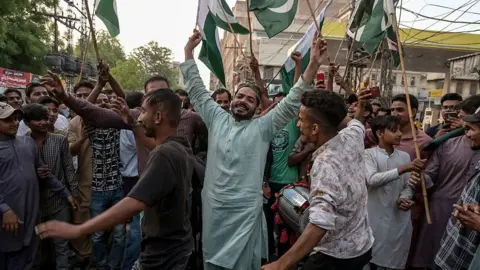
In a dramatic turn of events, US President Donald Trump took to social media on Saturday to announce that India and Pakistan - after four tense days of cross-border clashes - had agreed to a "full and immediate ceasefire".
Behind the scenes, US mediators, alongside diplomatic backchannels and regional players, proved critical in pulling the nuclear-armed rivals back from the brink, experts say.
However, hours after a ceasefire deal, India and Pakistan were trading accusations of fresh violations - underscoring its fragility.
India accused Pakistan of "repeated violations" while Pakistan insisted it remained committed to the ceasefire, with its forces showing "responsibility and restraint."
Before Trump's ceasefire announcement, India and Pakistan were spiralling towards what many feared could become a full-blown conflict.
After a deadly militant attack killed 26 tourists in Indian-administered Kashmir last month, India launched air strikes inside Pakistan and Pakistan-administered Kashmir - triggering days of aerial clashes, artillery duels and, by Saturday morning, accusations from both sides of missile strikes on each other's airbases.
The rhetoric escalated sharply, with each country claiming to have inflicted heavy damage while foiling the other's attacks.
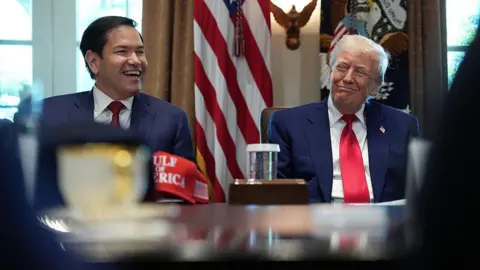
Tanvi Madan, a senior fellow at the Brookings Institution in Washington DC, says US Secretary of State Marco Rubio's call to Pakistani Army Chief Asim Munir on 9 May "might have been the crucial point".
"There's still much we don't know about the roles of various international actors, but it's clear over the past three days that at least three countries were working to de-escalate - the US, of course, but also the UK and Saudi Arabia," she says.
Pakistan's Foreign Minister Ishaq Dar told Pakistani media that "three dozen countries" were involved in the diplomacy - including Turkey, Saudi Arabia and the US.
"One question is whether, if this call had come earlier - right after the initial Indian strikes, when Pakistan was already claiming some Indian losses and an off-ramp was available - it might have prevented further escalation," Ms Madan says.
This isn't the first time US mediation has helped defuse an India–Pakistan crisis.
In his memoir, former US secretary of state Mike Pompeo claimed he was woken up to speak with an unnamed "Indian counterpart", who feared Pakistan was preparing nuclear weapons during the 2019 standoff.
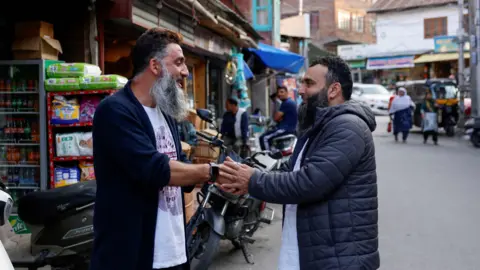
Former Indian High Commissioner to Pakistan Ajay Bisaria later wrote that Pompeo overstated both the risk of nuclear escalation and the US role in calming the conflict.
But diplomats say there is little doubt the US played an important role in defusing the crisis this time.
"The US was the most prominent external player. Last time, Pompeo claimed they averted nuclear war. While they'll likely exaggerate, they may have played the primary diplomatic role, perhaps amplifying Delhi's positions in Islamabad," Mr Bisaria told the BBC on Saturday.
Yet at the outset, the US appeared strikingly standoffish.
As tensions flared, US Vice President JD Vance said on Thursday that the US was not going to get involved in a war that's "fundamentally none of our business".
"We can't control these countries though. Fundamentally, India has its gripes with Pakistan... America can't tell the Indians to lay down their arms. We can't tell the Pakistanis to lay down their arms. And so we're going to continue to pursue this thing through diplomatic channels, " he said in a television interview.
Meanwhile, President Trump said earlier this week: "I know both [leaders of India and Pakistan] very well, and I want to see them work it out... I want to see them stop, and hopefully they can stop now".
Ejaz Haider, a Lahore-based defence analyst, told the BBC this appeared to be the only difference from previous occasions.
"The American role was a continuation of past patterns, but with one key difference - this time, they initially stayed hands-off, watching the crisis unfold instead of jumping in right away. Only when they saw how it was playing out did they step in to manage it," Mr Haider told the BBC.
Experts in Pakistan say as the escalation cycle deepened, Pakistan sent "dual signals", retaliating militarily while announcing a National Command Authority (NCA) meeting - a clear reminder of the nuclear overhang.
The NCA controls and takes operational decisions regarding Pakistan's nuclear weapons.
This was around the time US Secretary of State Marco Rubio stepped in.
"The US was indispensable. This outcome would not have occurred without Secretary Rubio's efforts," Ashley J Tellis, a senior fellow at the Carnegie Endowment for International Peace, told the BBC.
What also helped was Washington's deepening ties with Delhi.
Indian Prime Minister Narendra Modi's personal rapport with Trump, plus the US's broader strategic and economic stakes, gave the US administration diplomatic leverage to push both nuclear-armed rivals towards de-escalation.
Indian diplomats see three key peace tracks that happened this time, much like after Pulwama–Balakot in 2019:
- US and UK pressure
- Saudi mediation, with the Saudi junior foreign minister visiting both capitals
- The direct India-Pakistan channel between the two national security advisors (NSAs)
Despite shifting global priorities and a hands-off posture at first, the US ultimately stepped in as the indispensable mediator between South Asia's nuclear rivals.
Whether overstated by its own officials or underacknowledged by Delhi and Islamabad, experts believe the US's role as crisis manager remains as vital - and as complicated - as ever.
Doubts do, however, linger over the ceasefire's durability after Saturday's events, with some Indian media reporting it was essentially brokered by senior military officials of the two countries - not the US.
"This ceasefire is bound to be a fragile one. It came about very quickly, amid sky-high tensions. India appears to have interpreted it differently than did the US and Pakistan," Michael Kugelman, a foreign policy analyst, told the BBC.
"Also, since it was put together so hastily, the accord may lack the proper guarantees and assurances one would need at such a tense moment."
Latest Stories
-
WFP, UK Govt push for fortified rice in school feeding to tackle child malnutrition
13 minutes -
Tottenham Supporters’ Trust says it cannot support De Zerbi appointment
15 minutes -
Gyokeres’ late winner fires Potters’ Sweden past Poland to World Cup
24 minutes -
SIC MD denies political interference claims, admits SIGA only ‘encouraged’ state entities
25 minutes -
Turkey beat Kosovo to reach first World Cup in 24 years
33 minutes -
Tiger Woods had pills in pocket at crash scene, say police
44 minutes -
Mahama to review IMANI petition on insurance sector concerns – Kwakye Ofosu
50 minutes -
Road Safety Authority embarks on nationwide sensitisation ahead of Easter festivities
51 minutes -
Government reaffirms commitment to combat Human Trafficking at first 2026 HTMB meeting
1 hour -
A/R: One injured, house torched at Penten as land dispute turns violent
1 hour -
Delta Air Lines, AmCham Ghana honour women leaders at ‘Give to Gain’ High Tea event
2 hours -
TaxForGalamsey: Awula Serwah slams ‘ignorance’ defence in levy scandal, demands sanctions for MMDCEs
2 hours -
Collecting levies from galamseyers is wrong; sanctions must be enforced – Kenneth Ashigbey
2 hours -
BeTechConnected launches Future of Work Africa Podcast to amplify African voices on jobs, innovation
2 hours -
Rejecting pesewa coins is illegal, fuels inflation – BoG warns traders
2 hours