

Audio By Carbonatix
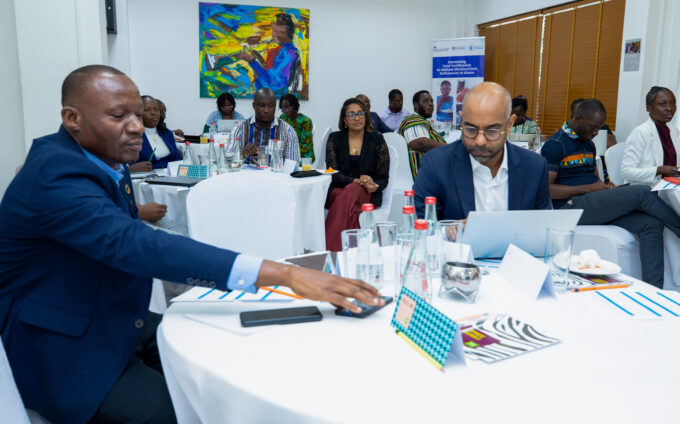
The World Food Programme (WFP) and the United Kingdom’s Foreign, Commonwealth & Development Office (FCDO) are urging Ghana to introduce fortified rice into the Ghana School Feeding Programme, describing it as a practical and cost-effective way to address malnutrition among children.
The call follows a cost-benefit analysis, which found that rice fortification is an affordable, high-impact intervention capable of improving children’s nutrition and boosting learning outcomes.
Speaking on behalf of the WFP Country Director, Steven Ordatefio said micronutrient deficiencies remain a major public health concern in Ghana, with anaemia affecting nearly half of children under five and more than 40 per cent of women of reproductive age.
He noted that poor nutrition continues to undermine children’s health, cognitive development and academic performance.
WFP is therefore calling on the Government of Ghana to make fortified rice a mandatory component of meals served under the school feeding programme.
Supporting the proposal, FCDO Representative Dr Tristan Eagling said results from a pilot initiative show that rice fortification is both feasible and impactful.
“Fortification is affordable, smart and high-impact,” he said, adding that the intervention is particularly important at a time when rising food prices and economic pressures are affecting the quality of meals served in schools.
Dr. Eagling noted that with the right systems in place — including reliable supply chains and strong institutional backing — the initiative could be expanded nationwide.
Director of Operations at the Ghana School Feeding Programme, Esther Z. Mahama, also reaffirmed the programme’s readiness to collaborate with partners to improve the nutritional quality of meals provided to pupils.
She said the GSFP remains committed to working with stakeholders to strengthen the programme and enhance the nutritional value of food served in schools.
The initiative, which involves collaboration between government and private sector millers, is also expected to support local food systems by creating opportunities for farmers and food processors.
Representatives from the Food and Drugs Authority, Ghana Standards Authority, Ghana Education Service and Ghana Health Service attended the meeting, alongside international partners including UNICEF and the World Health Organisation.
Stakeholders say Ghana is well-placed to scale up rice fortification, pointing to the country’s previous success with salt iodisation and other food fortification initiatives.
Latest Stories
-
Gender Minister assures women’s group of action on Affirmative Action, Development Bank
14 minutes -
Over 2,000 teachers in Dormaa comply with strike – GNAT Secretary
24 minutes -
Food Buffer Stock seeks stronger liquidity buffer despite record profit
30 minutes -
LPG investments key to achieving 50% access target by 2030 – Energy Minister
31 minutes -
Jinapor: New LPG terminal strengthens Ghana’s energy security
34 minutes -
Agbodza directs road agencies to fast-track design approvals to prevent project delays
37 minutes -
Housing Minister urges stakeholders to prioritise quality education in Banda District
43 minutes -
Government redeems pledge to complete abandoned projects – Kofi Buah
48 minutes -
Sam George calls for Black Stars disbandment, GFA dissolution after Gambia defeat
50 minutes -
Bunkpurugu MP urges action to curb network disruptions in Northern Ghana
51 minutes -
Education Minister calls for evidence-based response to learning crisis in West Africa
58 minutes -
NPA reaffirms regulatory support as Puma Energy deepens investment in LPG and CRM
1 hour -
Ketu South NDC clears 73 aspirants for constituency elections
1 hour -
We are with all flood victims – Hohoe MP
1 hour -
Asharami Ghana commends NPA CEO Edudzi Tameklo for support towards LPG vessel arrival
1 hour