

Audio By Carbonatix
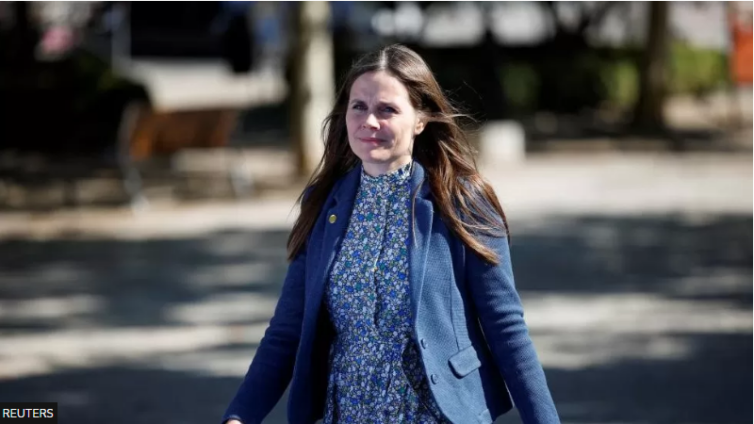
Tens of thousands of women in Iceland, including Prime Minister Katrín Jakobsdóttir, are refusing to work on Tuesday.
The "kvennafrí", or women's day off, has been called in protest at the gender pay gap and gender-based violence.
Fields in which women form the majority of workers, such as healthcare and education, are especially affected.
The planned walkout marks the first full-day women's strike since 1975.
Women and non-binary people have been urged to refuse paid and unpaid work on Tuesday, including household chores.
Some preschools and primary schools are closed, while some others that remain open are offering reduced services. Some museums, city libraries and zoos are also affected.
"I will not work this day, as I expect all the women [in cabinet] will do as well," Iceland's prime minister old the mbl.is website ahead of the protest.
Katrín Jakobsdóttir said her government was looking into how female-dominated professions are valued, in comparison to fields traditionally dominated by men.
According to the Icelandic Teachers' Union, women make up the majority of teachers at every level of the educational system, including 94% of kindergarten teachers.
Around 80% of workers at the National University Hospital of Iceland, the biggest in the country, are women.
Speaking to BBC Newshour, strike organiser Kristín Ástgeirsdóttir said violence against women remains a problem in Iceland despite high levels of gender equality.
"The theory was that the more gender equality, the less violence. That unfortunately does not seem to be the case," she said, adding: "Violence against women is deeply rooted in our culture."
Iceland has been ranked the best country in the world for gender equality by the World Economic Forum (WEF) for 14 years in a row. But the country is not completely equal, with the WEF assigning it an overall score of 91.2%.
"We're seeking to bring attention to the fact that we're called an equality paradise, but there are still gender disparities and urgent need for action," said Freyja Steingrimsdottir, one of the strike organisers, in quotes cited by Reuters news agency.
The volcanic island, which is one of the most sparsely-populated countries, ranks 14th in the world for economic participation, below countries including Liberia, Jamaica and Norway.
Around 90% of Iceland's female workforce went on strike in 1975, seeking to highlight the importance of women to the economy. The strike prompted the country's parliament to pass an equal pay law the following year.
Former Icelandic president Vigdís Finnbogadóttir told the BBC in 2015 that the 1975 strike was "the first step for women's emancipation in Iceland," which paved the way for her to become the first woman to be democratically elected head of state in the world in 1980.
Latest Stories
-
Government reiterates commitment to growth in real estate sector; Prime Accra launched
2 minutes -
Energy Minister engages key stakeholders to boost Ghana’s upstream petroleum sector
8 minutes -
Flood survivors in North East region demand non-partisan action on Pwalugu Dam Project
17 minutes -
“We’re not speaking out of vacuum” – IMANI defends SIC political inference claims
20 minutes -
GH¢20m unexecuted hospital payment exposes systemic failure in public spending – Edem Senanu
42 minutes -
Sampson Tagbor: SIGA’s B2B strategy is proactive and must be commended
44 minutes -
All set for 2026 Kwahu Business Forum
54 minutes -
Photos: Mahama welcomes Zimbabwean President Mnangagwa for 3-day state visit
1 hour -
Four killed in bus crash at Sefwi Asempanaye
2 hours -
Casual staff at Northern Regional Hospital strike over 5 months of unpaid salaries
2 hours -
GCB Bank records GH¢3.2bn profit, sets industry benchmarks in 2025
2 hours -
UK will seek closer ties with EU in light of Iran war, Starmer says
2 hours -
Maxzy’s debut EP ‘Hunter’s Tale’ chronicles pain, loyalty and survival
2 hours -
Volta Region Presiding Members backs Council of State member in EOCO dispute
2 hours -
Explosions at Burundi ammunition depot kill civilians, witnesses say
2 hours