

Audio By Carbonatix
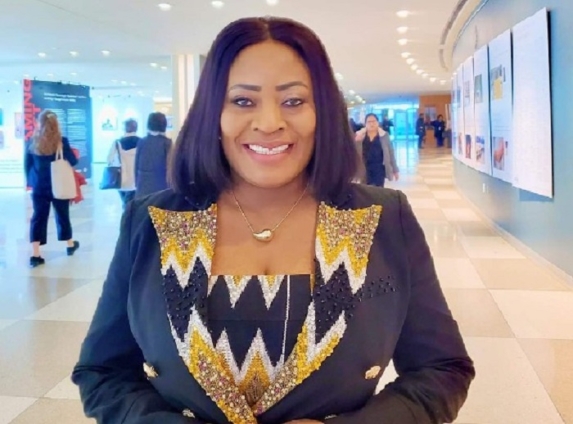
Media personality and Gender advocate Josephine Oppong-Yeboah, believes that defending the rights of women and girls will help to prevent violence and discrimination against them.
This, she notes, will help to strengthen the gains made so far in promoting and safeguarding the rights of women and girls worldwide, particularly in Africa.
She expressed the concern that available data indicates a reversal of gains made towards preventing violence and gender-based discrimination against women worldwide, a scenario she said calls for urgent action to get them addressed.
Ms Oppong-Yeboah, who is taking part in this year’s Commission on the Status of Women (68th session), which started on March 11, 2024, at the United Nations headquarters in New York, made the remarks in a media interview.
The 68th session of the Commission on the Status of Women which will end on March 22, 2024, is on the theme: “Accelerating the achievement of gender equality and the empowerment of all women and girls by addressing poverty and strengthening institutions and financing with a gender.”
Each year, the Commission on the Status of Women (CSW) meets at the United Nations headquarters in New York to discuss a priority theme, assess progress made, identify challenges ahead, and set international standards to promote gender equality and the rights of women and girls.
For Ms Oppong-Yeboah, protecting the rights of women is crucial for fostering a fair and just society where all individuals have equal opportunities, rights, and access to resources regardless of their gender.
“Gender equality is a fundamental human right. It ensures that all individuals, regardless of gender, have equal access to opportunities, resources, and freedoms,” she noted.
She observed that closing the gender gap in all areas of society can boost economic growth and productivity, saying “When women have equal access to education and employment opportunities, economies thrive.”
Ms Oppong-Yeboah also indicated that gender equality contributes to better health outcomes for both men and women, and that it enables access to healthcare services, reproductive rights, and reduces gender-based violence and discrimination, leading to improved well-being for all.
She expressed the concern that in conflict zones around the globe, for instance, women and girls are suffering most from wars waged by men.
That, she noted, when there is war, women and girls suffer most, pleading with all stakeholders to work to maintain peace in their communities.
Ms Oppong-Yeboah also called for more opportunities for women in decision-making, saying that despite evidence that women’s full participation makes peace building much more effective, the number of women in decision-making roles is falling, particularly in Africa.
Latest Stories
-
Court fines miner for breaking into gold buying shop
2 minutes -
Tarkwa court jails labourer for three years over GH¢123,000 theft
57 minutes -
GAEC must retain nuclear scientists for Ghana’s nuclear ambitions – Minister
1 hour -
Man reportedly mistaken for game and shot by hunter dead in forest
2 hours -
19-year-old mason jailed 15 years for defiling seven-year-old pupil
2 hours -
Ghana’s banking sector assets rise 20.47% to GH¢500.2bn – BoG Governor
2 hours -
22 injured as Sprinter bus overturns at Sege after tyre burst
2 hours -
UN housing expert urges Ghana to strengthen Rent Control Department amid housing affordability concerns
2 hours -
Delta-BCI partnership reaches 166,000 people with breast cancer education
2 hours -
Power restoration fault suspected in Kumasi Central Market fire
7 hours -
The 7-foot giant of Ngleshie Amanfro: Seven-foot Ghanaian Ephraim Saawa dreams of joining the national basketball team
8 hours -
Government promises support for Kumasi Central Market fire victims
8 hours -
Vibes The Movie: Big Ghun’s Ghanaian film earns five nominations at 2026 REFFA
8 hours -
‘I’m a fulfilled man’—Justice Korbieh on missing out on Supreme Court despite two nominations
9 hours -
MamaCare CEO warns unresolved conflicts among health workers could undermine maternal and neonatal care
9 hours