

Audio By Carbonatix
The Western Region, long regarded as a major hub for artisanal and small-scale gold mining, is experiencing an alarming expansion of mostly unregulated and unlicensed mining activities, commonly known as galamsey.
A new report by the Global Initiative Against Transnational Organised Crime reveals that while the region’s economy is largely driven by agriculture, employing about 70% of its estimated two million residents, there is a growing dependency on mining and its allied sectors, including oil and gas extraction, cocoa processing, timber, and palm oil production.
However, it is illegal gold mining, often conducted under the radar of regulatory authorities, that is rapidly transforming the economic and environmental landscape of the region.
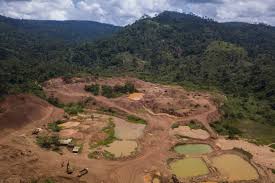
Satellite imagery analysed between 2015 and 2021 highlights a significant surge in artisanal and small-scale gold mining activity, particularly around Wassa Akropong and Asankragua, where the communities are emerging as gold trade hotspots.
Illegal mining beyond boundaries
The report underscores that while it is difficult to determine the legality of every mining site without physical inspection, a significant portion of ASGM operations clearly extend beyond licensed mining concessions. Some also take place within concessions designated solely for exploration, not exploitation, and others flout basic environmental and health regulations, qualifying them as unlicensed operations under the country's law.
According to the report, overlaying satellite imagery with the mining cadastral maps reveals a disturbing picture: vast stretches of mining activity occurring illegally, both outside sanctioned zones and within areas where miners lack the appropriate licences or permits.
The phenomenon, experts warn, is not merely a question of geography but of impunity and weak regulatory enforcement.
Asankragua: a new mining frontier
While Wassa Akropong has long been on the radar of researchers and authorities, the growth of artisanal and small-scale gold mining in and around Asankragua marks a new frontier. Once overlooked, Asankragua has become a burgeoning hotspot, with predictive computer models indicating strong potential for further mining activity in its environs.
The researchers attribute this development to the arrival of foreign nationals, particularly Chinese actors, who are introducing sophisticated technologies and accelerating the scale and intensity of artisanal and small-scale gold mining operations.
This foreign influence, the report notes, has brought with it an influx of advanced mining machinery and processing techniques, facilitating a gold rush that is not only largely unregulated but also environmentally destructive, the report stated.
Cocoa plantations under threat
One of the most troubling consequences of this illegal mining boom is the widespread destruction of cocoa plantations, a critical source of livelihood for thousands of rural families in the Western Region.
According to the findings, in many communities, gold mining pits have replaced cocoa farms, undermining food security and threatening the country's global reputation as a top cocoa producer.
Images captured near Abooso, for example, show shocking levels of deforestation and water turbidity, both indicators of environmental harm caused by unregulated mining. Ground-truthing exercises, or field verification visits, remain essential for confirming satellite findings and gauging the true extent of the damage.
Call for stronger oversight and enforcement
The report calls for urgent policy attention and enhanced regulatory oversight. It recommends more consistent ground-based investigations to supplement satellite surveillance and advocates for the review of current mining policies to ensure proper licensing, compliance, and enforcement mechanisms.
Environmentalists and local leaders are also calling for a rethinking of the development model in the region. “We cannot trade our forests, farms, and water bodies for short-term gain,” one local official remarked. “Ghana must invest in sustainable mining practices and community engagement, especially in high-risk zones like Asankragua.”
Below is the full report
Latest Stories
-
Building cost inflation declines to 3.9% at start of 2026
4 minutes -
Why Litina Travels is the smart choice for fans heading to the 2026 World Cup
29 minutes -
Free Food Company marks Valentine’s Day with community love outreach
42 minutes -
Voazok positions Ghana as a global agribusiness destination through international leadership exchange
54 minutes -
Ghana overtakes Cote d’Ivoire as second largest economy in West Africa – Mahama
1 hour -
Planned maintenance not ‘dumsor’ – ECG assures public
1 hour -
COCOBOD refutes GH¢12m Black Stars sponsorship allegation
1 hour -
John Bart Addo declares bid for NPP USA Branch Youth Organiser position
1 hour -
Global crude gains outpace cedi appreciation as external pressures drive March fuel hike
1 hour -
Shortage of 10 pesewas coin affects price of sachet water in Koforidua
2 hours -
NPP General Secretary urges sympathisers to formalise membership in upcoming registration
2 hours -
Veep to be special guest of honour at 78th Remembrance Day
2 hours -
GIFF demands independent probe into 18-truck BOE incident, warns against transit policy backlash
2 hours -
Pump prices set to rise again with petrol up 3.59%, diesel 1.52% in March window
2 hours -
Why rename Bawumia’s G4R policy and claim it is new? – Gideon Boako questions government
2 hours