

Audio By Carbonatix
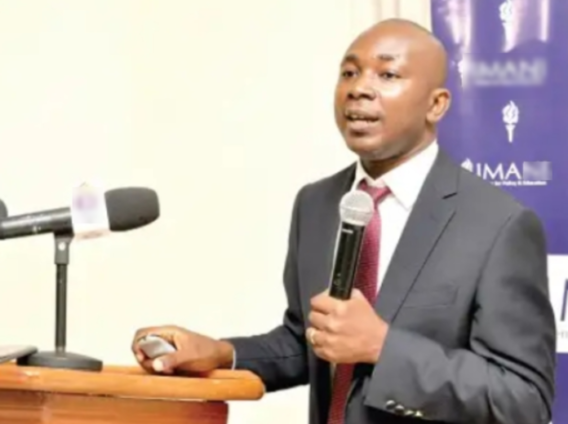
Economist Professor Godfred Bokpin has expressed worry that the design of the current International Monetary Fund (IMF) programme does not address the leakages and wastage of public funds.
According to him, the Fund overemphasised the need to increase revenue without setting up anti-graft systems that will prevent corrupt acts in Ghana’s public financial management system.
Speaking to Joy Business, Prof. Bokpin, argued that the current deal will leave Ghanaians more vulnerable.
“I have a problem with the design of the programme. By the time we are done, it will leave more Ghanaians vulnerable than it sought to achieve”, he said.
He explained that even though Ghana’s tax-to-GDP is not the best, improving revenue collection without blocking the loopholes that encourage corruption will yield little results.
“In as much as a spoiled child needs money, that spoiled child needs more discipline and measures to tackle corruption”, he said, adding that increasing revenue without proper measures to ensure its efficient usage will be counterproductive.
Prof. Bokpin is of the view that for a developing country with revenue leakage challenges, the programme should have outlined strict measures that will be disincentive acts of corruption.
“I have gone through the programme. The programme is largely mute on corruption measures. The programme is largely mute on wasteful expenditure cut. The programme is heavily based on revenue based fiscal consolidation. I think by design, it is an error”.
He stressed that it will be in the interest of the country to self-impose anti-graft measures to stop wastage in the public sector.
Businesses unhappy with aggressive revenue moves
The Ghana National Chamber of Commerce and Industry (GNCCI) earlier expressed worry about the revenue mobilisation under its $3 billion IMF support programme.
According to the Chamber, if the suggestions are implemented, it will adversely affect businesses that are already burdened with numerous taxes and other unfavourable conditions.
The Chief Executive Officer of the Chamber, Mark Badu-Aboagye indicated that at present, the country is undergoing some level of economic crisis.
“Businesses in Ghana are very ready. I told you, the last time that we conducted a research, we realised that the SMEs in Ghana are growth-oriented, which means that by giving them the opportunity they can grow to become multinationals.
However, he pointed out that, “When you introduce externalities like taxes, like high-interest rates, like levies, then you go to the bottom line and you realise that all of them are making losses, which means that, that component needs to be managed”, he said.
Latest Stories
-
Government reaffirms commitment to combat Human Trafficking at first 2026 HTMB meeting
20 seconds -
TaxForGalamsey: Awula Serwah slams ‘ignorance’ defence in levy scandal, demands sanctions for MMDCEs
23 minutes -
Collecting levies from galamseyers is wrong; sanctions must be enforced – Kenneth Ashigbey
32 minutes -
BeTechConnected launches Future of Work Africa Podcast to amplify African voices on jobs, innovation
42 minutes -
Rejecting pesewa coins is illegal, fuels inflation – BoG warns traders
1 hour -
New Juabeng MP seeks details on GRA’s customs AI system
1 hour -
TaxForGalamsey: Levies were institutional, not personal – Kwakye Ofosu explains lack of sanctions
1 hour -
Feeding Hungry Pupils: 38-year-old female teacher initiates food bank to promote teaching and learning at Abankoro
2 hours -
Education Minister announces 2027 start date for Jomoro College project in Western Region
2 hours -
‘Sit us down and explain ‘it’—Customs agents raise alarm over new GRA AI system
2 hours -
Gov’t commits GH¢25m seed fund to Ghana Defence University project
2 hours -
Fighters condemns PAC Chair Abena Osei-Asare over Agbana comments; renew call for inclusive politics
2 hours -
72 Days to Mundial: Ghana’s risky gamble after sacking Otto Addo
2 hours -
Health Ministry boosts cardiovascular care with new guidelines, GH¢6m equipment support
2 hours -
OmniBSIC Bank delivers 104% profit growth, assets and deposits double in 2025
2 hours