


Audio By Carbonatix
Associate Director, Financial Advisory at Deloitte Ghana, Dennis Brown, has advised downstream petroleum sector players to manage their finances in a transparent manner to convince banks and other financial institutions to finance their operations without any second thought.
Speaking as a panelist on the topic “Industry and Banking” at the just-ended Downstream Petroleum Dialogue organised by the Chamber of Oil Marketing Companies (COMAC), Mr. Brown said banks are mindful of the business environment and would therefore lend only to businesses that are fund ready - that is businesses that can sufficiently demonstrate ability and capacity to repay loans advanced to them.
Among other suggestions, he encouraged the petroleum downstream players (Oil Marketing Companies, LPG Marketing Companies and the Bulk Oil Distributors) to develop robust and efficient working capital management structure, invest in relationships and partnerships that ensure a constant supply of petroleum products and invest in systems that facilitate transparent and accurate financial reporting process to assure banks and other capital providers that they can make good use of the loans advanced to them and to successfully pay back.
According to Mr. Brown, financing is a big thing for every industry, including the oil and gas sector.
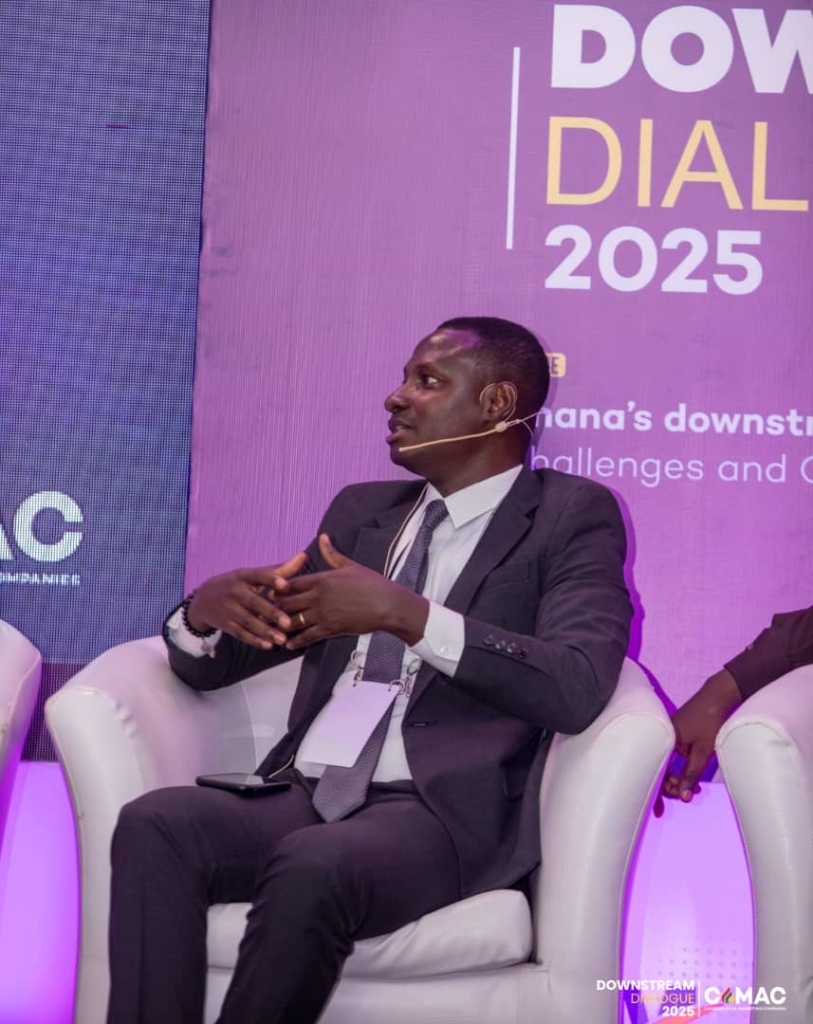
He stressed that; “You [the downstream petroleum players] are operating in a margin-driven business and therefore [your ability to push] volumes [into the market] is key [for the financial sustainability of your business]. Are you able to demonstrate to the banks, [as they assess your funding requests], that you have [in place the partnerships and relationships required to ensure] a constant supply of the products? The demand for petroleum products is regarded as inelastic in nature, meaning that, [as an essential commodity], consumers will buy the quantities they need [with little recourse to price]. But on your part, are you able to [reasonably] demonstrate [strong] access to a reliable source of supply to feed the market?”
“In terms of your business model, do you sell on credit? And if you do, are you able to manage your working capital such that you get [to realise] cash from your credit sales early enough to fund the working capital cycle? For instance, there are large institutions that procure products from you and are supposed to pay in 30 days. If it takes you 60 to 90 days to receive the cash from them, you may run out of stock and may] need to resort to costly short-term loans (i.e. bridge financing) [to replenish your stock]. This will reduce your margins and [reduce your creditworthiness], make it difficult for banks to lend you money”, he explained.
He further added that “If your bank is going to give you money, they’re going to look at your financial records”.
Mr. Brown suggested that businesses may present a funding request that is tied to a forward-looking project and the projections may look great, but all of that will be dependent on certain assumptions made by the business managers. However, banks “will look to validate those assumptions using the historical data that you have. The first thing they would look at is how credible the data is. Has the data been prepared through transparent processes? is it accurate enough to facilitate effective decision making?”.

Banks Urged to Establish Tailored Risk Management Framework
The banks were also urged to establish a tailored Risk Management Framework for the Petroleum Sector.
Continuing, Mr. Brown encouraged banks not to shy away from financing activities of the petroleum downstream players, despite the enormous challenges.
He therefore wants the banks to implement a robust risk management framework tailored to the peculiar needs of the petroleum downstream sector to avoid shooting down funding requests based on overly generic risk assessments of the projects.
“The consideration is that banks can get down there [petroleum downstream sector] and develop something more tailored in terms of the risk management framework, understand the sector and go beyond [just identifying the risks to developing risk management solutions] and also be able to develop expertise internally around the complexities and the technical considerations in those sectors to be able to better understand the risks and also to develop tailored products [for the sector]”.
“More often, when banks see unmitigated risks along the project appraisal process, they raise their hands [they don’t want to go ahead] rather than looking at options available to mitigate those risks. Mr. Brown advised that banks could consider more innovative approaches. For instance, “can they bring another partner [bank to syndicate] on board? Can they bring the insurance sector players on board [to help address some of the unmitigated risks]?”, he added.
The Downstream Petroleum Dialogue brought together stakeholders in the downstream petroleum sector to discuss pertinent issues, share insights and develop actionable strategies for industry growth and sustainability.
Latest Stories
-
Ghana Embassy in Switzerland engages community to mark 69th Independence Anniversary
4 minutes -
DPS International and Peculiar International shine at Ghana Inter School Festival
7 minutes -
National Service Authority orders NSPs at CLOSAG institutions to continue work during strike
14 minutes -
Scholarship beneficiaries are Ghanaians, not foreigners – Scholarship Authority boss
24 minutes -
NDPC Director-General stresses planning, coordination for effective district development
25 minutes -
Oh Joo returns with Turd Talks 2.0: a night of comedy and creative presentations
26 minutes -
AIMS Ghana, GES , GETFund partner to celebrate International Day of Mathematics 2026
27 minutes -
‘Sukudai’ cocktail may pose serious kidney and liver risks after lab tests kill rats within 24 hours
27 minutes -
‘We didn’t play well’ – Semenyo on defeat to Real Madrid
30 minutes -
Shatta Wale teams up with John Legend for new single ‘Ain’t Nobody’
41 minutes -
Weija Dam encroachers to face crackdown – Works and housing minister
49 minutes -
Dr Apaak hails top 2025 WASSCE candidates as role models of excellence
50 minutes -
WPL: ‘We want to win the league for Milot Pokuaa’ – Hasaacas Ladies squad promises
53 minutes -
Real Madrid ‘brought us down to earth’ – Antoine Semenyo on Man City defeat
54 minutes -
Chinese national arrested over attempt to smuggle 2,000 queen ants from Kenya
54 minutes