

Audio By Carbonatix
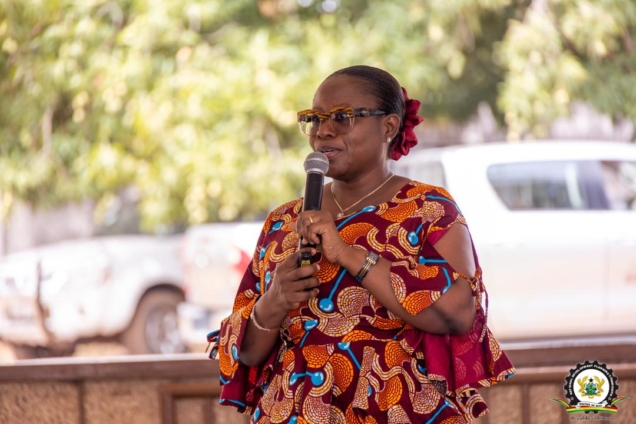
The Director-General of the National Development Planning Commission (NDPC), Dr. Audrey Smock Amoah, has emphasised the central role of structured planning and reporting in driving development across Ghana’s districts.
Speaking at a stakeholders’ engagement in the Northern region on Wednesday, 11th March 2026, the Director-General highlighted the importance of the District Performance Assessment Tool (DPAT) in promoting accountability and ensuring that districts align their activities with national development priorities.
“The DPAT ranks all districts, and I do not think any district would want to find itself in the last position,” Dr. Amoah said.
“The assessment is largely plan-based, meaning the key documents required are the development plan and the Annual Action Plan. With our new digital platforms, much of the assessment relies on the documents submitted, with minimal human intervention.”
She stressed that when monitoring teams from development partners or oversight institutions such as the Internal Audit visit, these documents are always the first point of reference, highlighting the critical role of planning in accessing resources.
Dr. Amoah further explained that monitoring and evaluation operate through a structured system that flows from the national to the sub-national level.
“If project managers delay in providing information at the district level, it affects the entire national reporting system,” she noted.
“Any delay in submitting reports, such as the 2025 Annual Progress Report, impacts the preparation of the National Annual Progress Report. Timely and accurate reporting ensures that development interventions respond effectively to the needs of the people.”
She urged local leaders to take ownership of the planning process, emphasising that development plans should capture community concerns, align with national policies, and be properly implemented.
“Preparing a development plan is not just desk work; it requires engagement with communities, adequate logistical support, and commitment to follow through. Your role is to ensure that plans are not only prepared but also effectively executed, monitored, and reported on.”
Highlighting the importance of continuous oversight, Dr. Amoah drew attention to existing institutional structures.
“District Planning Coordinating Units are expected to meet quarterly to review implementation, identify challenges, and make corrections early. When planning is done thoroughly, development activities can be executed systematically and at a reasonable cost, rather than reacting to emergencies,” she said.
Concluding her remarks, Dr. Amoah noted that the Regional Integrated Development Plan, which combines the priorities of all districts within a region, serves as a cornerstone for coordinated and sustainable development.
Latest Stories
-
Top-Up Pharmacy wins Community Pharmacy Chain of the Year at 2026 PSGH Pharma Excellence Awards
6 seconds -
Nigeria military aircraft with 32 on board crashes
3 minutes -
Black Stars need a coach who can inspire players to perform – Ignatius Osei Fosu
4 minutes -
Revenue collector crushed to death on Kasoa-Winneba highway
8 minutes -
GPL Week 5: Stephen Amankona, 8 other outstanding players win NASCO awards
10 minutes -
NPP’s new leadership team has experience to deliver – Dr Asah-Asante
10 minutes -
Mahama committed to developing Volta Region – Chief of Staff
11 minutes -
NPP’s new leadership offers no renewal after ‘micro minority’ defeat – NDC’s Abeiku Hayford
13 minutes -
Blackstar Experience to hold fashion show and summit in November
13 minutes -
Prof Mike Oquaye backs Kojo Bamba’s call for stronger ballot protection
23 minutes -
If police won’t protect you, you’ll protect yourself – Prof Mike Oquaye backs Kojo Bamba’s election
24 minutes -
Spotify makes fandom the ticket with debut Surround Sound experience in Lagos
34 minutes -
Deputy Interior Minister calls for joint action to strengthen Ghana’s cybercrime response
44 minutes -
Gov’t announces plans to create 20,000 jobs in waste management, circular economy
49 minutes -
T-bills auction: Government exceeds target by 30%, but demand to remain relatively soft at next auction
51 minutes