

Audio By Carbonatix
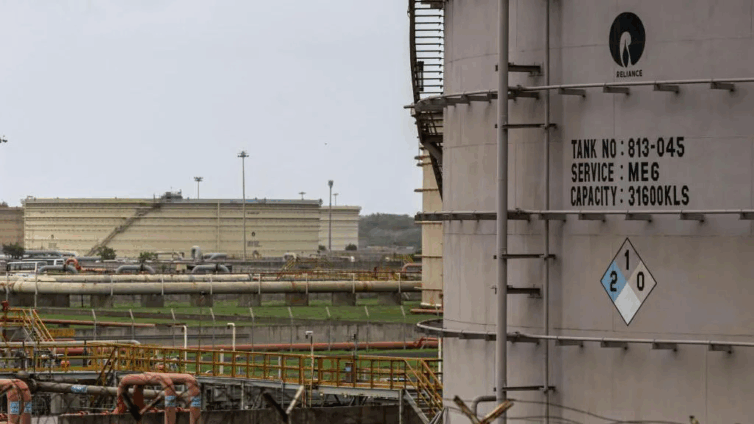
India's largest conglomerate Reliance Industries, owned by billionaire Mukesh Ambani, has stopped importing Russian crude oil for its export-only refining unit at Jamnagar in the western state of Gujarat.
The move aims to comply with an EU ban on fuel imports made from Russian oil through third countries, which takes effect next year. It also aligns with US sanctions on major Russian oil producers Rosneft and Lukoil, set to kick in on Friday.
"This transition has been completed ahead of schedule to ensure full compliance with product-import restrictions coming into force on 21 January 2026," Reliance said in a statement.
The White House has welcomed the move by Reliance.
"We welcome this shift and look forward to advancing meaningful progress on US-India trade talks," the White House press office said, in a statement to the Washington Post.
Delhi's purchase of Russian oil has been a major sticking point between India and the US. Trump slapped India with 50% tariffs in August, including a 25% penalty for buying Russian oil and arms, which he says was funding Moscow's war on Ukraine - a charge India has denied.
India's purchases of discounted Russian oil shot up from barely 2.5% of imports before the war began in 2022, to around 35.8% in 2024-25.
Reliance is India's largest importer of Russian oil, and accounts for around 50% of Russian oil flows into the country.
The Jamnagar refinery is the largest single-site refining complex in the world - with two separate units dedicated for exports and the domestic market.
Mounting global pressure appears to be having a desired effort on India after months of resistance from Delhi to reduce oil purchases from Moscow. Over the past couple of months, oil refiners in India have been lowering their imports, according to several reports.
Reliance reduced orders from sanctioned Russian companies by 13% while increasing monthly imports from Saudi Arabia to 87% and Iraq to 31% in October, according to a Carnegie Endowment report.
Indian state-controlled refineries are also skipping Russian crude imports for December contracts according to Bloomberg.
Given India has sharply curtailed its imports, Washington must "immediately scrap the additional 25% tariff on Indian goods", Ajay Srivastava of the Global Trade and Research Initiative (GTRI) think-tank said.
"Maintaining the tariff despite India meeting US expectations undermines goodwill and risks slowing already delicate trade negotiations," Mr Srivastava said.
Negotiations for a broader trade deal between India and the US have been severely hampered by the former's Russian oil purchases, but the tensions appear to be gradually letting up after months of uncertainty.
Latest Stories
-
President Mahama is not sincere with Ghanaians on LGBTQ bill matter – Hassan Tampuli
4 minutes -
Gov’t to establish Prison Industrial Hub to equip inmates with income-generating skills – Prison Service boss
23 minutes -
Alhassan Tampuli donates cement, roofing sheets to support storm victims in Gushegu
23 minutes -
Alhassan Tampuli appeals for urgent support for storm victims in Gushegu
26 minutes -
The hypocrisy must stop; pass Anti-LGBTQ+ Bill now – Alhassan Tampuli to Mahama
30 minutes -
Imprisonment should be rehabilitative, not punitive – Ghana Prisons boss at UNGA
52 minutes -
Ga Adangbe traditional priests petition Mahama over McDan aviation licence revocation
1 hour -
Anti-LGBTQ Bill: NDC’s arrogance is worrying – Hassan Tampuli
1 hour -
Let’s give OSP time to mature, not to scrap it – Hassan Tampuli
1 hour -
Nigeria convicts 386 Islamist militants in mass trials
1 hour -
Djibouti president wins election with 97.8% of vote, state media says
1 hour -
We don’t have mandate to deduct tax from rent allowance of security services personnel – Interior Ministry clarifies
2 hours -
Ablakwa receives Presidential Special Envoy on Reparations to advance global agenda
2 hours -
Christina Koch becomes first woman to travel around the moon on Artemis II
2 hours -
Epstein survivors’ calls to meet King Charles and Queen harder to ignore as US visit approaches
2 hours