

Audio By Carbonatix
The National Disaster Management Organisation (NADMO) has warned that persistent indiscipline among Ghanaians is undermining efforts to tackle flooding, particularly in urban centres.
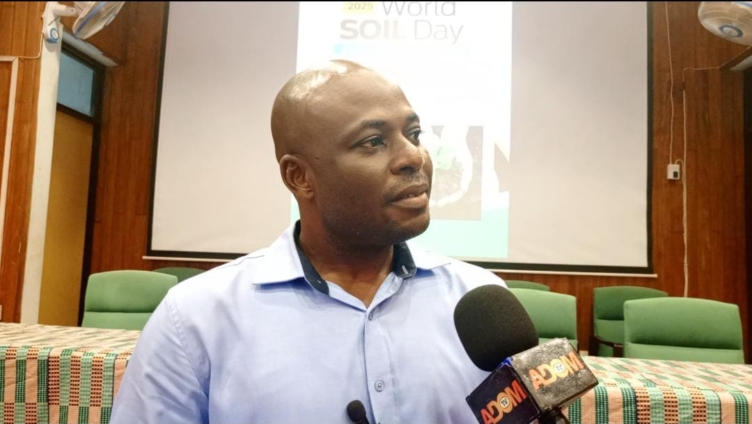
The Kumasi Metropolitan Assembly (KMA) NADMO Administrator, Jamal-Deen Ibrahim Seidu, said irresponsible waste dumping, illegal construction and disregard for drainage regulations remain the major drivers of flooding in the Ashanti Region.
Speaking on the sidelines of the World Soil Day celebration at the Soil Research Institute of the Council for Scientific and Industrial Research (CSIR-SRI) in Kumasi, Mr Seidu stressed that authorities cannot win the fight against floods without a change in public behaviour.
“Floods in the Ashanti Region are largely a result of indiscipline,” he said. “People throw rubbish into gutters, block waterways, and build on waterlogged land. When the rains come, the water has nowhere to go.”
He revealed that a new law awaiting presidential assent will empower NADMO to demolish structures illegally erected in flood-prone areas, a move he believes will strengthen enforcement.
“We need the legal power to act decisively,” Mr Seidu noted, adding that weak enforcement has allowed encroachment on waterways to persist over the years.
Despite the challenges, he said the region recorded relatively low flood incidents in 2025, attributing the improvement to intensified public education and sensitisation campaigns.
“Because of the heightened sensitisation, we did not experience any flood cases that got out of control, especially here in the Kumasi metropolis,” he stated.
Mr Seidu also disclosed that NADMO has been organising regular clean-up exercises across the metropolis, clearing choked gutters and removing waste to allow free flow of rainwater. These interventions, he said, helped prevent major flooding during the rainy season.
He further called on gthe overnment to redesign and upgrade drainage systems, arguing that many existing structures are outdated and unable to handle increasing rainfall linked to climate change and rapid urbanisation.
The World Soil Day event, held under the theme “Healthy Soil for Healthy Cities,” brought together researchers, students, local authorities and environmental groups, who all emphasised the need for responsible land use and proper waste management.
Mr Seidu urged residents to stop dumping refuse into waterways, respect drainage easements and report illegal developments, warning that flooding remains a shared responsibility.
“Together we can turn the tide against flooding,” he concluded.
Latest Stories
-
Mother arrested for allegedly severing daughter’s toe in Juaboso
17 minutes -
Iran and US race to find missing American crew member downed in fighter jet
2 hours -
Gomoa Easter Carnival: Samini, Ofori Amponsah and Kwabena Kwabena rock Day 2; Obrafour and Kwaw Kese set for Day 3 showdown
3 hours -
‘Comical joke’: Atta Akyea disputes ‘personal account’ claim in former NSB boss Adu-Boahene case
3 hours -
Kenpong intervenes as Afua Asantewaa, husband reconcile after public scrutiny
3 hours -
“Pay this, pay that, and the patient dies” – Former UGMC boss demands end to cash-and-carry in emergency care
3 hours -
Free Primary Healthcare: Gov’t floods clinics with 24,500 medical tools ahead of April 15 launch
4 hours -
Agyarko bolsters NPP chairmanship bid with Henry Quartey and Osei-Owusu as campaign leads
4 hours -
Sky-high spectacle as 2026 Kwahu Easter Paragliding Festival takes flight
5 hours -
Asiedu Nketia supports AshantiFest 2026 art initiative with GH¢50,000
5 hours -
Former UGMC boss recounts ‘up and down’ hospital nightmare resulting in niece’s death
5 hours -
Artemis II crew take ‘spectacular’ image of Earth
6 hours -
Afenyo-Markin criticises high costs stifling Ghanaian startups
6 hours -
Afenyo-Markin slams school feeding contractors for snubbing local rice farmers
6 hours -
This Saturday on Newsfile: Galamsey taxes, sole-sourcing probes, the Black Stars and presidential dialogue post-mortem
7 hours