

Audio By Carbonatix
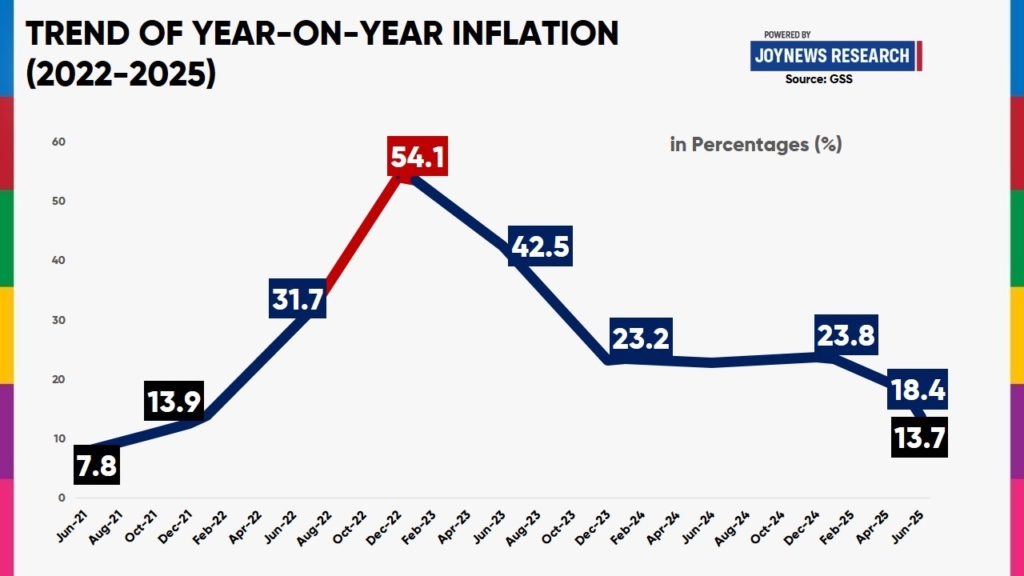
Ghana’s inflation rate has dropped significantly to 13.7% in June 2025, down from 18.4% in May. That’s a steep 25.5% decline, and the lowest figure recorded since late 2021.
It also marks the sixth consecutive month of disinflation, continuing a downward trajectory from 23.5% in January. Just 18 months ago, in December 2022, inflation peaked at a staggering 54.1%.
By all accounts, this is a promising development. So why do prices in markets and retail shops still feel high?
Disinflation deflation
The short answer: Disinflation is not the same as deflation. What we’re witnessing is a slowdown in the rate at which prices are increasing, not a decline in prices.
A lower inflation rate means that prices are rising more slowly than before, not that they’re reversing.
Take a basic example: if the price of kenkey rose from GHS 3 to GHS 7 during the height of inflation, a decline in the inflation rate doesn’t mean it will drop back to GHS 3. Prices tend to be "sticky" downwards—a well-known economic phenomenon.
Once they go up, they rarely come down with the same speed or ease. This stickiness is partly due to structural factors. Businesses still bear fixed costs like rent, salaries, and logistics that don’t drop just because inflation does.
There’s also strategic caution. Businesses fear that lowering prices may signal instability, confuse customers, or even trigger a damaging price war.
So prices often stay put unless companies are compelled by market competition or significant cost savings to adjust downward.
But aren’t economic conditions improving?
To be fair, the broader economic environment has seen tangible improvements. The cedi has strengthened. Global and domestic fuel prices have eased. Transport fares have even dropped by 15% in recent weeks.
Yet many retailers argue that they are still selling off inventory acquired when the cedi was weaker and fuel was pricier.
In other words, the high input costs from months past are still baked into the prices of goods currently on shelves. Until that stock is depleted and replaced at a lower cost, consumers are unlikely to see major relief.
But this rationale may be wearing thin.
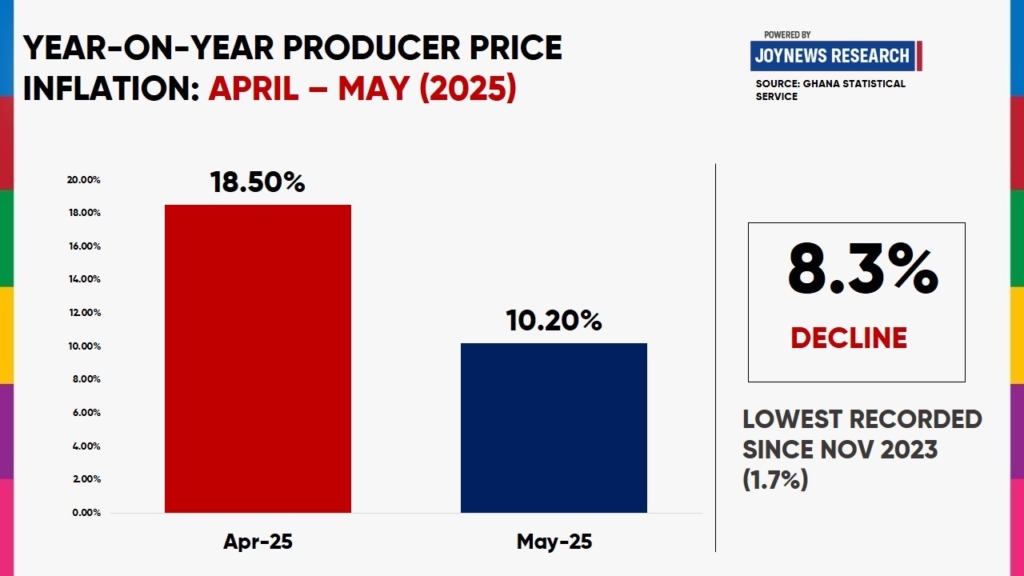
Data from the Ghana Statistical Service shows the Producer Price Index (PPI), which measures the average change over time in the selling prices received by domestic producers, fell by 8.3% between April and May 2025.
This decline suggests that production costs are beginning to ease more substantially. If the downward trend continues, the pressure on final consumer prices should start to ease as well.
The real question now is: How long will it take for these cost savings to trickle down to consumers? And at what point do retailers lose the justification to maintain elevated prices?
Until then, the gap between falling inflation and persistently high prices will remain a source of public frustration, even as economists cautiously celebrate the numbers.
Latest Stories
-
Government reiterates commitment to growth in real estate sector; Prime Accra launched
2 minutes -
Energy Minister engages key stakeholders to boost Ghana’s upstream petroleum sector
7 minutes -
Flood survivors in North East region demand non-partisan action on Pwalugu Dam Project
16 minutes -
“We’re not speaking out of vacuum” – IMANI defends SIC political inference claims
19 minutes -
GH¢20m unexecuted hospital payment exposes systemic failure in public spending – Edem Senanu
41 minutes -
Sampson Tagbor: SIGA’s B2B strategy is proactive and must be commended
43 minutes -
All set for 2026 Kwahu Business Forum
54 minutes -
Photos: Mahama welcomes Zimbabwean President Mnangagwa for 3-day state visit
1 hour -
Four killed in bus crash at Sefwi Asempanaye
2 hours -
Casual staff at Northern Regional Hospital strike over 5 months of unpaid salaries
2 hours -
GCB Bank records GH¢3.2bn profit, sets industry benchmarks in 2025
2 hours -
UK will seek closer ties with EU in light of Iran war, Starmer says
2 hours -
Maxzy’s debut EP ‘Hunter’s Tale’ chronicles pain, loyalty and survival
2 hours -
Volta Region Presiding Members backs Council of State member in EOCO dispute
2 hours -
Explosions at Burundi ammunition depot kill civilians, witnesses say
2 hours