

Audio By Carbonatix
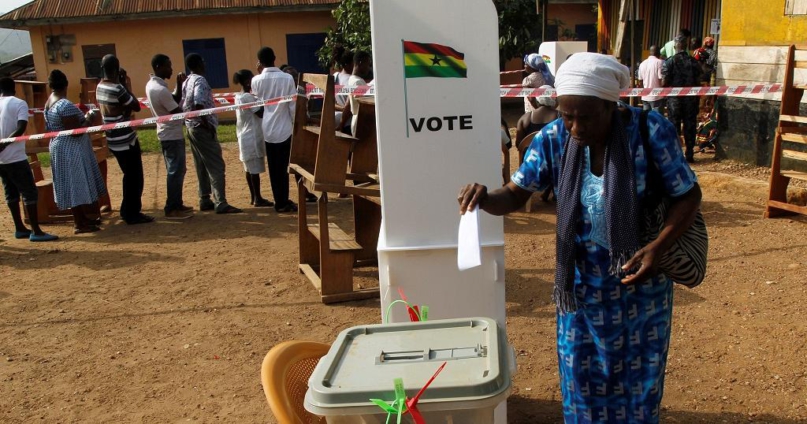
On December 7th, over 15 million Ghanaians are expected to head to the polls to elect a president and some 275 members of parliament. The total number of polling stations has increased from 28,992 in 2016 to 31,851 (provisional).
The regional breakdown of these numbers are yet to be published by the Electoral Commission. For over 1 million first-time voters, election observers and the diplomatic community, it is important to understand what happens on election day, from when ballots are cast to the declaration of the results.
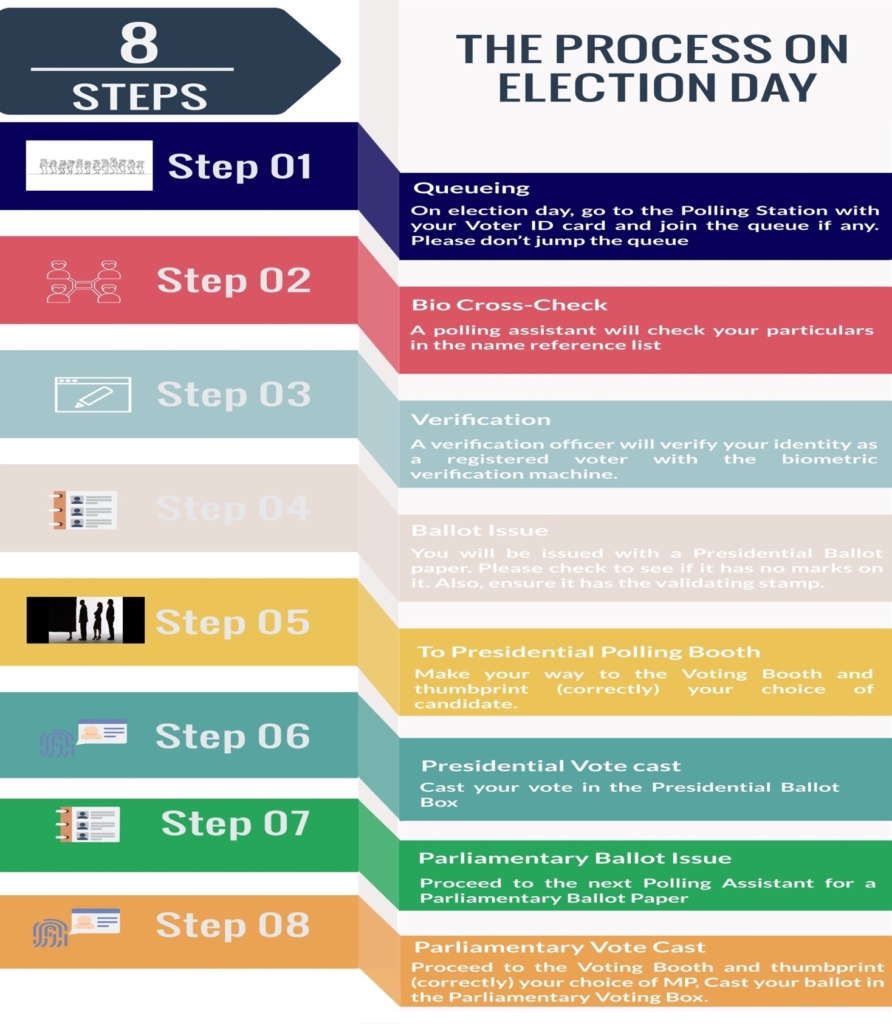
Here is the process of vote casting;
The law states that a person after casting their ballots should leave the Polling Station, they can return at the close of polls for the count.Each constituency is broken down into electoral areas and then further divided into polling stations.
At the polling stations you are likely to see a Returning Officer (RO), Presiding Officer (PO), about 5 Polling Assistants, 2 Party Representatives; Presidential Candidate and Parliamentary Candidate for each party or candidate and at least 1 security personnel. Both the presidential candidate and parliamentary candidates can pick a Counting Agent each if they choose. Unless otherwise directed by the candidate, a polling agent appointed by a candidate shall act as a counting agent.
After casting of votes, the next step is vote counting and collation of results. Counting and declaration of results at voting stations are done in the presence of party representatives by the presiding officer.
Each party representative is expected to sign a form accepting the openness of the process or to fill a form contesting the procedure and asking for a recount. If there is a need for recounting, the PO would do so accordingly. In the event the PO feels there isn’t good enough reason to recount, the recounting will be done by the RO at the Constituency Collation Center.
Ballot boxes, under security presence, are sent to the next stage which is known as the constituency collation centers where all polling station figures are pooled together and summed. The officer in charge declares two sets of results, the presidential and parliamentary figures.
The winner of the parliamentary vote becomes the MP-elect for the constituency whiles the figures for the presidential race are sent to the regional collation centers. There, other constituencies will be added and a regional lump figure is declared.
In essence the process is clear and straightforward with multiple checks and presiding members from different parties, election officials and in some cases election observers from multiple domestic and international bodies
Latest Stories
-
U-17 AFCON 2026: Ghana drawn in tough group as Black Starlets eye World Cup return
1 minute -
NRSA recommends strict enforcement of laws banning right-hand drive imports
9 minutes -
‘Don’t belittle our intelligence’ – Methodist Bishop criticises Kwakye Ofosu over LGBTQ comment
9 minutes -
Ghana’s crude oil output declines for 6th consecutive year – PIAC
12 minutes -
$434m in oil revenue allocated to Big Push Programme — PIAC
13 minutes -
Ghana’s oil production hits 694 million barrels since 2010 – PIAC report
21 minutes -
Ghana records 7.5% economic growth in January 2026, services sector leads expansion
25 minutes -
One-cedi levy essential to keep power sector afloat- Ben Boakye
27 minutes -
Nii Noi marks Easter with donation of medical equipment to Taifa Polyclinic
27 minutes -
Police arrest man over viral video that sparked public fear
29 minutes -
Tamale water crisis a “major headache”, but government will fix it — Haruna Iddrisu
31 minutes -
Finance Ministry directed SOEs to do business with SIC but order was verbal, says SIC Life MD
32 minutes -
Cabinet to decide on fuel measures amid rising prices – Edudzi Tameklo
34 minutes -
Minority considers petition to Asantehene over cocoa price cuts
36 minutes -
Insurance Brokers join IMANI petition to end political interference in state insurance placements
38 minutes