

Audio By Carbonatix
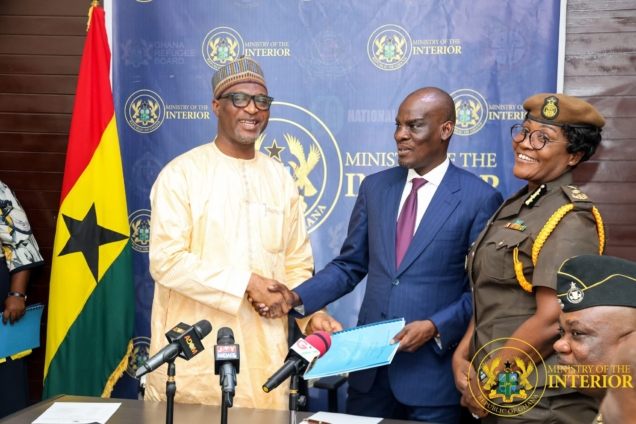
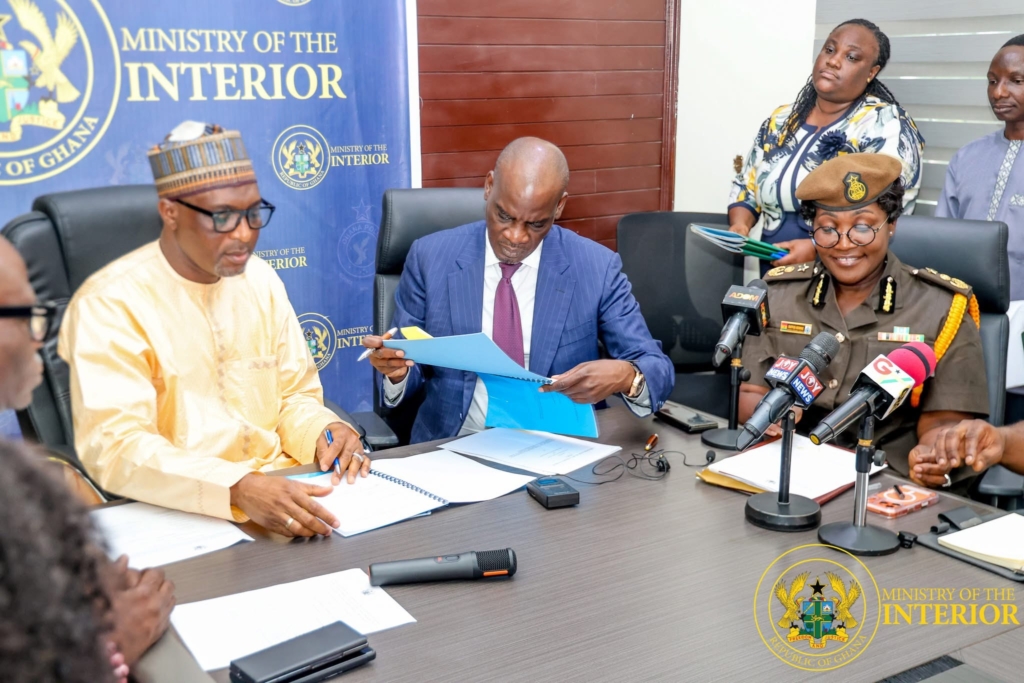
The Ministries of the Interior and Education have signed a Memorandum of Understanding (MoU) to enable the Ghana Prisons Service to produce and supply at least 30 per cent of sanitary pads, school uniforms and furniture for schools across the country.
The signing ceremony, held at the Ministry of the Interior in Accra, forms part of the government’s broader agenda to strengthen local production, ensure value for money in public procurement, and support inmate rehabilitation while meeting critical needs within the education sector.
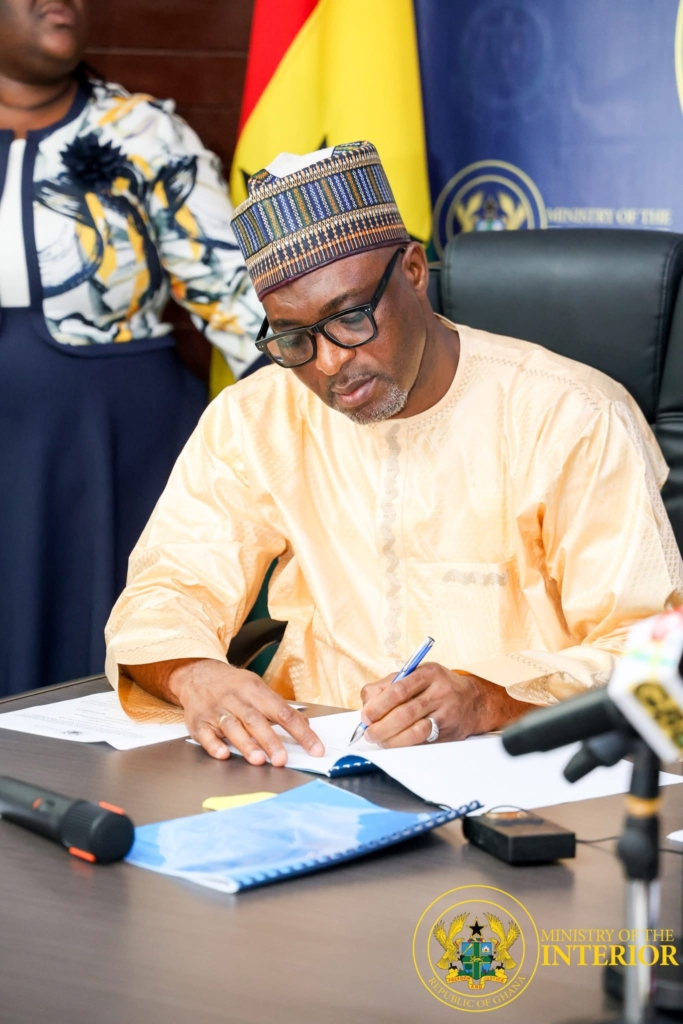
Minister for the Interior, Muntaka Mohammed-Mubarak, described the initiative as a deliberate policy decision that places education at the heart of national development.
He said anchoring the production of essential educational materials within state-owned institutions would help improve efficiency, promote transparency, and guarantee timely supply.
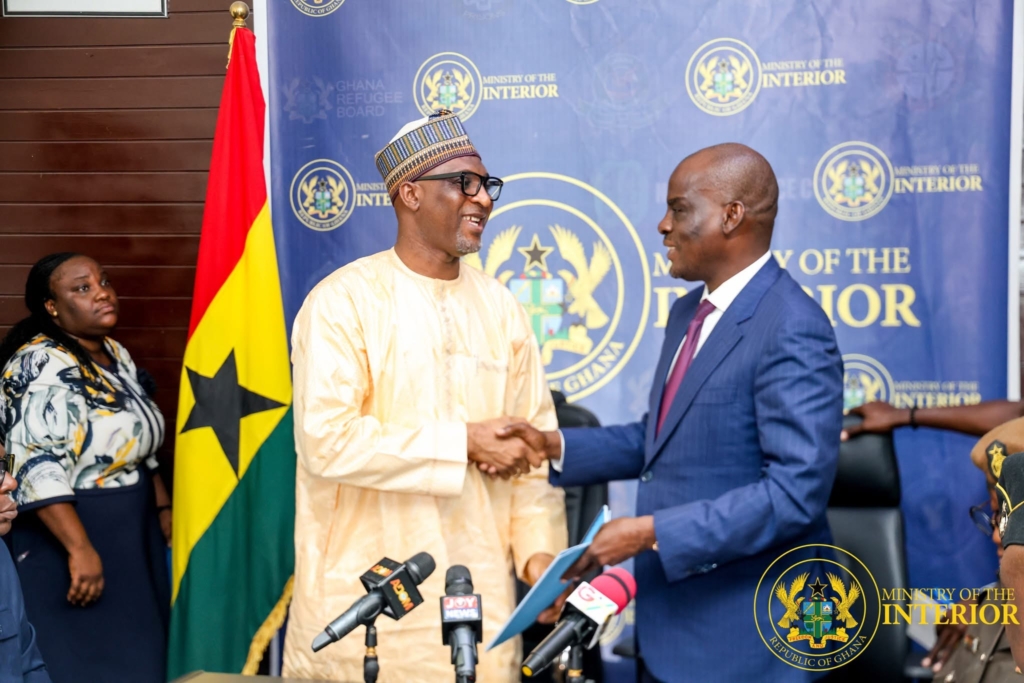
According to him, the initiative is expected to deliver multiple benefits, including skills development for inmates, income generation, improved rehabilitation outcomes, and a reduction in recidivism.
He announced that a five-member implementation committee would be established to oversee the effective rollout of the agreement, commending the Ghana Prisons Service for embracing its expanded developmental role.
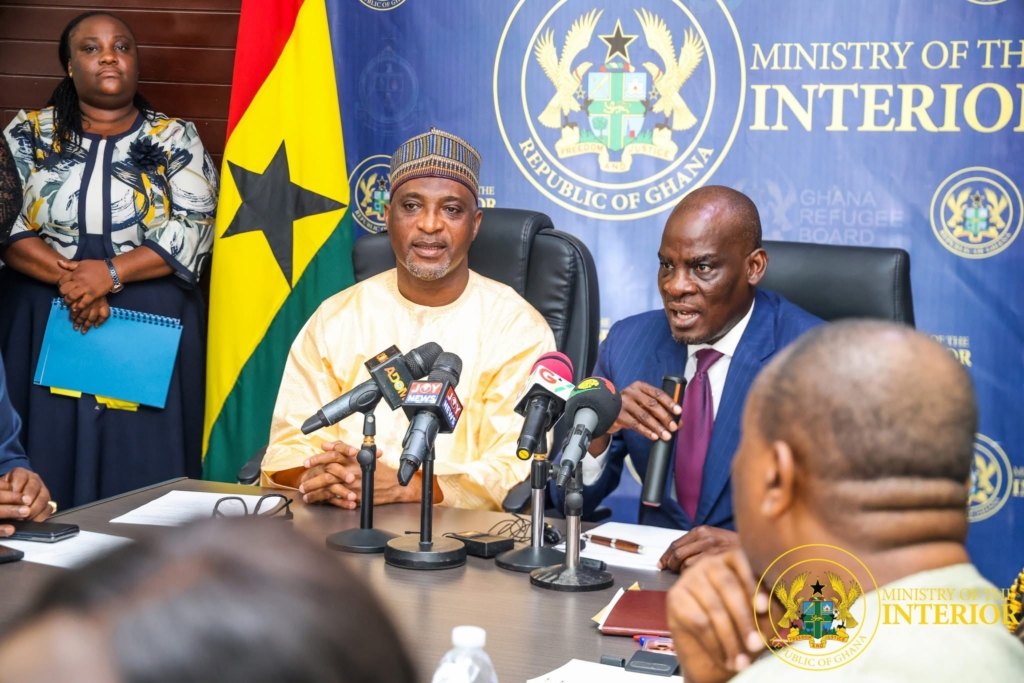
On his part, Minister for Education, Haruna Iddrisu, said the MoU redefines the role of the Ghana Prisons Service by integrating it into the education value chain.
He noted that recidivism—relapse into criminal behaviour, remains a major concern and stressed the importance of engaging inmates in structured, productive activities that equip them with employable skills.
He added that the initiative adopts a value-chain approach rooted in indigenous and local production, including the establishment of productive units within prison facilities.
Director-General of the Ghana Prisons Service, Mrs. Patience Baffoe-Bonnie, described the agreement as a game changer, saying it positions the Service as a key contributor to national production and development.
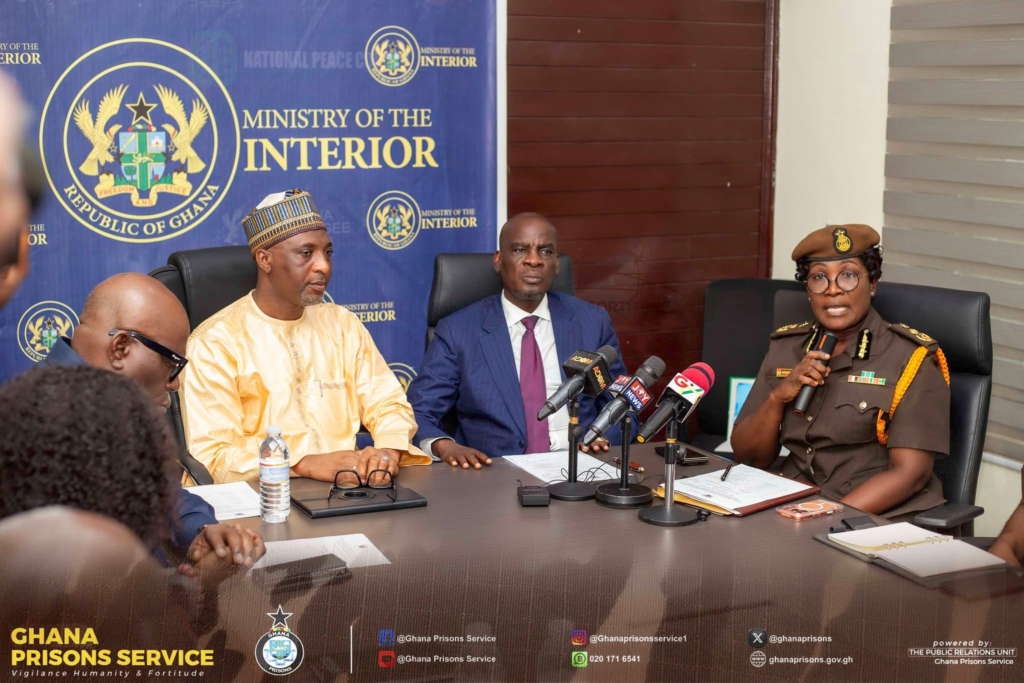
She said the ultimate objective is to enhance public safety by breaking the cycle of reoffending and supporting inmates to reintegrate into society as productive, law-abiding citizens after incarceration.
Latest Stories
-
A source of excellence across generations – Vice President Opoku-Agyemang lauds Mfantsipim
53 minutes -
(Photos) Mfantsipim School launches historic 150th anniversary
1 hour -
Knights and Ladies of Marshall group backs Catholic Bishops’ stance on anti-LGBTQ+
2 hours -
Bright Simons writes: All the Filla in the Ibrahim Mahama/E&P – Gold Fields Saga
3 hours -
Monetise Idiocy In Ghana
3 hours -
The Ghanaian prophet and the mysterious death of his scottish wife Charmain Speirs
3 hours -
Nearly 400 sentenced in Nigeria for links to militant Islamists
4 hours -
Ghana’s recovery supported by gold strength despite global oil price pressures – Standard Bank Research
4 hours -
Methodist Church hails Mfantsipim@150; calls for “fresh consecration” to excellence
4 hours -
‘Excellence is our inheritance’ – Nana Sam Brew-Butler hails Mfantsipim’s 150-year reign in leadership
4 hours -
Kwaku Azar writes: A-G vs OSP
5 hours -
Mfantsipim–Adisadel rivalry built excellence, not division – Sam Jonah
5 hours -
Vice President launches Mfantsipim’s 150 years of shaping Ghana’s greatest mind
5 hours -
I assure Otumfuo, Mahama will join him to commission KNUST Teaching Hospital by end of this year – Haruna Iddrisu
6 hours -
Barcelona dominate derby to extend La Liga lead
6 hours