

Audio By Carbonatix
Internal auditors have been charged to strengthen financial controls to prevent misappropriation and fraud, particularly concerning election-related spending.
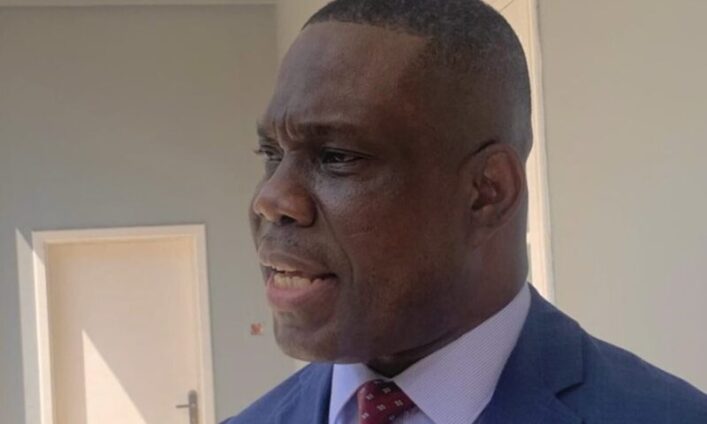
“As we go into the elections, let us continue to keep our eyes on the control system by elevating our advisory and assurance services to management in an a-political manner,” said, Dr Eric Oduro Osae, Director-General, the Internal Audit Agency.
Dr. Osae made this call during a training session for public institutions, aimed at aligning with the Global Internal Audit Standards (GIAS), set to be implemented in 2025.
He urged internal auditors to ensure their work upholds the integrity of financial transactions and reporting, optimizes resource use, and fosters transparency, accountability, and good corporate governance.
“Most public institutions have prepared their handing over notes. Internal auditors must validate these handing over notes and make sure that the content is accurate, and they reflect the situation on the ground,” he said.
Dr. Osae cautioned internal auditors against relying on outdated Charters, urging them to align with the new Global Standards set to take effect in 2025.
He noted that Ghana was one of the few countries worldwide to adopt these standards.
The updated Charter, developed by the Institute of Internal Auditors, includes enhancements to internal audit functions, mandates, organizational positions, reporting structures, and the scope of work.
The goal, Dr. Osae explained, was to improve the quality and consistency of internal audits across industries and regions, ensuring auditors adhere to high standards, which will assure investors and stakeholders of a strong approach to controls and ethics.
He added that Ghana had leveraged the ongoing Public Financial Management (PFM) reforms and the expiration of Internal Audit Charters in public institutions to revise its policies in line with these new requirements.
“With optimism and determination, let us collectively embark on this journey of transformation. I am confident that, through our collective efforts, we will uplift our practice and support management and protect the public purse through worldclass standards,” he said.
Dr. Osae explained that the workshop was designed to help public institutions align their Charters with the new global standards, using the template provided by the Agency.
He said that the training would be conducted across all 16 regions of the country, organized into four zones.
Dr. Osae said that institutions that failed to adopt the new audit charter by December 31, 2024, would face sanctions.
These would include publicizing the names of board members and heads of institutions that fail to comply in the newspaper.
Other penalties could include withholding budgetary allocations and the removal of non-compliant heads of institutions.
Latest Stories
-
Government of Ghana Internal Revenue Generation cannot fund Big Push in Four Years
50 seconds -
EPCG Moderator urges leaders to serve with courage and humility in Easter message
32 minutes -
The Cobra at the gate: When good intentions overrun the system
38 minutes -
Easter service disrupted in Nyanyano as suspected land guards storm church event
44 minutes -
Price surge exposing NDC gov’ts dishonesty -Titus Glover
48 minutes -
Afigya Kwabre North MP urges Finance and Energy Ministers to submit energy sector report
49 minutes -
Deliver quality or face sanctions — GETFund administrator cautions contractors
1 hour -
Kwahu Easter festivities trigger condom shortages; Health teams boost awareness
2 hours -
Victims of a legend: The women Daddy Lumba left behind
2 hours -
Mahama vows to prioritise roads, social amenities in Savannah region
2 hours -
Mahama sets up 18-member panel to advance Africa-led global health reforms
2 hours -
Ghana Medical Trust Fund Administrator urges hope and compassion in Easter message
2 hours -
Traders, Freight forwarders push back against planned cargo tracking policy
2 hours -
BoG Governor highlights tough trade-offs in monetary policy decisions
2 hours -
Trade Ministry intervenes to stop sachet water price increase, talks set for Wednesday
2 hours