

Audio By Carbonatix
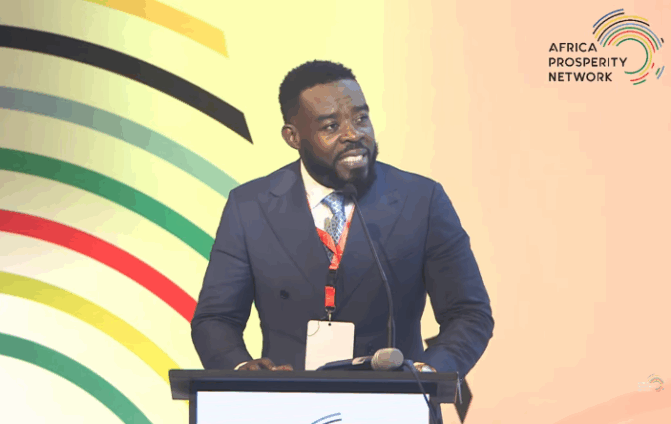
The Founding President of the RNAQ Foundation, Richard Nii Armah Quaye, has called on African businesses to treat youth investment as a core economic strategy rather than an act of corporate social responsibility.
Speaking at the Africa Prosperity Dialogue on Thursday, February 5, Mr Quaye argued that Africa’s long-term growth and business sustainability depend on deliberately integrating young people into productive economic systems.
“Investing in youth is not a social responsibility. It is the most strategic investment a business can make for long-term survival and growth,” he said.
He rejected the notion that Africa lacks talent, insisting the real challenge lies in the disconnect between education and employment.
According to him, the current system does not adequately prepare young people for the demands of modern economies.
“Africa does not have a talent shortage. Africa has a talent pipeline problem. The education-to-employment system, as it currently stands, is broken,” Mr Quaye stated.
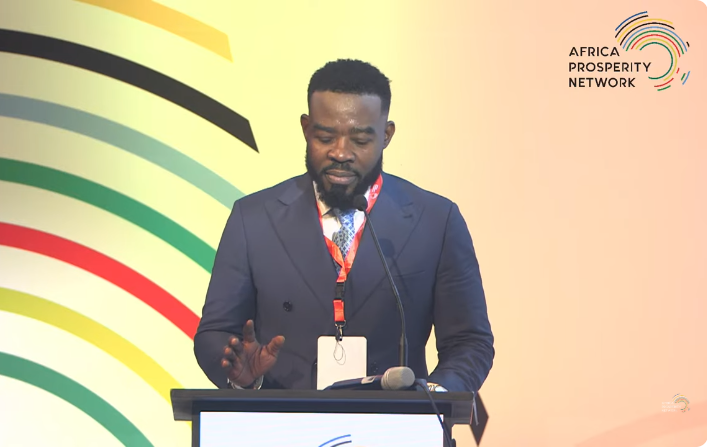
He noted that the operationalisation of the African Continental Free Trade Area (AfCFTA) has shifted the skills required across the continent, with economies now demanding practical competencies beyond academic certificates.
“Our economies now demand skills beyond certificates. We need digital literacy, cross-cultural competence, logistics and supply chain expertise, and export compliance skills,” he said, stressing that businesses can no longer remain passive observers in education reform.
Mr Quaye proposed what he described as a “new covenant” between industry and Africa’s youth, centred on structured pathways that link learning directly to employment opportunities.
He also called for closer collaboration between industry and educational institutions, urging businesses to co-design curricula with universities and training centres to ensure learning outcomes align with commercial and industrial needs.
According to him, aligning education with real economic outcomes is essential if Africa is to fully harness its youthful population and translate demographic potential into sustained prosperity.
Latest Stories
-
A source of excellence across generations – Vice President Opoku-Agyemang lauds Mfantsipim
2 hours -
(Photos) Mfantsipim School launches historic 150th anniversary
2 hours -
Knights and Ladies of Marshall group backs Catholic Bishops’ stance on anti-LGBTQ+
3 hours -
Bright Simons writes: All the Filla in the Ibrahim Mahama/E&P – Gold Fields Saga
3 hours -
Monetise Idiocy In Ghana
3 hours -
ECG kicks off Phase Two of transformer upgrades at Lashibi; brief outages expected
4 hours -
The Ghanaian prophet and the mysterious death of his scottish wife Charmain Speirs
4 hours -
Nearly 400 sentenced in Nigeria for links to militant Islamists
5 hours -
Ghana’s recovery supported by gold strength despite global oil price pressures – Standard Bank Research
5 hours -
Methodist Church hails Mfantsipim@150; calls for “fresh consecration” to excellence
5 hours