

Audio By Carbonatix
The tragedy of modern medicine is that while technology has advanced to perform life-saving transplants, thousands die every year not from lack of expertise but from lack of supply. Kidney disease remains one of the world’s silent killers. Dialysis is not a cure. It is an exhausting and expensive bridge to nowhere for many patients. The real cure is a transplant. Yet in most countries, the waiting list has become a euphemism for waiting to die.
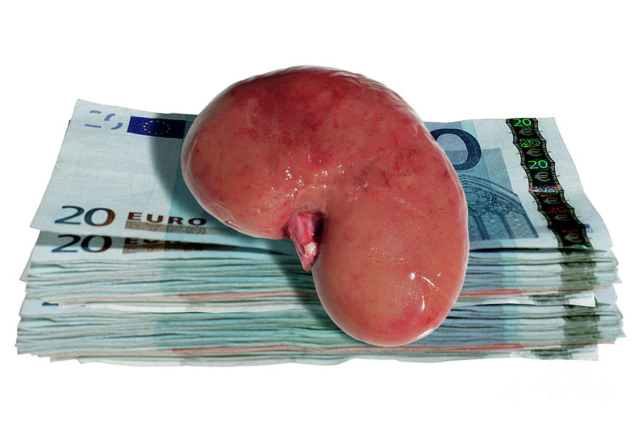
Iran is the only country that has chosen a pragmatic solution: a regulated kidney market. For over three decades, Iran has legalized compensation for living kidney donors. The result is simple and undeniable: Iran has no waiting list for kidney transplants. Donors receive a fair payment, partially state-subsidized and partially negotiated, while patients gain access to a life-saving organ without years of suffering. Unlike the black markets that thrive in secrecy and exploitation, Iran’s model brings sunlight, oversight and fairness into the process.
Critics argue that this system exploits the poor. But the current global reality is even worse. The poor are already exploited through illegal organ trafficking rings. Legalization, regulation and transparency are not the problem. They are the solution. A lawful framework ensures medical safety, equitable treatment and clear benefits for both donor and recipient.
There is also an economic case. Dialysis costs governments and insurers billions annually. A transplant, even with donor compensation, is far cheaper in the long run. Multiply that across thousands of patients and the fiscal benefits are staggering. Legalized kidney markets are not just humanitarian policy. They are sound economic policy.
This debate is urgent for Ghana. Many Ghanaians are dying of kidney disease because dialysis facilities are very few and painfully expensive. Families are drained emotionally and financially, and patients often cannot even access treatment consistently. For them, the waiting list is not hope. It is a slow death sentence.
The moral hesitation of policymakers abroad has condemned countless patients to needless deaths. It is time for courage, not timidity. Countries should study Iran’s model, not to copy it blindly but to adapt its principles of regulated compensation, oversight and donor protection. If more nations followed suit, the global shortage would end, the black market would wither and lives would be saved at scale.
We must face the truth. Kidneys will always be needed, and people will always be willing to give them. The question is whether we allow this to remain an underground trade that enriches traffickers, or whether we bring it into the light where it can save lives responsibly. Iran has shown the way. Ghana and the rest of the world must now find the courage to follow.
Latest Stories
-
Health Ministry strengthens governance and specialist training in health institutions
44 seconds -
Trump weighs renaming Strait of Hormuz after himself as US and Israel intensify strikes on Iran
3 minutes -
Afenyo-Markin praises A Plus for Gomoa Easter Carnival initiative
6 minutes -
Ghana to introduce new Loans Act to curb wasteful borrowing – Ato Forson
12 minutes -
Diplomatic rift widens as France denies US pressure to exclude South Africa from G7 summit
16 minutes -
Accra International Airport misses out again in 2026 Skytrax top 10 African Airports
20 minutes -
Ghana’s economic turnaround: A new era for investment and partnerships
36 minutes -
MCEs and DCEs drilling boreholes at GH¢100k each averagely with government approval – Assafuah reveals
42 minutes -
Ghana moves to enact new loans law to enforce discipline
44 minutes -
Ashanti regional U-17 football tournament reaches its thrilling climax this weekend
48 minutes -
Akoti Chief lauds Chirano Sefwiman Foundation, Asante Gold for new teachers’ quarters
53 minutes -
WASS teacher assault case: Court fines three GH₵4,000 each
1 hour -
TTU makes history as first deaf student graduates with Master’s degree
1 hour -
Ohemma Pokua Afoa Dankoto II enstooled as Queen Mother of Wenchi
1 hour -
GhIE identifies use of mixed rock types in collapsed Accra New Town school building
1 hour