

Audio By Carbonatix
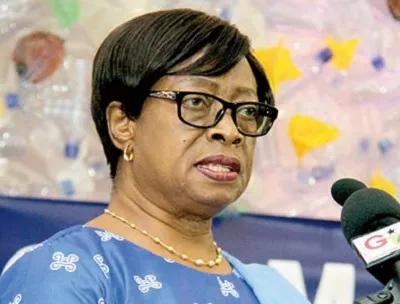
Former Chief Justice Sophia Akuffo is calling for sweeping reforms to Ghana’s judicial system, from how judges are appointed to how they are disciplined.
She argues that the current structure lacks transparency and fuels public mistrust.
Speaking on Channel One TV on Wednesday, November 5, Justice Akuffo said it was time for Ghana to “reconceive the judiciary” to strengthen its independence and restore public confidence.
“I have a passionate view and I have had it for quite a long time about how the judiciary is appointed, because the manner in which the appointment is made leaves a lot to be desired,” she said.
She criticised the existing appointment process as opaque, saying it allows speculation about political interference and favouritism.
“There is not much transparency in the process, and it’s important for that to happen, because otherwise, it leads to all kinds of speculation, that someone got appointed because of this or that, since people may not know the reality of the qualifications and merits of the appointment,” she explained.
Justice Akuffo proposed that Ghana consider models where independent bodies, rather than political actors, oversee judicial appointments.
These bodies, she suggested, should include respected representatives from professional and social institutions selected purely on merit and credibility.
She also questioned the calls to cap the number of Supreme Court justices, stressing that Ghana’s apex court is overburdened because it handles an unusually broad range of cases.
“You can only begin to talk about limiting the number of Supreme Court justices if you also look at the scope and magnitude of the jurisdiction of the Supreme Court.
"For as long as everyone has a right of access, and cases of all kinds keep coming, how can you limit the number of judges?” she asked.
Justice Akuffo contrasted Ghana’s system with that of the United States, where the Supreme Court selectively chooses cases, while Ghana’s “come one, come all” structure has created inefficiency and strain.
She concluded that the path to restoring trust in the judiciary lies in transparency, institutional reform, and a renewed commitment to independence.
“Strengthening judicial independence through transparent appointments and practical reforms is essential to maintaining public trust and the integrity of Ghana’s justice system,” she emphasised.
Latest Stories
-
Ayawaso East by-election: I’ve advised all my supporters to stay calm and law-abiding – Baba Jamal
6 minutes -
Chief of Staff’s committee completes review of 2,080 post-election public service appointments
14 minutes -
Bush burning and biodiversity: Bonyanto’s 10-year model of zero-fire record
18 minutes -
Baba Jamal votes, calls for peaceful election in Ayawaso East by-election
18 minutes -
Legal Education Reform Bill, 2025: Analysis and recommendations for a transformative legal training in Ghana
22 minutes -
Police presence at polling stations speaks negatively of our democracy — Boakye Agyarko
32 minutes -
Gov’t to commence enrollment for affordable homes under National Homeownership Fund
33 minutes -
We make the wrong choices when money rules elections – Boakye Agyarko
36 minutes -
Ziavi exhibits indigenous Ewe culture as it buries late Togbega Kwaku Ayim IV
39 minutes -
Ghana invites Chinese investors to drive industrial agriculture
45 minutes -
Global markets on edge as US-Israeli strikes on Iran send gold and oil prices to record highs
49 minutes -
Teacher, farmer die in shocking incidents in Assin Fosu
1 hour -
Iran World Cup participation in doubt after US-Israeli strikes
1 hour -
Over 1,500 public sector appointments upheld after post-election probe — Kwakye Ofosu
1 hour -
541 last-minute appointments under Akufo-Addo gov’t revoked to uphold due process – Kwakye Ofosu
1 hour