

Audio By Carbonatix
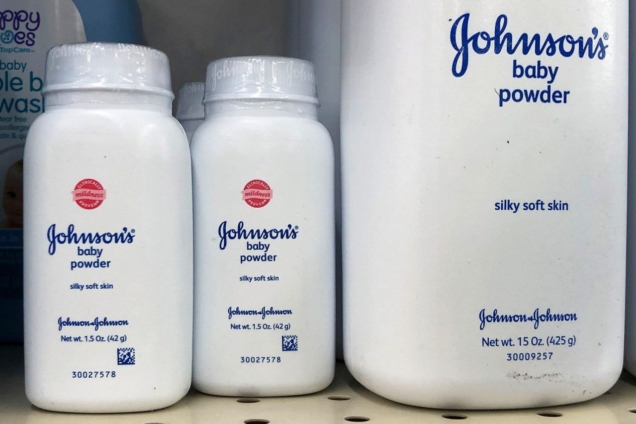
Healthcare giant Johnson & Johnson says it will continue to sell its talc-based Johnson's Baby Powder in the UK and the rest of the world, despite stopping sales in the US and Canada.
It said North American sales had shrunk partly because of a "constant barrage" of advertising by lawyers seeking clients to claim against the company.
J&J has been at the centre of claims for years that its talc causes cancer.
It has always strenuously defended the product's safety.
Johnson & Johnson has been ordered to pay out billions of dollars in compensation, but has so far always successfully appealed against these verdicts.
Almost 20,000 people in the US have so far lodged claims against the company.
Talc is mined from the earth and is found in seams close to that of asbestos, a material known to cause cancer.
The company said in a statement: "Johnson & Johnson remains steadfastly confident in the safety of talc-based Johnson's Baby Powder."
It said "decades" of study by medical and legal experts around the world supported its view, and all verdicts against the company that had gone against it had been overturned on appeal.
Dampened demand
It will continue to sell its talc-based products in the US and Canada until stocks have sold out.
It also sells a cornstarch-based powder which it will continue to sell in North America.
It said both types of Johnson's baby powder, talc-based and cornstarch-based, will continue to be sold in other markets around the world where there is "significantly higher" consumer demand for the product.
The firm said changes in consumer behaviour had also dampened demand for the powder.
The firm added that the move was also part of a reassessment of its consumer products prompted by the coronavirus pandemic.
It said in October that its testing had found no asbestos in its baby powder after tests conducted by the US Food and Drug Administration discovered trace amounts.
The firm is appealing against a 2018 order to pay $4.7bn (£3.6bn) in damages to 22 women who alleged that its talc products caused them to develop ovarian cancer.
Latest Stories
-
Strengthening economy through informal sector tax collection
10 minutes -
Stonebwoy Can Do It: A call to unite behind 2026 BHIM Fest
35 minutes -
World Shea Expo returns to Tamale for 2026 edition
38 minutes -
Prioritise cocoa sector with better prices, timely payments-Annoh-Dompreh urges NDC
1 hour -
Lands and Mines Watch Ghana endorses Heath Goldfields’ mining capacity
1 hour -
Gbintiri residents protest alleged diversion of 24-hour market project
2 hours -
Justin Bieber headlines Coachella with nostalgia-fuelled set
2 hours -
Ukraine and Russia accuse each other of hundreds of ceasefire violations
2 hours -
Asha Bhosle: The sound of Bollywood dies aged 92
2 hours -
Fire destroys section of 4-bedroom apartment at Tantra Hill
2 hours -
Safe city: Unnoticeable protection
2 hours -
North East Regional Police Commander raises alarm over burning of checkpoints
3 hours -
Free Primary Healthcare Programme set for take-off — Health Ministry confirms readiness
3 hours -
3 co-wives, 5 children perish in canoe disaster – Maritime Authority insists life jackets use mandatory for all water transport
4 hours -
Iran war lands ‘triple blow’ to flood-ravaged Sri Lankans
4 hours