

Audio By Carbonatix
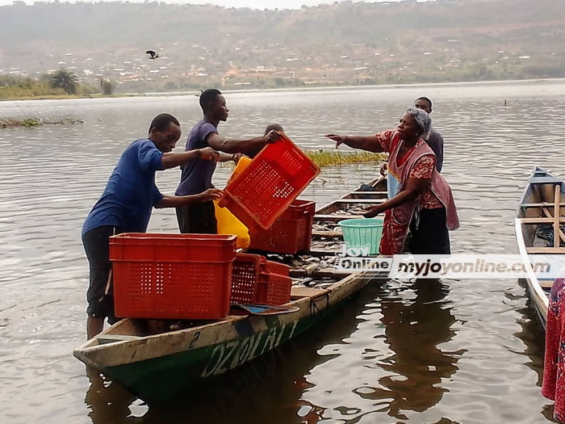
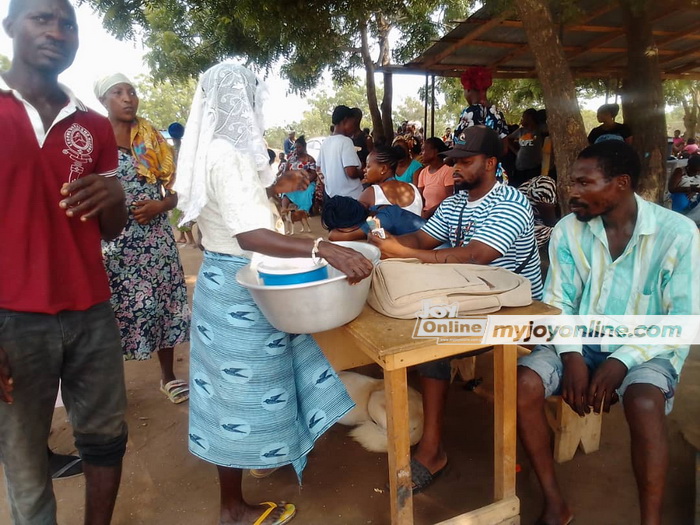
After a long and tiring day, fish farmers now draw closer to the river banks with bountiful harvests of tilapia to serve their longsuffering customers.
Traders and customers rush in with their baskets and bowls to listen to their names being called out by the record keepers so they can have their turn and purchase their fish.
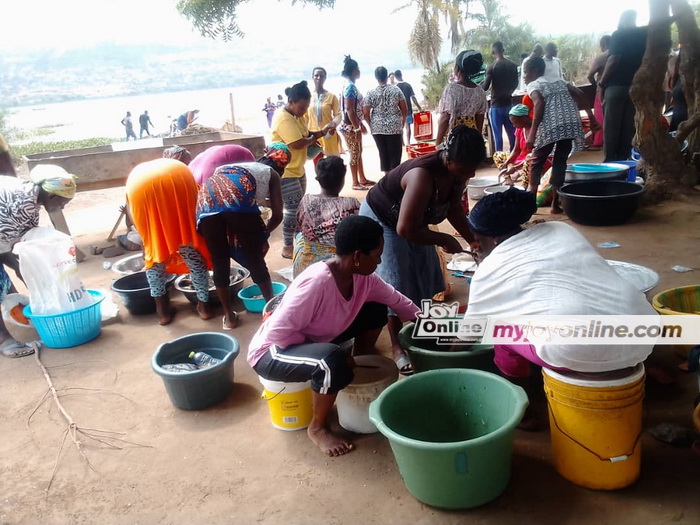
Before the fishes are sold out after harvesting, record keepers would have noted in advance how much each trader or customer intended to purchase.
Nathaniel is a record keeper. According to him, he comes in the morning and records the names of the traders who want to purchase the fish. He gives them a number (as an identity), and when the fish farmers arrive, he calls out the numbers in accordance with first to arrive, and the fish is weighed for the trader.

Tilapia is the main type of fish cultured by most fish farmers at Joma, near Ablekuma in the Ga West Municipality of the Greater Accra region. People from different locations like East Legon, Winneba and Nsawam come to purchase tilapia at Joma. Per their own stories, this has been a great means of survival for most of them.
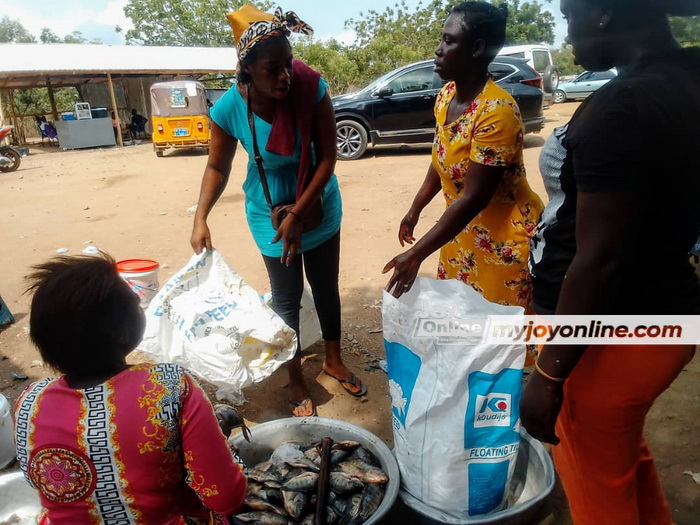
Vida Baidoo, a young lady who sells tilapia as her business said that she comes from East Legon to buy tilapia because she heard it is less expensive and always fresh at Joma.
Joma is big when it comes to fishing. Its lack of popularity in the recent past has rapidly given way, now attracting people from far and near into the tilapia business.
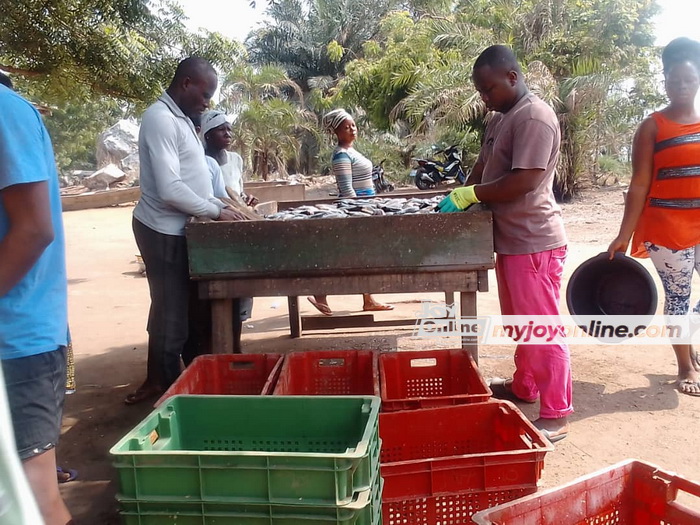
Richard Amebor has been in the business for the past 12 years and he complains bitterly about the relatively high cost of setting up a fish farming business. Plus, "you also need to have a business heart to do this kind of job", he said, explaining that because at times you invest in it and you get nothing in return.
According to him, fingerlings cost 20 pesewas each. And there is the cost of constructing ponds, plus feeding. These fingerlings are reared and fed for a duration of five to six months.
In the course of time, some of the fishes die, due to contamination in the river or some other causes. During the rainy seasons, the dam may overflow into the river, killing or carrying some of the fishes.
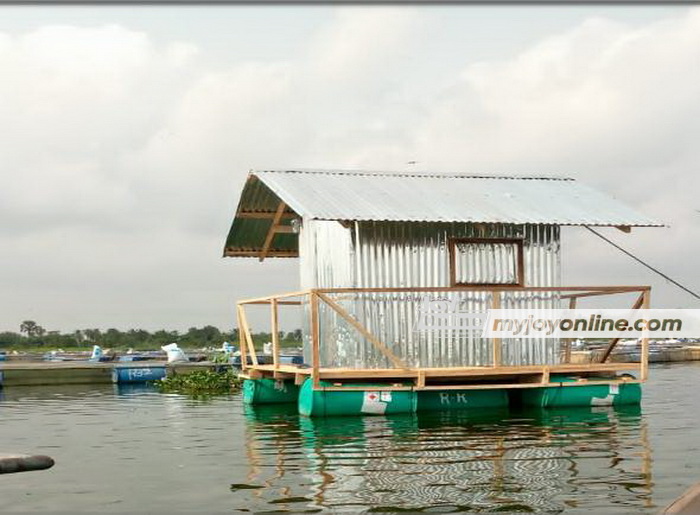
There is also theft of fishes, which usually occur in the still of the night when everyone retires home to rest. This is why they felt the need to put up a structure and hire guards to protect the fishes at night.
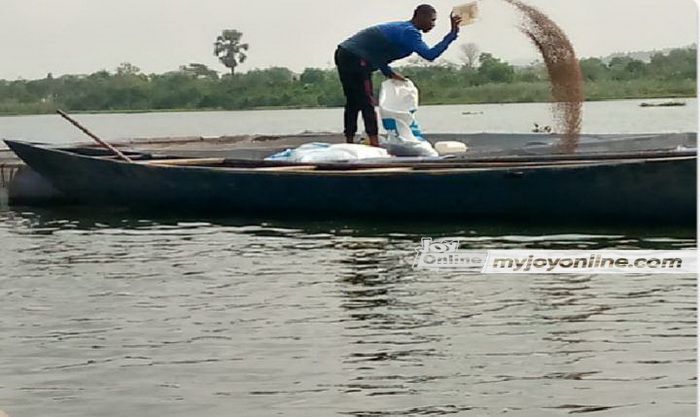
Richard Amebor won the best fisherman in 2020 and repeated the feat in 2022.
He counsels that the fingerlings must be fed three times daily to keep them healthy and strong for a good harvest and return, as well as serve customers with healthy fishes.
.
Latest Stories
-
Telecel hosts Women 100 Power Connect 2026 on reciprocity in leadership
2 minutes -
Ken Ofori-Atta released from ICE detention after judicial order — Lawyer confirms
4 minutes -
Women in PR Ghana unveils Top 10 PR Women for 2025
9 minutes -
Tourism Minister advocates expansion of Vodza Regatta in Volta region to boost coastal tourism
19 minutes -
Gradual recovery signals shift in fortunes of Tema Oil Refinery
22 minutes -
Greece to ban social media for under-15s from next year
22 minutes -
Volta Chiefs condemn EOCO over alleged disregard for Court ruling in Kwamigah-Atokple case
24 minutes -
We need collective action to advance sustainability in Ghana and Africa – Deloitte Tax Partner
28 minutes -
Imperial College promotes science communication and Africa–UK innovation links
28 minutes -
Imperial College President calls for global science partnerships with Africa
39 minutes -
NPP leaders converge at party headquarters ahead of NEC meeting on polling station elections
49 minutes -
Fuel prices may rise in Ghana despite global drops – Duncan Amoah
52 minutes -
‘No one is above the law’- Volta Chiefs condemn EOCO over handling of Council of State member’s case
53 minutes -
AMA creates alternative pedestrian routes at Kaneshie after footbridge closure
57 minutes -
Ghanaians were misled- NPP accuses NDC of politicising Anti-LGBTQ bill
58 minutes