

Audio By Carbonatix
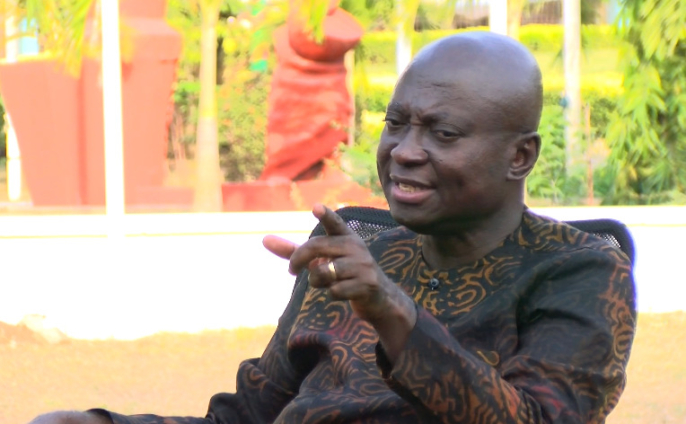
The Member of Parliament for Abuakwa South, Samuel Atta-Akyea, has dismissed allegations that the Supreme Court serves as an extension of the Jubilee House, describing such claims as misguided and uninformed.
According to Atta-Akyea, those making these assertions lack a proper understanding of legal principles and the judiciary’s fundamental role in a democratic society.
His remarks come in response to criticism following the Supreme Court's recent decision to overturn Speaker Alban Bagbin’s declaration of four parliamentary seats as vacant.
The decision sparked a wave of reactions, with some critics accusing the Court of bias and undue influence from the executive branch.
In an interview with Channel One TV on Saturday, 16th November, Atta-Akyea robustly defended the Supreme Court's integrity.
He described the justices as distinguished and impartial legal professionals committed to upholding the rule of law, emphasising that their decisions are rooted in legal reasoning, not political affiliation.
“Those who claim that the Supreme Court is merely an extension of the Jubilee House and will rubber-stamp what we want are mistaken," he stated.
He noted that the recent case showcased the Court’s independence, pointing out that two judges, Justice Lovelace Johnson and Justice Amadu Tanko, had dissented, demonstrating the diversity of thought within the judiciary. “The Supreme Court is a forum of respectable and capable individuals," he added.
Atta-Akyea further stressed that it was misleading to view the Court as an arm of the executive.
He criticised those who held such views as lacking a proper understanding of the rule of law and argued that such perspectives were subversive to the constitution and the principles of judicial independence.
The controversy arose after the Supreme Court's ruling on 12th November, which overturned Speaker Alban Bagbin's decision to declare four parliamentary seats vacant.
The ruling was in favour of a challenge mounted by Majority Leader Alexander Afenyo-Markin, asserting that the Speaker’s declaration was not in line with the law.
In their detailed judgement on 14th November, the five justices who supported Afenyo-Markin's position clarified that a parliamentary seat can only be considered vacant if an MP switches political parties while maintaining their position in Parliament.
Meanwhile, the two dissenting justices argued that the Supreme Court did not have the jurisdiction to decide the matter, highlighting a significant difference in legal interpretation regarding the Court's powers.
Latest Stories
-
Kukurantumi set to host 2025/26 Women’s FA Cup Final as Hasaacas Ladies face Army Ladies
26 seconds -
Where the law stops: Torture, power, and the failure of prevention in Ghana
37 seconds -
Only 6% of imports insured locally despite mandatory policy – GSA raises concern
6 minutes -
IndomieFest Accra 2026 delivers Ghana’s premier family festival at Easter
12 minutes -
GIP Secures $20m boost from Norfund, Axis Pensions to deepen SME financing in Ghana
20 minutes -
Newlywed wife of US soldier freed by ICE after detention at military base
35 minutes -
GMet forecasts thunderstorms, gusty winds over southern Ghana
40 minutes -
John Kpikpi supports Taviefe youth with GH¢5000, calls for unity and new leadership
43 minutes -
John Kpikpi courts Taviefe youth, urges shift towards Progressive Alliance for Ghana
50 minutes -
Reconstruct, Don’t Refurbish: Terminal 2 and the high cost of policy misjudgement
58 minutes -
Starmer arrives in Saudi Arabia after US-Iran ceasefire deal
58 minutes -
Maxwell Kwame Odoom-Tsibu
1 hour -
Health NGOs warn of imminent family planning crisis over delayed UNFPA supplies at Tema Port
1 hour -
President Mahama begins Paris visit with French Senate talks, meets Macron later today
1 hour -
World is lining up for Russian energy, the Kremlin says
1 hour