

Audio By Carbonatix
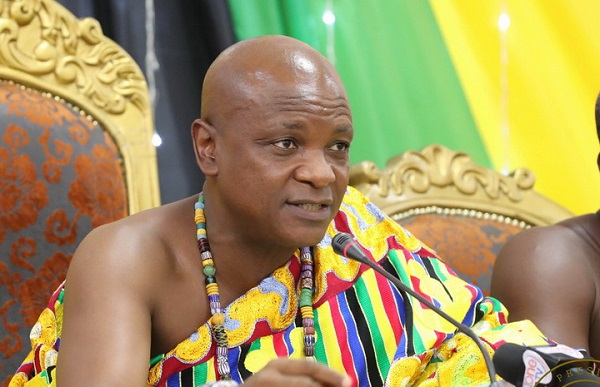
Togbe Afede XIV, the Agbogbomefia of the Asogli State and respected businessman, has voiced his concerns regarding the Bank of Ghana's (BoG) interest rates, emphasising their potential impact on the Ghanaian cedi's stability.
In his remarks, he asserted that the Ghanaian Cedi would continue to face detrimental consequences as long as interest rates remained "unnecessarily high."
The BoG recently highlighted forecasts indicating a potentially elevated trajectory, citing various factors such as potential adjustments in transport fares, utility tariffs, and higher fuel prices.
The Central Bank stated that some factors collectively contribute to economic pressures and could influence the country's financial landscape.
However, in a piece dated April 11, 2024, Togbe Afede XIV expressed his belief that the Cedi's stability would significantly affect other prices, including transport fares, utility tariffs, and fuel prices.
He underscored the interconnectedness of various economic variables and the repercussions of interest rate policies on overall economic stability.
According to the respected chief, the persistence of unnecessarily high interest rates exacerbates the challenges faced by the cedi, amplifying its vulnerability to adverse consequences.
Togbe Afede XIV urged the central bank to take proactive measures and reassess its approach to interest rate management to mitigate the negative impacts on the currency's stability.
“The truth is, all these variables are related. Whilst the policy rate is an important tool of monetary policy, its misuse, as in our case, can have damaging effects. As long as interest rates are kept unnecessarily high, our currency, the cedi, will continue to suffer adverse consequences, with pass-through effects on other prices, including transport fares, utility tariffs and fuel prices."
“Persistent cedi depreciation has been a key factor in our energy (including power) sector problems. We have always felt the need to adjust prices, not because consumers were not paying enough, but because the cedi has been depreciating," he said.
Currently, the demand for the dollar and the other major foreign currencies has surged, culminating in a sharp depreciation in recent times.
It is going for about GH¢14.50 to one US dollar GH¢18.00 to one British pound in the retail market.
Latest Stories
-
A source of excellence across generations – Vice President Opoku-Agyemang lauds Mfantsipim
14 minutes -
(Photos) Mfantsipim School launches historic 150th anniversary
38 minutes -
Knights and Ladies of Marshall group backs Catholic Bishops’ stance on anti-LGBTQ+
2 hours -
Bright Simons writes: All the Filla in the Ibrahim Mahama/E&P – Gold Fields Saga
2 hours -
Monetise Idiocy In Ghana
2 hours -
The Ghanaian prophet and the mysterious death of his scottish wife Charmain Speirs
3 hours -
Nearly 400 sentenced in Nigeria for links to militant Islamists
3 hours -
Ghana’s recovery supported by gold strength despite global oil price pressures – Standard Bank Research
3 hours -
Methodist Church hails Mfantsipim@150; calls for “fresh consecration” to excellence
4 hours -
‘Excellence is our inheritance’ – Nana Sam Brew-Butler hails Mfantsipim’s 150-year reign in leadership
4 hours -
Kwaku Azar writes: A-G vs OSP
4 hours -
Mfantsipim–Adisadel rivalry built excellence, not division – Sam Jonah
4 hours -
Vice President launches Mfantsipim’s 150 years of shaping Ghana’s greatest mind
5 hours -
I assure Otumfuo, Mahama will join him to commission KNUST Teaching Hospital by end of this year – Haruna Iddrisu
5 hours -
Barcelona dominate derby to extend La Liga lead
5 hours