

Audio By Carbonatix
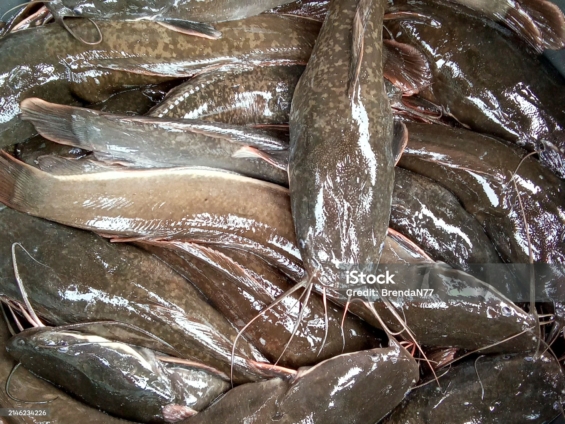
A new study by researchers at the Kwame Nkrumah University of Science and Technology has revealed that the African catfish (Clarias gariepinus) can triple its air-breathing rate when exposed to high levels of carbon dioxide in water.
The African catfish is a unique fish that possesses the ability to breathe oxygen dissolved in water as well as from the atmosphere. Its air-breathing behaviour is characterised by regular swimming to the air-water interface and directly breathing air.
The researchers observed that at 40 mg/L CO₂, the fish significantly increased its breathing frequency compared to normal conditions, showcasing its remarkable adaptability to changing aquatic environments.
The study also found that the catfish adjust their breathing based on oxygen availability and temperature fluctuations.
When oxygen levels dropped to moderate and severe lows, their air-breathing rate more than doubled, reaching 1.40 and 1.23 breaths per minute, respectively, compared to 0.47 breaths per minute under normal conditions.
Temperature changes further influenced their behaviour. The study published in the Environmental Biology of Fishes observed rising water temperatures caused a steady increase in air-breathing until reaching a critical threshold, beyond which breathing declined.
Again, fish in thermally stratified water columns also adjusted their breathing rates according to the temperature of different layers.
Why this matters for fish farmers
For fish farmers, understanding the air-breathing behaviour of Clarias gariepinus is crucial for maintaining healthy stock and optimizing production.
According to the lead scientist, Dr. Kwasi Adu Obirikorang, when oxygen levels drop, catfish rely more on air-breathing. Farmers can reduce stress and mortality by ensuring proper aeration, especially in densely stocked ponds.
Again, high levels of carbon dioxide can force catfish to breathe more frequently, which may lead to stress and energy depletion. He therefore advises regular water exchange and proper filtration can help maintain balanced gas levels.
And last, since catfish increase their air-breathing rate as temperatures rise, he wants farmers to monitor seasonal variations and avoid overheating, which could push fish beyond their thermal tolerance.
By applying these insights, fish farmers can improve growth rates, reduce stress-related losses, and create better conditions for sustainable catfish farming.
Latest Stories
-
UEW Public Lecture Series 2026: Education debate ‘about the soul of Ghana’s future’ — Dr Ibn Chambas
30 seconds -
EU fingerprint and photo travel rules come into force from today
28 minutes -
Anti-LGBTQ+ Bill: Ghanaians demand expedited passage, not dialogue – Ntim Fordjour to Mahama
36 minutes -
EU airline industry warns of fuel shortages if Strait of Hormuz stays closed
39 minutes -
White House staff told not to place bets on prediction markets
46 minutes -
Auctioneers petition Prez Mahama over ‘interference’ in public auctions
53 minutes -
GEA, Mastercard Foundation drive market access for MSMEs at Kwahu Business Forum
55 minutes -
Education Ministry begins review of Ghana Library Authority law
1 hour -
Ghana U-15 girls clinch back-to-back CAF Schools titles
1 hour -
Rev. Ntim Fordjour urges Mahama to issue directive to fast-track anti-LGBTQ+ bill
1 hour -
GPL 2025/26: Stoppage-time penalty hands Aduana FC win over leaders GoldStars
1 hour -
Ntim Fordjour rejects call for more dialogue, says anti-LGBTQ+ bill has faced a decade of debate and delay
1 hour -
Catholic Bishops say moral values must match economic priorities in Anti-LGBTQ+ debate
2 hours -
IGP Yohuno urges merit and hard work ahead of Police Academy exams
2 hours -
Queendalyn Yurglee releases debut album ‘Clouds of Glory’
2 hours