

Audio By Carbonatix
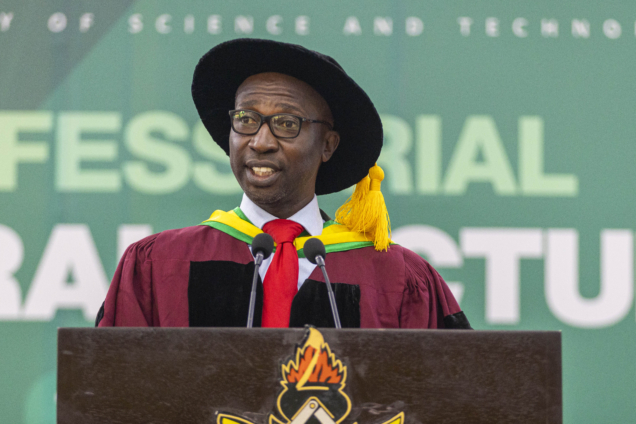
KNUST scientist, Professor Nathaniel Owusu Boadi is calling on the government, industry leaders, and scientists to take bold steps toward using nanotechnology to solve Ghana’s energy challenges.
Delivering his professorial inaugural lecture, he laid out a roadmap for turning cutting-edge research into real-world energy solutions that are affordable, sustainable, and made in Africa.
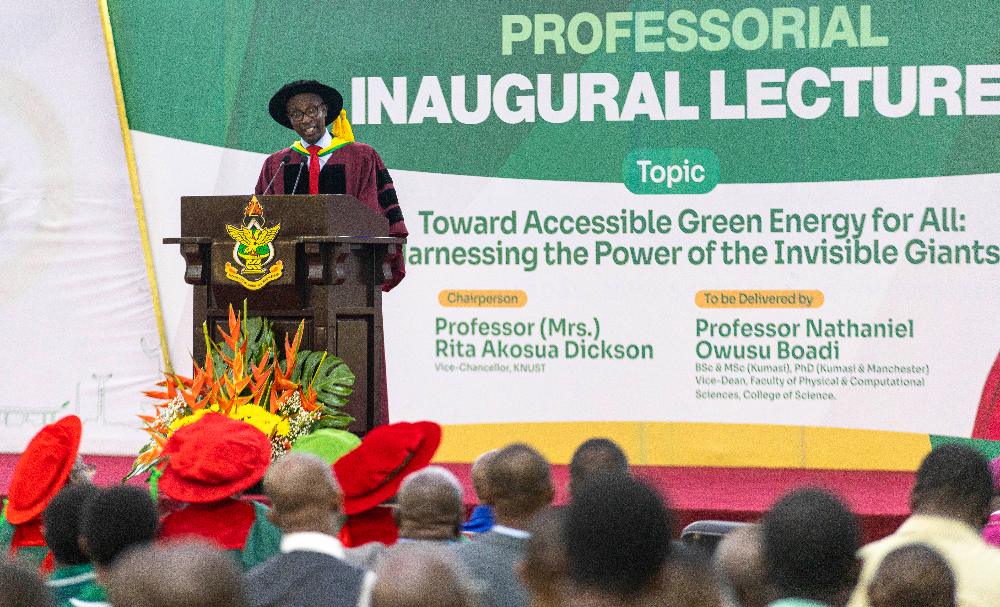
The lecture, titled: “Toward Accessible Green Energy for All: Harnessing the Power of the Invisible Giants,” highlighted the promise of nanomaterials, extremely small materials engineered at the scale of atoms, as a powerful tool to transform how Ghana and the continent generate, store, and use energy.
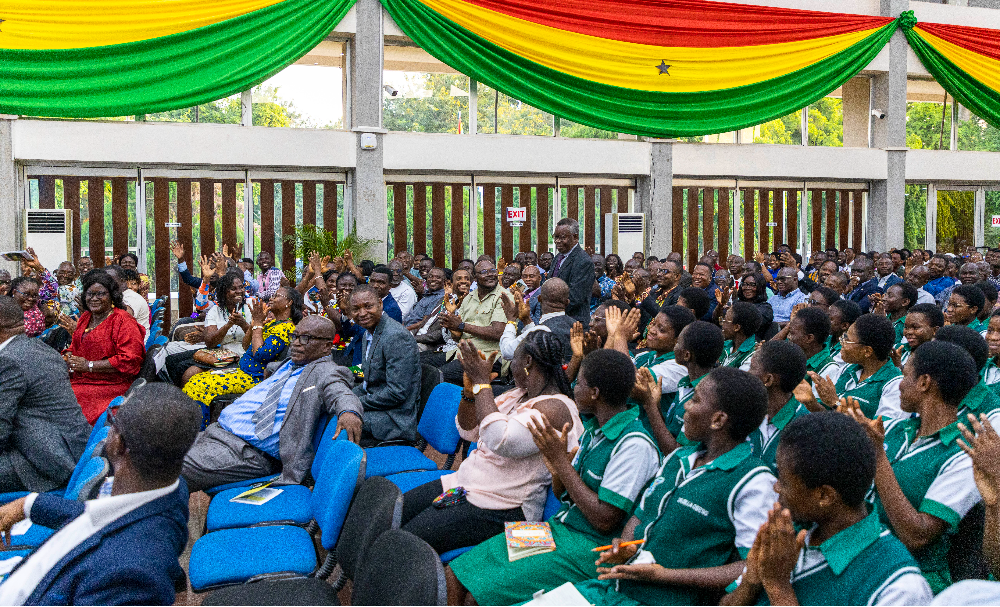
Prof. Owusu Boadi emphasized that affordable alternatives to traditional silicon-based solar cells are within reach, thanks to advances in nanomaterials. These materials could drastically lower the cost of solar energy, making it more accessible, especially in underserved and off-grid communities.
He also spoke about the urgent need to produce these materials in environmentally friendly and sustainable ways, ensuring that Ghana’s transition to green energy doesn’t come at the expense of health or the environment.
Beyond solar energy, Prof. Boadi pointed to the potential of nanomaterials in improving energy storage systems, enhancing the performance of devices like batteries, sensors, and smart displays.
He noted that four new lead-based crystal structures developed by his research team have already been accepted into the prestigious Cambridge Crystallographic Data Centre, putting Ghanaian innovation on the global map.
“These are not just lab experiments,” he said. “They are building blocks for the future, designed right here in Ghana, with the potential to power homes, clinics, and industries across Africa.”
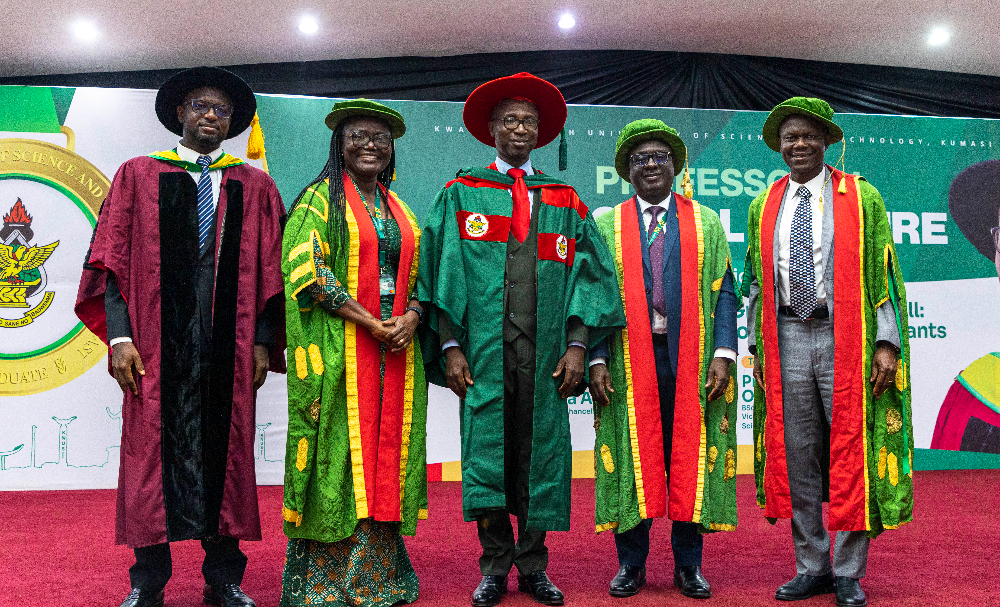
In his recommendation, Prof. Owusu Boadi, called on the Government of Ghana, particularly the Ministries of Finance and Energy, to make substantial investments in nanotechnology research and development, ensuring that the country stays competitive in the global race for green energy solutions.
He also urged regulatory bodies such as the FDA, EPA, and Ghana Standards Authority to create and enforce science-based safety standards for the production and use of nanomaterials. These regulations, he stressed, should protect public health while encouraging innovation.
His most ambitious proposal was for the creation of a National Nanotechnology Research Centre, backed by the Ministry of Science and Technology, in collaboration with academia, industry, and the Ministry of Finance. Such a centre, he said, would help fast-track the development and commercialization of homegrown solutions.
“We must stop being passive consumers of imported technologies,” he declared. “With the right support, Ghana can become a hub for nanotech innovation tailored to African realities.”
Latest Stories
-
Elevate Africa confirms presidents, vice presidents and ministers for 2026 Annual Convening in Accra
15 minutes -
Keta MP commissions 60-seater kindergarten facility to replace unsafe structure
20 minutes -
Salomey Awiti-Baffoe’s lawyers welcome GH¢100,000 bail after earlier rejection
22 minutes -
Domestic tourism and its impact on the local economy
30 minutes -
Top-Up Pharmacy wins Community Pharmacy Chain of the Year at 2026 PSGH Pharma Excellence Awards
30 minutes -
Nigeria military aircraft with 32 on board crashes
33 minutes -
Black Stars need a coach who can inspire players to perform – Ignatius Osei Fosu
34 minutes -
Revenue collector crushed to death on Kasoa-Winneba highway
38 minutes -
GPL Week 5: Stephen Amankona, 8 other outstanding players win NASCO awards
40 minutes -
NPP’s new leadership team has experience to deliver – Dr Asah-Asante
40 minutes -
Mahama committed to developing Volta Region – Chief of Staff
41 minutes -
NPP’s new leadership offers no renewal after ‘micro minority’ defeat – NDC’s Abeiku Hayford
43 minutes -
Blackstar Experience to hold fashion show and summit in November
43 minutes -
Prof Mike Oquaye backs Kojo Bamba’s call for stronger ballot protection
53 minutes -
If police won’t protect you, you’ll protect yourself – Prof Mike Oquaye backs Kojo Bamba’s election
54 minutes